Costa News Spain Breaking News | English News in Spain.


You’re not dreaming if you hear a strange call on your terrace while you drink your morning coffee, or see a flash of color over the campo. Some of Spain’s best summer birds have returned for the new season.
The Bee-Eater is one of the brightest guests to arrive.
The European Bee-Eater is an enchanting mix of chestnuts, turquoises, yellows and blacks. It spends its Summers in the province of Malaga. The bee-eaters arrive in Malaga province between April and May. Residents along the west coast, near Estepona, Manilva, and further inland, towards Casares are treated to flocks of small birds hunting insects above the campo. They have a trill that sounds like a soft liquid. Be sure to keep an eye out for any sandy banks and earth cliffs nearby. Bee-eaters will nest in colonies by digging tunnels under the soft ground. Once you locate a colony they will return there year after year.
Golden Oriole: a brilliantly bright show.
Credit:DPN
The golden oriole has been one of the most well-kept secrets in the area. The male golden oriole is brighter and more striking than anything else you’ll find in Europe. He can also disappear into the foliage and go unnoticed. Residents hear his flute-like, loud whistle before they see him. There may be a singing Oriole above your head if you are near a mature tree, a riverbed or an urbanisation with well-planted trees. Orioles are seen in large numbers in the province during the spring migration. They also breed in many wooded valleys inland, especially around the Genal or Guadalhorce rivers.
The Nightingale is the music of the night.
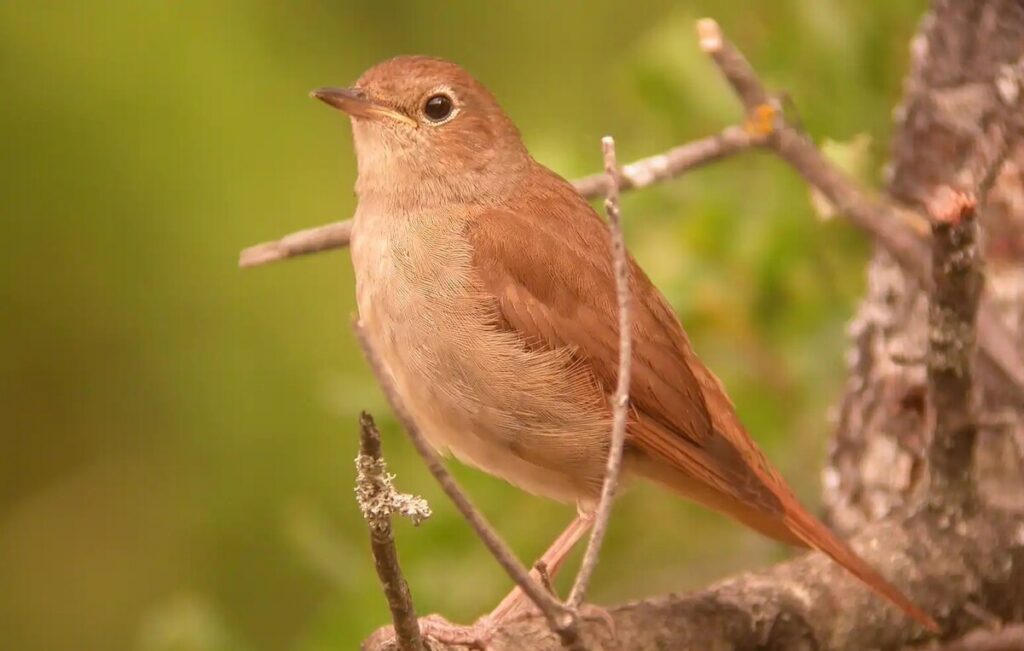
Credit:DPM
A Spanish spring evening, with a wine glass on your balcony and the nightingale is always there. This unremarkable brown bird can sing a song that is complex and powerful. It’s a cascading and ever-changing song with whistles, trills, and bubbly notes. The nightingales prefer dense scrubs, overgrown gardens, and shady, riverbeds. They are far more widespread than many people realize. You may have one if you live near a stream or a large patch of vegetation.
Find all three in spring and summer
It’s not necessary to travel far. You can find all three species in the Desembocadura del Guadalhorce Nature Reserve, located west of Malaga. This is well worth a morning visit. Also, the countryside in Estepona and Casares as well as the Rio Genal Valley is a great option. Many people find these three places by simply paying more attention to their local area. The best part is when wildlife comes to your home.
The data for this species is taken from the Diputacion de Malaga database of natural heritage. All three species are protected by Spanish and EU wildlife legislation.