Costa News Spain Breaking News | English News in Spain.


[ad_1]
By Eugene Costello
Now that the Sagrada Familia cathedral is finally complete after a 144-year wait for its central tower, there’s never been a better time to explore Gaudí’s Barcelona.
Although Lionel Messi has been the star of the Camp Nou for almost two decades, another genius continues to draw millions of pilgrims every year to the Catalan capitol.
Antoni Gaudi’s legacy, a century after his death, continues to define Barcelona’s skyline. It still defines its identity and its soul in many ways.
We had planned a weekend in the company of Gaudi, and brought maps, guidebooks, and carefully-planned itineraries with us.
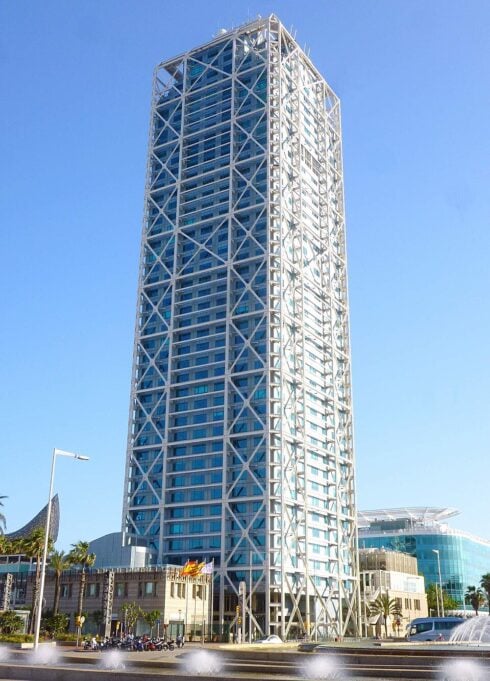
The view from our suite was absolutely stunning.
You could see the Marina and the entire city from the Hotel Arts. Numerous monuments were visible, as well as the hills in the background.
What caught the eye, time and again, was the pale towers that ascended in the distance, which are Gaudi’s famous Cathedral.
Sagrada Familia dominates Barcelona as mountains do landscapes. It’s not just another building, but the focal point of your orientation.
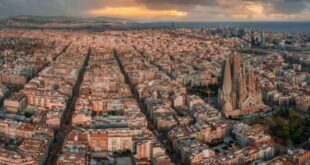
The view was almost theatrical as dusk fell over the city. The last rays of sun from Catalonia caught the white cross atop the recently completed Tower of Jesus Christ, before it started to glow in the deep blue of the evening skies.
We had planned to go out for dinner.
We opened a cava bottle and watched instead.
I was struck by the fact that there are many ways to view Gaudi’s masterpiece.
You can stand in the queues, look at it from the street below or take pictures from many different angles. We enjoyed it more than others because we were able to see the show from our suite.
READ MORE Pope Leo XIV to say Mass at Barcelona’s Sagrada Familia for inauguration of new centrepiece tower on centenary of Gaudí’s death
A second irony is also worth mentioning. Hotel Arts used to be one of Barcelona’s tallest landmarks. After 144-years of construction, completion of the 172.5m Tower of Jesus Christ returned the cathedral, with its illuminated Cross, to the top of the Barcelona skyline.
Although work continues on the monumental Glory Façade, the masterpiece has finally reached the height Gaudi always intended.
It seems entirely fitting that Barcelona’s tallest building is a church, rather than a luxury hotel or office block.
Just a few days before our visit, Pope Leo XIV held a Mass in the basilica to commemorate the 100th anniversary of Gaudi’s birth.
It was a reminder that despite welcoming millions of tourists every year, the Sagrada Família remains what Gaudi intended all along: a living church rather than simply Spain’s most extraordinary attraction.
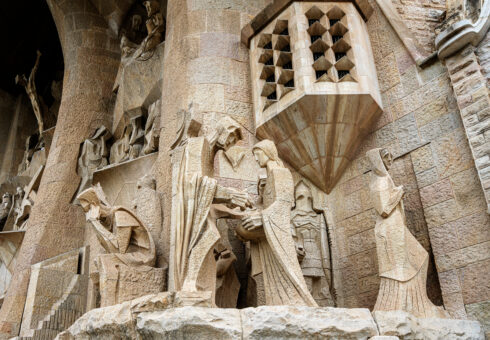
You are not prepared for the experience of walking in.
Photos show you how it looks. The photos cannot tell you what it feels like.
The columns rise up like trees, before fading into the stone canopy that covers them. As the sun moves across the stone, it filters sunlight through stained glass pools of sapphires. Every few moments, the building is subtly altered.
After a while, I gave up trying to capture it.
It was a bit absurd to reduce such a vast thing to a small screen on a mobile phone.
Gaudi observed that there are very few straight lines in the natural world. As you stand under the columns with their branching limbs, it becomes clear what Gaudi was trying to say. The building looks more like it has grown than been built.
Sagrada Familia became his sole existence.
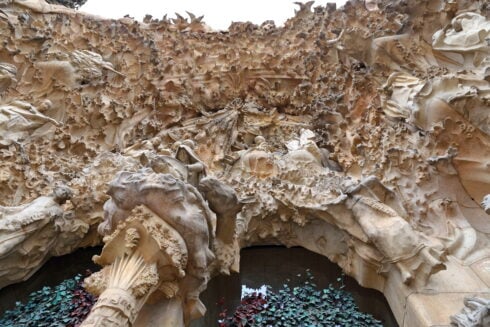
He gave up lucrative commissions and dressed more simply. He devoted his waking hours to the basilica.
He even slept in the room, rising early to supervise the work. His friends were worried that he would work himself to death. In a certain sense, yes.
In June 1926 Gaudi, while walking to confession, stepped in front of a tram. He was so unremarkable and his clothes so worn that many passersby thought he was a begging man and didn’t pay him much attention.
He died only three days later, without having seen even a quarter completed.
The city gave him a funeral fit for a national hero.
For you to understand his reasoning, you must leave the Basilica and walk along Barcelona.
Casa Batlló The world is not like any other place.
Its balconies resemble masks – or perhaps skulls. The façade ripples like sunlight on water, while the tiled roof evokes the scales of the dragon slain by Catalonia’s patron saint, Sant Jordi. Each guidebook provides its own interpretation.
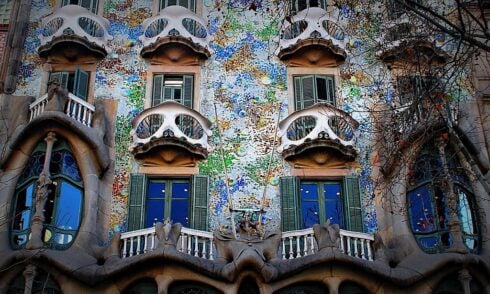
Evie took about three second.
‘Dad,’ she said, grinning. ‘It’s Floop’s castle.’
Once she said it, I could not unsee the castle in Spy Kids.
My daughter’s comparison to pop culture captured the playful absurdity of the building perfectly. Gaudí, I suspect, would have enjoyed the observation.
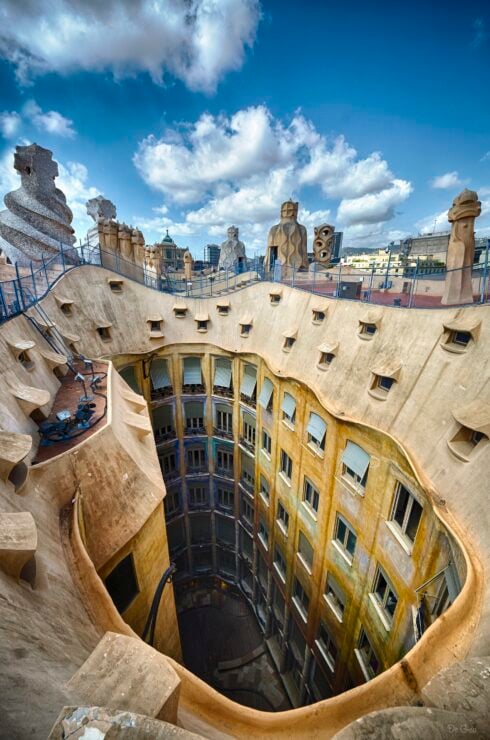
It’s only a few minutes away. Casa Mila – better known as La Pedrera – feels like the work of the same imagination, only more mature. Waves of pale limestone sweep across the façade. The wrought-iron balconies twist and turn like seaweed.
Surreal chimney pots on the roof resemble an armies of stone warriors silently gazing over Barcelona.
As I stood there, it made me wonder what the Edwardian city residents must have thought of it. Today, it seems visionary. It must have appeared positively extraterrestrial in 1912.
The morning after brought Park Guell When architecture appears to be completely submissive to nature. Because trees lean, columns lean. The paths follow the contours and slopes of the hillsides rather than fighting against them.
The famous serpent mosaic, colourful benches, and gingerbread gateshouses avoid becoming whimsical by feeling rooted in their landscape.
You can’t spend any time here without smiling.
Children chase pigeons. Buskers play Spanish Guitar beneath the columns. Every few minutes, someone stops to point and laugh with delight.
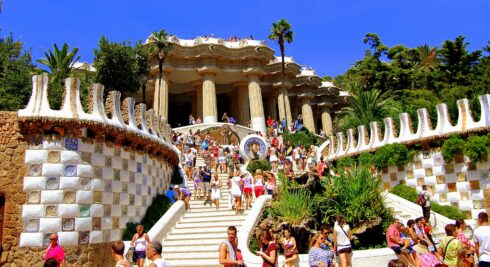
It is possible that this is the most simple definition of great architecture. It makes adults feel like kids again.
Not everyone was convinced. Pablo Picasso, according to reports, regarded Gaudi’s Sagrada Familia with a barely hidden contempt and dismissed it as excessive and absurd.
His fellow Catalan Salvador Dalí saw precisely the opposite. Dali saw a visionary, whose dreamlike architecture anticipated Surrealism years before the term was coined.
Dali, who saw Picasso’s eccentricity as something to be ashamed of, saw it as genius. Dali has received a better judgement from history.
More than a century after construction began, millions continue to make their own pilgrimage to Gaudi’s creations – not because they are perfect, but because they remain utterly unlike anything else ever built.
Our final evening, we returned to the place where our journey began.
The Torre Glories, Spain’s answer to London Gherkin, pulsed in a changing blue and red across the skyline.
Above the city, the cross-shaped illuminated structure atop Sagrada Familia acted as a beacon.
Neither of us was particularly tempted to turn on our televisions.
We sat at the window, talking about our weekend and watching Barcelona glitter below us.
Travel writers search for an image that best defines a destination. Barcelona provided us with one without our having to try.
Even a hundred years after his death the city’s best hotel still looks to its greatest architect.
And somehow, that feels exactly as Gaudí would have wanted it.
Eugene Costello spent his stay at Hotel Arts in a Skyline Suite. Visit More information
Click here to read the latest Barcelona News from The Olive Press.
[ad_2]