Costa News Spain Breaking News | English News in Spain.

DISNEY princesses had no easy lives. Their paths to a happy ending were always strewn with formidable obstacles: evil stepmothers, jealous witches, tentacle-bottomed sea sorceresses – you name it.
Female royalty in real life faces less fantastical threats. However, that does not mean their lives consist of glittering halls, and joyous rides in bullet-proof Rolls-Royces.
Take a recent instance. This week, The Olive Press reported on a social media fraud involving AI-manipulated photos of Spain’s Princess Leonor in the middle of her final year at Air and Space Academy.
The heir to a throne of the country was upset and has sought legal advice.
This comes after Chilean authorities opened an investigation on the distribution of private images taken of Leonor without her consent in a shopping center during her training.
It is a public place, so it would be legal in Europe. However, South America has a different situation.
If those seem like trivial matters to worry about, wait until you read what our feature writer Michael Coy has put together for us this weekend – as he turns the clock back on two darker tales of Spanish royalty, divorce, and the exploitation of trusting women by ruthless men.
A princess who walked through the halls of power 500 years ago is still alive in Spain’s modern courts.
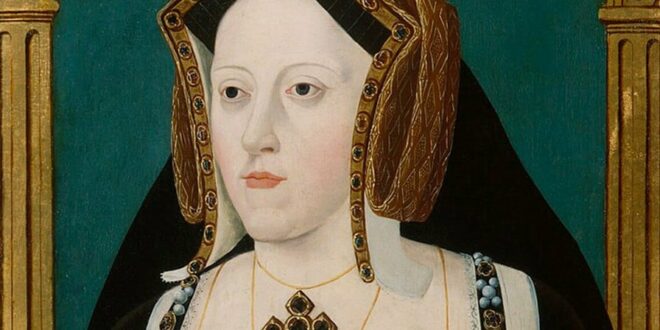
CATHARINE OF ARAGON
Catharine, the first wife of England’s legendary King Henry VIII, had a difficult life.
She was born in Spain in the year 1485. She spent most of her adult life in England under house arrest. She died in 1536 at age 50, more than half a century ago.
Catharine is the daughter of Ferdinand and Isabel, also known as the Catholic Monarchs. They were the couple that united Spain for the first time.
READ MORE REYES – The connection between Spain’s leading composer and an extinct mountain goat
An alliance with England seemed like a valuable ‘deal’ to the new king and queen of Spain, so they promised Catharine in marriage to king Henry’s older brother Prince Arthur when she was three years old!
Arthur was first in line to the throne and if he had lived into adulthood, Henry would never have been king – and how different history would have been!
Catharine was only a teenager when her journey to England began. She was to become the queen of England for three decades.
She and Arthur – her fiancé – could communicate only in writing. The common language between them was Latin. However, they had been taught differently how to pronounce the word, and so couldn’t communicate with each other.
She married Arthur in 1501 – but it didn’t last long. They were sent to live in Ludlow Castle, on the Welsh border (Arthur was the Prince of Wales), where they both fell gravely ill with what was called back then the ‘sweating sickness’.
Catharine recovered, but Arthur was killed.
What did the English Royal family then do with a 15-year old widow?
Catharine embarrassed herself in many ways. The Tudors had seized the throne in a coup d’état in the year of her birth: in fact, she had a better claim to the English throne than the Tudors (she was a descendant of John of Gaunt).
The wedding dowry had to be paid to Spain now that Arthur was deceased.
READ MORE MICHAEL COY delves into the world of Spain’s premier forensic linguist – who catches crooks with just one word
Henry, Arthur’s younger brother, was the obvious choice.
The couple got married in 1509. They didn’t get divorced completely until 1533.
Catharine’s fall was largely due to her sexuality. She was forced to provide embarrassing proof that she and Arthur never consummated their wedding.
During the time she spent with Henry, she had five children, but only Mary lived (Henry wanted a male heir). Henry became more interested in Ann Boleyn from 1525 than Catharine.
The Spanish girl, who was twice queen of England, is buried today in Peterborough Cathedral.
THE INFANTA CRISTINA
Any Spanish princess who is in direct line to the throne is known as an ‘infanta’.
Cristina de Borbón, now 60 years old (she was born in 1965) is the sister of the current Spanish king Felipe VI.
She had an enviable early life until her choice of marriage in 1997 to Iñaki Urdangarin, a Basque who seemed to be going places (as it turned out, prison is where he went!).
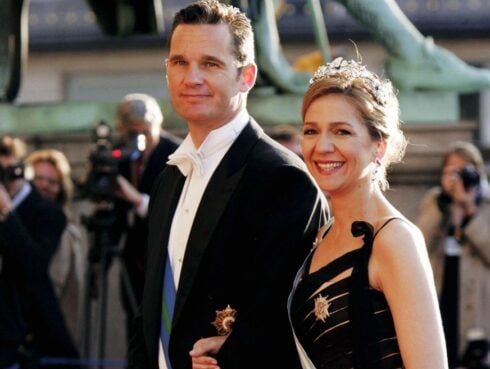
Iñaki was an athlete and Spanish hero. Inaki became a professional player of handball at the age of 18. He quickly rose to become a member of Spain’s national team.
He represented his nation at three different Olympic Games (1992 1996 2000) and was team captain on the last occasion.
The royal couple fell in love, and things looked good in the first years of the millennium.
Cristina had studied Political Science and had a Master’s Degree from New York, and in 2001 was appointed UNESCO ‘goodwill’ Ambassador for Spain.
Iñaki retired from playing handball, and was given directorships in an array of companies, including ‘Noos’, an organisation which installed sporting facilities in schools and public buildings. It’s just that it didn’t.
Urdangarin spent a decade traveling back and forth across Spain signing contracts for the construction of basketball courts and running tracks with regional councils.
You can also do this by putting the checks in your pocket. Literally.
READ MORE ON THIS DAY: Spain permitted female nouns, two legendary singers were born – and a Spanish cinematic classic was released, writes MICHAEL COY
When it all came out, it was proved that no sports facilities had been constructed, and Iñaki had concealed six million euros in shady bank accounts in both Belize and the UK.
Cristina had signed some of his fraudulent contracts. She was arrested for fraud on 7th January 2014.
She was somehow able to avoid a custodial sentence – unlike Urdangarin, who got five years.
She divorced her husband!
The Infanta Cristina is a low-key person today. She lives in Geneva, Switzerland and works as the head of international programs for the Aga Kahn Foundation.
She is technically still a member the extended Spanish Royal family, but the scandals surrounding her ex-husband as well as her own court appearance have led to her being excluded from royal duties in Spain and the public life.
After her divorce, she maintains a professional career while staying out of the spotlight.
The trials of Catharine and Cristina, despite the five centuries that separated their lives, reveal a pattern. While both were born to privilege and expectation they found themselves tragically intertwined by the ambitions and betrayals the men they had married.
Henry VIII’s desperate search for a son to succeed him stripped Catharine of her freedom and title.
For Cristina, it was Iñaki Urdangarin’s greed and criminal exploitation that led to scandal, public humiliation, and her exclusion from the royal fold.
Their stories – one ending in house arrest and death, the other in legal judgment and self-imposed exile – serve as a stark reminder that even within the most gilded cages of royalty, a woman’s fate can be ruthlessly dictated by the consequences of another’s actions.
The Olive Press’ La Cultura News is available here.