Costa News Spain Breaking News | English News in Spain.

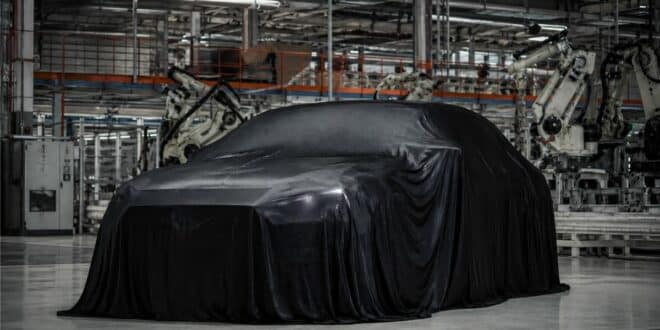
Reuters reports Stellantis is in negotiations with Hongqi, a subsidiary of China’s state-owned automaker FAW. The company wants to manufacture vehicles at a Spanish factory. Reuters cites Reuters sources as saying that if an accord is reached, cars could be assembled in the Stellantis factory in Zaragoza.
Leapmotor is facilitating the talks, according to reports. This is because both FAW as well Stellantis are interested in this Chinese electric vehicle manufacturer. Stellantis has already committed to producing Leapmotors in Zaragoza.
A final agreement has not been announced. This makes the story important, but it has not been confirmed as an investment.
What Spain means to Chinese automakers
Spain is already Europe’s leading car producer. The country has established large factories, supply chain, port access and strong links with the European market.
Chinese brands can benefit from producing in Europe by reducing their exposure to tariffs and shortened delivery routes. They can also expand more easily. The move also allows brands to have a stronger local presence at a time where Brussels is being more strict on China’s electric vehicles.
Hongqi’s possible move follows on from other China-linked investment in Spain’s auto sector. Reuters reported last year that CATL had broken ground on a major battery plant in Aragón with Stellantis, underlining the region’s growing role in electric mobility.
From state symbols to European ambition
Hongqi’s history is unique. Branded cars and the political elite of China were once associated with this brand. Today, the brand is trying to establish itself as a global premium.
Reuters reports that Hongqi aims to sell a million cars a annum by 2030. At least 10% of the sales will be outside China. It also plans to launch 15 hybrid and electric models in Europe before 2028.
A Spanish production arrangement would be much more than just an agreement to build a factory. Hongqi would gain a foothold on the Western European market at a time where Chinese carmakers are aggressively attempting to compete with established brands.
Zaragoza’s role in the future of Spain’s EV
Zaragoza’s importance in Spain’s electrified vehicle strategy has grown.
The Stellantis plant at Figueruelas has long been one of Aragón’s main industrial engines. The new EV- and battery-related projects could protect this role, as the European automotive sector shifts from petrol and diesel to electric and hybrid models.
It is not just a question of whether Chinese companies build in Spain. These deals must bring stability, technology transfer and industrial value.
The deal would have political weight
These talks take place at a time of great importance for the European auto industry.
European manufacturers are under pressure due to high costs, a slower EV market in certain markets, and the competition of Chinese brands. the same time, governments also want to retain factory jobs and attract new investments.
Spain has established itself as a manufacturing base that is competitive for the next-generation of vehicles. Hongqi’s acquisition of Stellantis would reinforce this image, but would also raise issues about dependence on Chinese tech and how European brands will respond.
Spain’s auto industry awaits confirmation
If the talks go well, Spain might gain another important automotive project linked to China. Even if the talks stall, Zaragoza’s inclusion in the discussion still shows how important Spain is to Europe’s EV manufacturing.
The Hongqi Spain discussions, in either case, highlight a larger reality: Europe’s auto industry will no longer be shaped solely by Germany, France or Italy. Spain is well and truly in the race.