Costa News Spain Breaking News | English News in Spain.

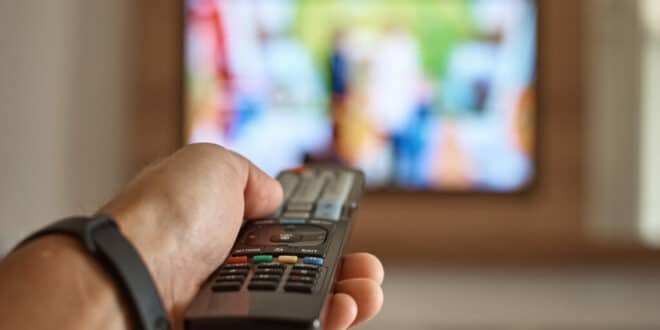
Although privacy concerns persist, technology advances have enabled more convenient and flexible controls. Photo credit: Lazy_Bear/Shutterstock
The traditional TV remote control may be rendered obsolete this year. Mobile applications and voice-controlled system advancements are allowing viewers to interact directly with their televisions without needing a physical device. This is a significant shift in home entertainment technologies.
Smartphones as universal controllers
Mobile devices have become the preferred alternative to conventional remote controls. Samsung SmartThings or the Roku app allows users to control all television functions directly from their smartphones and tablets.
This eliminates the need for a separate battery-powered deviceUsers will enjoy greater convenience. Using the touch screen, users can perform complex tasks like entering passwords, or searching for advanced information, that would have been difficult with a traditional remote.
The app allows users to navigate menus and adjust volume without the need for a separate remote.
Voice control and Artificial Intelligence
The mobile application provides functionality. experts predict that voice commands will become the dominant interface for TV interaction. Modern voice assistants that are powered by artificial intelligence, such as Gemini, on Google Home allow users to converse with their devices in natural languages.
Users do not need to memorise complex commands as the systems can understand context and carry out simple instructions. The television can be asked to perform a search for a particular film genre, change the lighting, or change input sources all without touching the screen or physical remote.
This method makes technology easier to use for all users, allowing them to enjoy entertainment and control their smart homes.
Privacy challenges
Privacy remains an important concern despite voice control’s convenience. Mics must be active or on standby for the assistant to work effectively. Some users disable these features because they are concerned about data collection and the possible processing of their conversations by third-parties.
Many people still rely on apps to control their TVs, as they balance convenience and privacy. While physical remotes are declining in popularity, voice-activated system adoption is still high.
Market trends and industry trends
Analysts predict that voice assistants and smartphones could become the norm for TV interaction by 2026. Industry reports have highlighted a growing number of apps that are designed to centralise the control of devices and improve user experience.
These updates will ensure compatibility between smartphones and tablets. Some brands, like LG, offer features that let any viewer operate the TV in the room without the need for a shared device.
Digital control has many advantages
Digital control has immediate benefits. Users can forget about batteries or lost remotes. They also have to manage them. Multiple viewers can interact with the TV simultaneously. This democratises access and provides a more inclusive environment.
App-based control, voice interaction, and broader smart home system integration are also seamless. This allows for coordinated management of sound, lighting, and other connected appliances. This consolidation results in a more efficient, engaging and enjoyable living environment.
The future of TV interaction
Experts believe that, as remote controls become more popular, they will be viewed as a convenience rather than an essential. Software and AI-driven user interfaces will replace the majority of functions that were previously performed by physical controllers.
The shift is part of a larger trend in consumer electronics. Devices are now interconnected, and can be managed via smartphones or voice commands. TV companies are adapting their software and design strategies in response, and future models will likely assume that users will use digital interfaces primarily.
Home entertainment has undergone a significant evolution since the advent of remote controls. Combining mobile apps and AI-driven speech interfaces makes the TV experience more intuitive, accessible and integrated with the smart home ecosystem.
Even though privacy concerns persist, technology advances have enabled more flexible and convenient control options. As 2026 unfolds tThe TV remote control, once an essential in every household, is likely to become a thing of the past.Replaced by devices and systems which provide direct, personalized interaction for each viewer.