Costa News Spain Breaking News | English News in Spain.

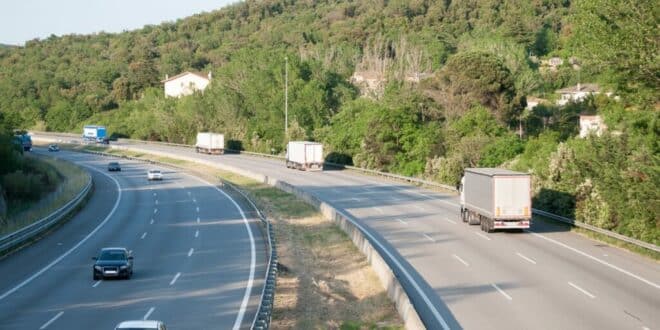
Traffic on the AP-7 is being affected by new safety measures, including reduced speed limits.
Credit : Juanjo Molina, Shutterstock
The AP-7 motorway, which connects France and Spain along the Catalan coastline, has been in the news for the wrong reasons. After a steady rise in traffic and a worrying spike in serious accidents, the Catalan government has stepped in with an emergency road-safety plan – and drivers will start feeling the changes very soon.
Catalonia’s interior minister, Núria Parlon, has announced a package of around 20 urgent measures to improve safety on the AP-7, now officially described by authorities as the most dangerous road in the region. A major speed limit reduction is at the core of the plan, which covers a particularly dangerous stretch south of Tarragona.
Traffic increases after tolls are removed
Since toll charges were scrapped and the AP-7 became free to use, traffic levels have climbed sharply – and so have accident figures.
Catalan data shows that overall traffic has increased this year by 3.2%, and the number of heavy goods vehicles on the highways is up 2.6%. Traffic-monitoring station data in the Terres d’Ebre, located south of Catalonia, has shown increases up to 5 per cent, both for vehicles and lorries.
Unfortunately, this rising number is reflected in an increasing tragedy. Fifteen people have already lost their lives on the AP-7 this year – more than twice the number expected for 2024, making it the deadliest road in Catalonia. Ten of these fatalities were in Tarragona and seven involved heavy lorries.
Statisticians in the region were left with no choice but to act immediately.
New speed limits in a dangerous area
The introduction of lower speed limits is the most significant change for motorists. This section has now been designated as one of the blackspots on the motorway.
New limits will soon be applied to the 44-kilometre stretch from Calafat to Amposta in a north-south direction:
- 100 km/h for automobiles
- This section already has an overtaking restriction of 80 km/h on lorries.
Authorities have confirmed that these restrictions will be in place before the end year. At the moment the restriction only applies to this section of motorway. However, officials have admitted that it could be expanded to other parts if accident statistics do not improve.
The aim is simple: slower speeds mean fewer collisions – and when accidents do occur, they are less likely to be fatal.
Speeding on the road and in the air
Changes to the signage are only one part of the overall plan. To ensure drivers follow the new rules, enforcement has been increased.
The Mossos d’Esquadra (regional police), will intensify their checks by using a variety of tools including:
- Unmarked vehicles with mobile radars are used to target all types of vehicles for speeding.
- Six new mobile radars are expected to be operational before the end of this year.
- Orange boxes, or fixed roadside speed cameras are located along important motorways.
- Helicopter surveillance, speed monitoring and dangerous driving from above.
All vehicles – from private cars to heavy lorries – will be subject to the increased scrutiny, as authorities look to deter speeding and reckless manoeuvres along the route.
The police measures are part a wider action plan that also includes traffic management, awareness campaigns for drivers and additional training programs aimed at reducing dangerous driving behaviour.
What it means for travellers and drivers
The AP-7 doesn’t just serve local traffic – it carries thousands of international travellers every day, especially holidaymakers and commercial drivers moving between France and Spain. Anyone planning to travel on the motorway during the coming months will need to prepare for the following:
- Lower speed limits on the Calafat–Amposta stretch,
- Increased roadside inspections and visible controls
- Possible slower journey times during peak periods.
Authorities say the goal is not to punish drivers, but rather to stop the deadly pattern of crashes.
AP-7 is in the spotlight right now. With 15 lives already lost this year, officials say there is no room for delay – and every driver using this key cross-border route will now be travelling on one of the most closely monitored motorways in Spain.