Costa News Spain Breaking News | English News in Spain.

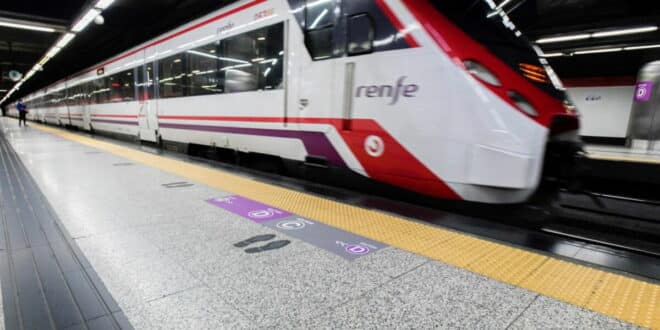
In a surprising about turn, Spain’s Transport Minister Óscar Puente is said to have given his blessing to plans to extend the commuter train line to Marbella via tunnel, the country’s only city with over 100,000 residents without access to a rail service.
Puente dismissed the idea As unfeasible, due to its ridiculously high costs and complex terrain. The Minister now supports a tunnel beneath the A-7 motorway. This is a major undertaking. win For the Costa del Sol infrastructure expansion and commuter rail extension in Andalucia.
The shift in opinion shows a clear acceptance of Marbella’s long overdue connection with the national network. The existing Cercanías line ends in Fuengirola, where a 50-year-old tunnel could serve as the starting point. The Costa del Sol’s rocky terrain, urban sprawl and complicated terrain have always hampered progress in what was considered an impossible dream. Ministry sources now confirm that a “cut and cover method” is preferred, similar to Malaga’s Metro system, to minimize disruption.
Marbella rail expansion: how it will be built
Construction will be done in 15-20 kilometre segments, starting with the excavation of side walls, pouring cement, and installing roof slabs before tunnelling. One A-7 lane will be closed at a time to minimise traffic impacts on the Costa del Sol’s main artery. Renfe’s current president has been a strong advocate of the approach. Álvaro Fernández Heredia While serving as a deputy minister, he promised to offer the best possible option.
Engineer Ángel García Vidal, representing Malaga’s College of Civil Engineers, estimates each segment at €40-60 million. The expropriations would take between 6-12 months if the project were to be accelerated. However, full construction could last for at least 4 years.
Massive passenger demand drives Costa del Sol train project
There are huge demand projections: up to 60 millions passengers annually across four segments. The breakdowns are Nerja-Malaga (9.5 million/year), Malaga – Fuengirola (25.57), Fuengirola – Estepona (20.30) and Estepona – Algeciras (4.89). Malaga-Fuengirola C-1, which is overloaded, already carried 17 millions passengers in the past year. It was operating at 116% capacity during summer. This makes it Spain’s most efficient line per seat. data.
To cope, the ministry plans track duplicationExtending five stations by 100 metres will allow longer trains to run and increase frequency. Extending Cercanías to Marbella emerges as a much simpler option than broadening the A-7, greatly improving regional mobility and sustainability.
The Marbella extension train could change the transport landscape in Andalusia, by easing congestion and cutting emissions. It would also unlock tourism and business opportunities. After viability and informational studies, it is possible that tenders will be issued soon. After decades of being isolated, Marbella’s rail dreams have tunneled towards reality. They are poised to link Spain’s most glamorous location to the rest the world.