Costa News Spain Breaking News | English News in Spain.

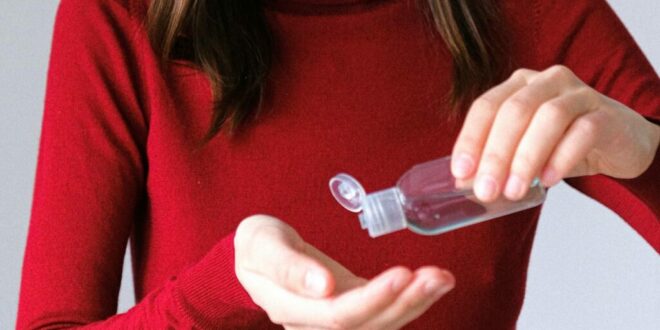
Applying hand sanitiser gel. Credit: Anna Shvets, Pexels.
In the height of COVID-19, when you entered a store, school, or hospital, the staff would ask that you dispense sanitiser into your hands.
Hand sanitiser was a symbol for public safety. The EU is now considering classifying ethanol as potentially cancerous, a key component in most sanitisers. This was reported by the Financial Times and Reuters.
Health risks of ethanol in hand sanitiser are being investigated
The European Chemicals Agency (ECHA)’s internal working group suggested on October 10 that ethanol might pose cancer and pregnancy risk, sparking a debate throughout the continent. The agency’s Biocidal Products Committee is expected to meet from November 25–28 to discuss its classification.
The committee may replace ethanol in certain products if it concludes that it is carcinogenic. ECHA told FT however that ethanol may still be approved to use for biocidal purposes if exposure levels are deemed safe or if there are no other alternatives.
Alcohol-based hand sanitisers that contain ethanol are on the World Health Organization essential medicines list and continue to be deemed safe by both the WHO (World Health Organization) and UK Health Security Agency.
Hand sanitisers gel is the new pandemic.
A study of 2022 in the Journal of Exposure Science & Environmental Epidemiology Children in schools used hand sanitiser as much as 25 times a day during the pandemic. Adults used it about nine times a day.
Statistics Canada shows that sales of sanitisers grew 792 percent from March 2019 to March 2019. Hand gels were as plentiful as masks with dispensers installed at every public doorway, transport hub and other location.
But frequent usage wasn’t without its problems. Poison centres in Canada reported a 400% increase in calls related to exposure to sanitisers during the first months of COVID-19. The most common complaints were eye irritation, accidental ingestion of sanitiser by children, and skin inflammation.
The European Commission has issued an emergency guideline for 2020 that allows rapid production of hand disinfectants based on alcohol under the Biocidal Products Regulation(EU 528/2012).
Manufacturers were permitted to convert factories – including breweries – into temporary sanitiser producers to meet demand. The guidelines differentiated between cosmetic “hand cleansers” and biocidal hand disinfectants, the latter being strictly controlled for their claims of pathogen-killing.
Industry experts’ opinions on the safety and efficacy of ethanol
Industry groups say that the science behind ethanol’s reclassification has been weak. Nicole Vaini, EU Affairs Director of the International Association for Soaps, Detergents and Maintenance Products, told FT there are “no studies focused on ethanol specifically – the only human data available concerns alcohol consumption.”
Experts warn of the potential consequences to hospital hygiene if ethanol is removed. Dr Alexandra Peters of University of Geneva, Clean Hospitals Network and FT.
“Healthcare-associated infections kill more people globally every year than malaria, tuberculosis and AIDS combined. Hand hygiene is important, and alcohol-based hand scrubs can prevent 16 million infections each year.
She said that alternative products such as isopropanol were “even more toxic” and switching production at short notice was near impossible.
What the FDA in the US says
The U.S. Food and Drug Administration, or FDA, maintains alcohol-based sanitisers to be safe and important for public safety when they are correctly made. The FDA has issued several recalls due to products contaminated by toxic substances, such as 1-propanol and methanol.
The agency urges consumers to avoid using sanitisers with methanol or that lack clear manufacturer information. Past experiences have shown that methanol-containing sanitisers are not recommended. FDA official guidance:
If soap and water aren’t available, use a hand sanitiser containing at least 60% ethanol. Do not use any product on the FDA’s ‘Do Not Use’ list.”
There have been no new entries to the list since 2023. ‘This page is no longer being updated. Visit the drug recalls Page or search FDA recalls database Check back for any additional recalls. On the FDA website, you can also find out about inspections and other FDA activities. data dashboard.’
The FDA emphasises that ethanol itself is not classified as carcinogenic in its consumer product guidance but stresses the importance of manufacturing purity – a distinction that could shape how Europe approaches its own review.
If ethanol were reclassified as a fuel in Europe, a number of common cleaning and sanitising products would disappear from the shelves of supermarkets, being replaced by less efficient or more expensive alternatives. From airports to hospitals, public spaces may have to adjust hygiene practices.
As the ECHA prepares its late-November meeting, the EU’s post-pandemic reckoning with sanitiser safety continues to evolve – a reminder that even well-intentioned public health tools can sometimes leave a somewhat complicated legacy.
View all Health News