Costa News Spain Breaking News | English News in Spain.

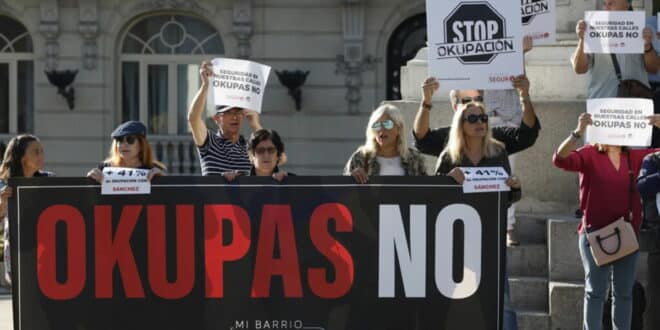
In Andalusia, the protests against squatting are increasing as more cases occur.
Credit – Maria Mercedes
Catalonia was almost always the topic of conversation when it came to squatting. That has now changed – and quite decisively.
Andalusian authorities confirmed that in January 2026, the region had overtaken Catalonia to become the part of Spain where the most squattings cases were active. The courts are currently dealing with more than 2,800 cases, which shows how rapidly the situation has escalated.
Many property owners, particularly along the southern coast of Spain, are not surprised. The number of complaints has been increasing for several months but the rapidity with which they are being filed is forcing the regional government to act.
From the Costa del Sol city centre
Costa del Sol is still the most vulnerable area. Málaga continues to record the highest number of legal filings, largely driven by empty investment properties and second homes that are left unoccupied for short periods. Some owners are only made aware of the situation when their neighbours observe unusual activity in the home.
The problem has spread beyond tourist areas, which is what worries officials the most.
In cities like Seville and Cádiz, squatting cases are increasingly linked to ordinary residential blocks, not holiday apartments. According to judges and police sources, the same addresses may be repeatedly occupied. This can lead to lengthy legal battles for everyone.
Reclaiming a property can take a long time once it has been occupied. During that time, owners often continue paying community charges, taxes and legal fees – all while being locked out of their own homes.
The Junta takes a tougher line
The magnitude of the problem has forced the Andalusian Government to adopt a much firmer stance. Officials openly refer to a “zero tolerance approach”, something that would not have been acceptable a few decades ago.
The region intends to prevent anyone convicted of an illegal occupation for five years from being able to access subsidised housing. The Junta says that the goal is to eliminate any incentives for squatting.
A new coordination group is also being created to improve communication among courts, local councils, and police. It is hoped that the eviction process will be sped up, as cases are currently held in limbo and can take months to resolve.
Town halls will also be given access to new verification tools, allowing them to flag unusual patterns linked to utility use or census data – an attempt to spot illegal occupation earlier, before cases become entrenched.
The clash of national rules
Andalusia has limited room for maneuvering despite these actions.
The central government has extended its ‘social shield’ measures until the end of 2026, restricting evictions when occupants are classed as vulnerable. In practice, this can freeze eviction proceedings even when household incomes approach €1,800 a month – a threshold regional officials say stretches the concept of vulnerability too far.
Housing Minister Rocío Díaz has been vocal in her criticism, arguing that current national rules shift responsibility onto private owners instead of the state. Her position has resonated with many landlords who feel trapped between legal obligations and an unprotected system.
What owners are doing in their place
Already, the uncertainty has changed behaviour.
More owners in Andalusia are opting to leave their homes empty, rather than renting them out. Other people invest heavily in alarm systems and private security. This is especially true in areas that are popular with foreigners.
Andalusia is currently at the forefront of Spain’s debate on squatting. It remains to be determined whether its more aggressive approach will have a positive impact. What is clear is that the issue is no longer confined to one region – and the outcome here could influence housing policy well beyond the south.
As one property lawyer in Málaga put it quietly, “The law hasn’t caught up yet. “Until the law catches on, everyone will just be trying to protect their own interests.”