Costa News Spain Breaking News | English News in Spain.

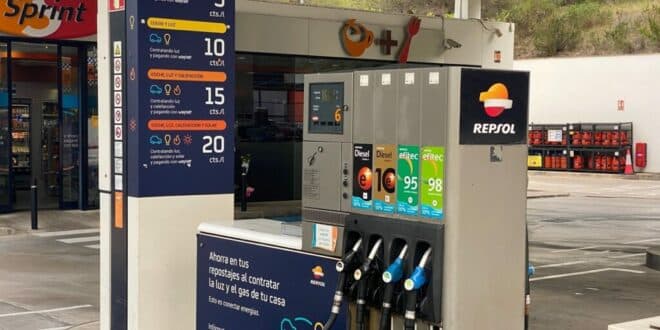
Spain may end temporary VAT discounts on fuels and electricity in July, which could increase costs for motorists and householders.
Credit: Tetyana_Pidkaluyk / Shutterstock
The temporary VAT reductions for electricity, gas and petrol are set to expire on June 30, so drivers and households in Spain may soon face higher fuel and energy costs.
The tax cuts were introduced originally as part of Spain’s anti-crisis measure linked to rising prices. energy prices Instability on the international scene. The government has reportedly decided to end these reductions due to the increasing pressure to increase revenues and move towards cleaner energy policies.
As summer begins to increase, consumers will notice the difference at petrol pumps and household utility bills.
This move follows wider recommendations made by the European Commission. They have encouraged all member states in Europe to replace broad tax incentives linked to fossil-fuels with targeted ones.
Why Spain could end VAT reductions on fuel and electricity
The temporary VAT reductions initially aimed to reduce the impact of rising energy costs after conflicts abroad pushed prices sharply higher in Europe.
The governments of the EU were rushing to protect their citizens from the rapidly rising costs for electricity, fuel and heating.
Spain was one of several countries to introduce emergency tax reductions, and other support measures.
But now, the discussion has changed.
Experts in taxation and government officials argue more often that the vast majority of VAT reductions are aimed at households with higher energy usage, rather than those struggling with rising costs.
Gestha is the association of technicians in Spain’s Finance Ministry. They believe that these reductions are “regressive”.
Their argumentation is quite straightforward.
The higher income households tend to have larger homes, consume a greater amount of electricity, and use more heating, air conditioning, or both. They also drive more cars. This means that they will benefit from tax cuts for all.
The European authorities are also not happy with the blanket reduction in VAT on fossil fuels.
Brussels instead has pushed governments to focus on more targeted support measures that are aimed at households with lower incomes, public transport, and cleaner energy systems.
The broader approach is increasingly visible throughout Europe, where governments are trying to balance the rising costs of living with climate goals while also balancing pressures on public finances and increasing living expenses.
What will be more expensive starting July?
Consumers could see increases in a number of everyday expenses if the reductions do not disappear as anticipated on June 30.
The cost of electricity may increase again, depending on the market price and the rate of VAT. Gas costs may also rise, especially if households are still heavily dependent on gas for heating or cooking. Petrol and diesel prices could increase in petrol stations once the reduced VAT is no longer applicable.
Fuel prices will not necessarily increase dramatically overnight because they are heavily influenced by international oil markets, as well as refining costs. Removing temporary tax breaks would increase prices, but at a moment when households are already monitoring their spending.
Although the final decision has not been made by the government, tax experts from Gestha think that it will be after the current anti-crisis package expires.
This move is also in line with European Commission recommendations, which have repeatedly stated that the long term goal of energy policy should be to reduce dependency on fossil fuels and less on subsidising their consumption.
The EU wants cleaner energy sources and less dependence on cars
The European Institutions are directing countries to adopt policies that reduce fossil fuel consumption rather than lower taxes.
Included in this is support for electric cars, public transport, energy-efficient homes and renewable energy systems.
The European Commission also supported temporary incentives to reduce the use of private cars, such as cheaper public transportation and support for electric-mobility infrastructure.
Spain has already expanded subsidies for electric vehicles and charging points as well as energy efficient home renovations.
Nevertheless, certain targeted measures of support will remain in place to help sectors that are heavily affected by the cost of fuel.
Gestha supports aid measures for transportation companies, farmers and fishermen, as well as other industries that are directly affected by the rising price of energy.
The association believes that tax cuts should be targeted to lower and middle income households, rather than being applied universally.
The support of social bonuses for electricity and butane, the price limit on propane and butane as well as incentives to use solar energy are all still considered positive.
But for most households, the immediate concern is far simpler. The public wants to know if their bills will be increasing again. If the government does not extend the current discounts beyond June, this possibility will become more likely in the second half.