Costa News Spain Breaking News | English News in Spain.

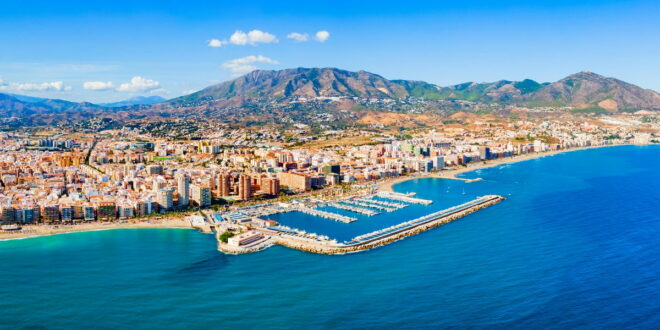
On Friday morning, the earth moved as a magnitude 4.9 earthquake shook the Costa del Sol in Southern Spain. The epicentre was located just off of the coast of Fuengirola in Malaga.
The event took place at 10.38am local at a recorded depth between 77-79 kilometres. Although the initial report rated the magnitude as 4.2, an official confirmation from the Instituto Geográfico Nacional (IGN) Set it to 4.9. Authorities confirmed that despite the strong magnitude, there was no immediate report of serious damage or injuries. Just a lot nervous residents.
Immediate Impact and Emergency Response
Initial intensity of the earthquake, meaning that it was a mild tremor felt mostly by those inside. This caused some minor oscillations in objects hanging from ceilings. The unexpected shaking prompted emergency services to respond quickly.
Andalucia’s emergency number, 112, managed over 40 calls Malaga, Seville and Cordoba are three provinces that reported the earthquake. In Malaga the tremors could be felt in coastal areas such as Benalmadena Torremolinos Marbella as well as the capital. They were also felt in inland areas, like Ronda or Antequera. Eyewitnesses said they heard a “strong, rattling sound” that lasted between two and five second.
This is typical of the constant seismic activity that occurs in the region. A few days prior, the IGN had recorded a smaller, 3.2-magnitude earthquake off the coast. Estepona The 1st of December is a holiday.
Official tsunami risk associated with the Alboran Fault
Malaga lies adjacent to the seismically-active Alboran Sea. This is defined by the complex Alboran Fault. This system is the boundary between African and Eurasian plates. It can cause both large earthquakes and tsunamis.
Spain’s State Civil Protection Plan on Tsunamis acknowledges the possibility of a tsunami along the Malaga Coast.the Plan Estatal de Protección Civil ante el Riesgo de MaremotosThis document was approved by the central Government in 2021. This document names Malaga among the areas which could be severely affected by a major earthquake offshore.
A tsunami generated by a Southern Alboran fault could cause sea levels to rise more than five metres and reach the Malaga coastline in about 20 minutes. This risk profile is supported by studies, including a 2021 finding from the Consejo Superior de Investigaciones Científicas (CSIC) which concluded that strike-slip faults like the Averroes fault in the Alborán Sea have a greater tsunami-generating potential than previously assumed.
History of the major Malaga earthquakes
The 4.9 magnitude tremor has been the strongest Malaga, a province in southern Spain, has seen several devastating earthquakes over the years. The Andalusian Institute of Seismic Hazard Prevention has compiled data.
- 1494: A magnitude 6.5 estimated earthquake with its epicenter in Malaga.
- 1680: An earthquake of magnitude 6.2, epicentred also in the city. This quake tragically killed around 100 people, and damaged the infrastructure in a wide range. However, the Cathedral was remarkably intact.
- 1884: Known in Southern Spain as the Granada earthquake, it was one of Southern Spain’s most destructive tremors, causing devastation to the eastern part Malaga Province.
Aftershocks & Repeat Quakes
Official earthquake reports safety recommendations published by Spain’s Instituto Geográfico Nacional (IGN) and the Spanish Civil Protection authorities (Dirección General de Protección Civil y Emergencias), which the IGN always references and promotes:
BEFORE An earthquake
- Find safe places in each room.
- Fix heavy furniture, appliances and water heaters to the wall.
- Learn where and how you can turn off your electricity, gas or water.
- Prepare an emergency kit with water, food, medicine, radio, flashlights and whistles.).
- If you are separated, decide on a place to meet.
DURING an earthquake (the famous “Crouch – Cover – Hold On” triangle)
You are inside:
- Drop the floor.
- Cover: Get under a desk or table (protecting your neck and head).
- Hold on until you feel the shaking stop.
- If there is no table nearby → crouch next to an interior wall, protect your head with your arms.
When you are outdoors,
- Avoid trees, powerlines, buildings and streetlights.
- Drop to the floor and protect your head.
- If you’re driving:Slow down, and stop in an open area that is safe (away form bridges, overpasses and buildings).
- Continue to drive until the shaking stops.
After the earthquake
- Check for injuries in yourself and others.
- Aftershocks are possible (and they can be powerful).
- Do NOT use elevators.
- If you smell gas or see fallen power lines → evacuate and alert emergency services (dial 112 in Spain).
- Only call 911 in an emergency.
- Updates can be found by listening to radio or official sources such as IGN, Civil Protection (112) and the IGN website.
Sources official IGN/Civil Protection (in Spanish and English) www.ign.es