Costa News Spain Breaking News | English News in Spain.

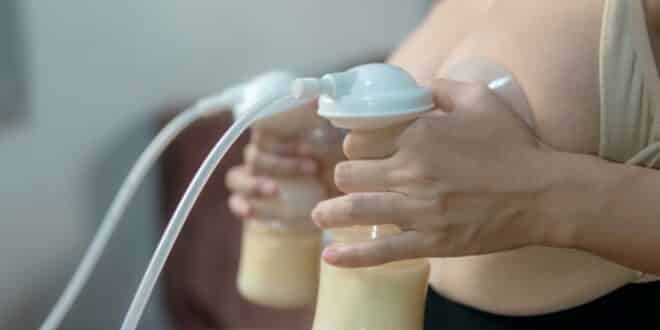
Double breast pump. Credit: releon8211, Shutterstock.
World Breast Pumping Day Every year, on the 27th of January, we celebrate this day. It was created to recognise breast pumping as an essential – and often invisible – part of breastfeeding. The day was created to normalise the expression of milk, especially for parents returning from work, as well as to acknowledge that physical, emotional and time-intensive labor is involved.
Breastfeeding should be a priority for public health
The World Health Organization WHO says that breastfeeding is a great way to protect the health of a child and ensure their survival. It recommends breastfeeding exclusively for the first six-months of life. Then, it continues breastfeeding with complementary foods up to or beyond two years. WHO data links breastfeeding with lower rates of infection in infants, and reduced risk of breast and ovarian carcinoma for mothers.
According to UNICEFThe labour involved in breastfeeding more than 700,000,000 children around the world is not recognised. UNICEF states that breastfeeding directly contributes to better national health outcomes, and lower healthcare costs. However, it is not included in standard economic measures such as GDP.
Breastfeeding work that is not paid
Julie P Smith is Professor of Economics at Australian National University. Her research shows that breastfeeding constitutes a significant form of unpaid labor that is systematically ignored in national economic accounts. In her peer reviewed paper ‘Lost milk? Counting the economic value of breast milk in gross domestic product’Smith, in the Journal of Human Lactation shows that, when breast milk is valued by standard replacement cost methods, it rivals major agricultural commodities. Her analysis concludes that in high-income countries, the annual economic value of breastfeeding per child runs into several thousands of euros, once the time, skill involved and associated healthcare savings are accounted for – highlighting a major blind spot in how economies measure productive work.
Breast milk donation can save lives
The European Milk Bank Association has endorsed the fact that human milk banks report that breast milk donated to premature or medically vulnerable babies is crucial. The association cites clinical evidence that shows donor milk reduces the risk for necrotising enterocolitis in preterm infants, which is a potentially life-threatening intestinal disorder.
One of the most documented cases of milk donation involves Elisabeth Anderson-Sierra, an American mother diagnosed with hyperlactation syndrome – oversupply. According to Guinness World Records, she donated 1,599.68 litres (56,301.20 UK fl oz) to a milk bank between February 20, 2015, and June 20, 2018 – equivalent to 2,253 Venti lattes at Starbucks.
Lactation specialists point out that, while an oversupply of milk can lead to medical complications and pain, a controlled donation can turn a personal struggle into lifesaving help.
After returning to work, pumping allows breastfeeding
The International Labour Organization (ILO) states that workplace support is crucial to continue breastfeeding after maternity leaves. ILO Maternity Protection Convention No. According to ILO Convention No.
Spanish laws on breastfeeding and pumping in the workplace
In Spain, breastfeeding or pumping is not a discretionary benefit but a protected right. According to Spain’s Ministry of Labour Article 37.4 of Workers’ Statute provides employed parents with one hour of paid breastfeeding leave every working day, until a child reaches age nine months.
This hour may be taken as a single break, split into two 30-minute breaks, or – if collective agreements allow – accumulated into full paid days off. The law is clear that it covers both breastfeeding and the expression of milk.
Lactation Leave
The Government of Spain has confirmed that breastfeeding leave is available (permiso de lactancia) It is a right that can be exercised by either parent and not just the mother.
The Spanish Labour Inspectorate has issued guidelines that clearly state employers cannot penalise employees for taking lactation leaves, nor can they restrict promotions or reduce wages. Spanish courts have ruled the denial of pumping breaks to be sex-based.
To all those breastfeeding around the world – well done and thank you!
View all Health and Beauty News.