Costa News Spain Breaking News | English News in Spain.

SPAIN’S crippling housing crisis is not a market failure but a deliberate ‘political choice’ designed to protect the wealth of property owners, a leading sociologist has warned.
Javier Gil, a top researcher at the Spanish National Research Council (CSIC), claims the country has entered a devastating new era of ‘rentier capitalism’ that is quietly fracturing society.
In his controversial new book, Generacion inquilina (Generation Rent), the academic argues that housing no longer functions primarily as a place to live, but as a financial asset used to extract wealth from the working class to enrich property owners and investment funds.
READ MORE: Spain’s property market continues to heat up: The eight provinces where home sales now exceed bubble-era highs

“The rentier economy doesn’t produce, it redistributes already created wealth upwards,” Gil explained in an interview with national daily El Pais this week.
It is a reality biting hard across Spain’s expat hotspots. On the Costa del Sol, the Costa Blanca and the Balearics, a deep economic divide is rapidly emerging within the community.
The older generations who bought villas two decades ago are sitting on unprecedented equity.
Meanwhile, the new wave of younger residents are being structurally priced out, routinely facing rents of over €1,500 a month for basic apartments in coastal hubs like Malaga and Palma.

CREDIT: Samantha Mythen
Gil points out the grim mathematics facing the younger generation: Historically, a Spanish home cost three years of an average worker’s salary.
Today, a young worker needs up to 14 years of their full wages to buy, a figure that climbs to over 20 years in highly competitive markets.
But rather than fix this, Gil claims the Spanish political class actively works to maintain the bubble.
Favourable regulations for investment funds, a historic failure to cap tourist flats, and a long-standing reliance on foreign wealth plugged financial gaps, but governments are now terrified of enacting any policy that might cause property values to drop.
This dates back to the aftermath of the 2008 financial crash.
Desperate to rescue bankrupt banks and clear a massive surplus of empty, repossessed homes, the government rolled out the red carpet for foreign capital.

They created ‘Golden Visas’ to lure wealthy expats, offered massive tax breaks to investment funds to buy up housing blocks, and turned a blind eye to the explosive, unregulated growth of tourist flats to boost the economy.
The panic measures worked, artificially inflating the market back to life – but created a new trap.
Today, if the government successfully lowered house prices to help young renters, it would wipe out the primary source of wealth for the 75% of the voting public who own their own homes.
It would also devastate the budgets of coastal town halls, which rely heavily on property taxes and lucrative construction licenses to fund local services.
Because of this, Gil argues, the political class is forced to actively maintain the bubble.
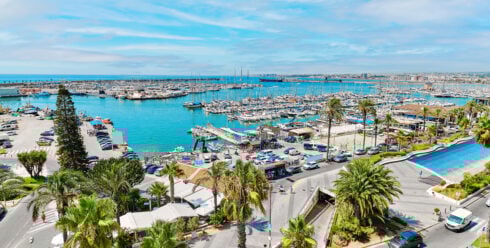
This choice is most starkly visible on the coast.
Town halls frequently lament the lack of affordable housing for local workers, yet simultaneously continue to fast-track luxury mega-developments and woo international investors, knowing their municipal budgets rely heavily on the high-end property boom.
Gil warns that deliberately sacrificing a generation of renters to protect asset owners will have profound and dangerous consequences, fuelling mass frustration and pushing disenfranchised youth towards political extremes.
“All bubbles eventually burst,” Gil warned. “This one is sustained by political intervention… but the social cost is enormous.”
Click here to read more Property News from The Olive Press.