Costa News Spain Breaking News | English News in Spain.

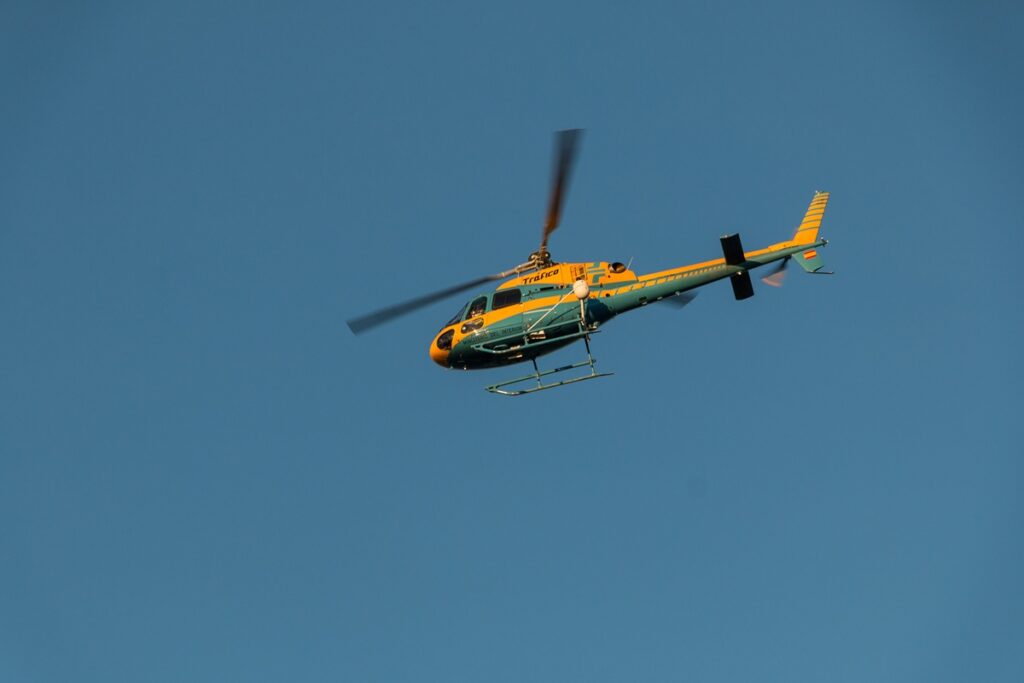
DGT’s Pegasus helicopters return to Spanish skies for speeding driver monitoring
Credit : Gustavo MS_Photography, Shutterstock
After a few quiet weeks on Spain’s roads, the DGT’s Pegasus helicopters are getting ready to take to the skies again — and with them, the return of fines for speeding, mobile phone use, and reckless driving.
Many were surprised by the break. Since September 1, aircraft owned by the General Directorate of Traffic of Spain (DGT), had been grounded due to an expired maintenance and operation contract. It was a welcome break for some drivers. The DGT knew it was just a question of time until their most sophisticated traffic surveillance system went back into operation.
Pegasus back on duty – and ready to fine
Now, it’s official. DGT has now signed a contract with Eliance. A Spanish aviation company that specialises in emergency missions such as rescue missions, firefighting and medical transportation. Under this contract – valued at just over €51 million – Eliance will handle the operation, maintenance, and review of the DGT’s helicopter fleet for the next 38 months.
The Pegasus helicopters are soon to return to patrolling the skies of Spain. Sources indicate that their return will be imminent, even though there is no date confirmed yet. Nine of DGT’s eleven helicopters were out of service due to the delay in the contract, which left large areas of the country without aerial surveillance.
The DGT insists these aircraft are essential tools for improving road safety and preventing serious accidents – especially on secondary roads and rural routes, where many fatal crashes occur.
How does the Pegasus system work?
Two crew members operate each DGT helicopter: a pilot, and a camera/radar specialist. The aircraft is equipped with high-resolution radar and cameras that can track and record vehicles from hundreds of meters above the ground.
The system calculates speed automatically, logs a vehicle’s location, and captures a clear picture of the incident. These details are sent in real-time to the DGT control centre, where officers decide whether or not to stop the vehicle.
All data collected during the landing of the helicopter is verified and entered into the official sanctioning procedure.
The list of offences Pegasus can spot from above is long – and familiar to Spanish drivers. Speeding, talking on a cell phone, not wearing your seatbelt while driving, illegal overtaking and tailgating are the main offences that Pegasus can spot from above. The system can detect signs of reckless driving or dangerous distractions that are invisible to ground patrols.
Road safety: A controversial tool that is crucial
The return of Pegasus is not a popular program. On social media, some drivers expressed frustration that the DGT relies on fines rather than focusing on infrastructure or prevention.
Road safety experts still say that aerial patrols do make a difference. The DGT claims that the Pegasus fleet reduces accidents, discourages reckless driving and promotes safer driving habits.
In fact, officials say the helicopters serve not just as an enforcement tool but also as a visual reminder to motorists that they’re being watched – a deterrent that often makes drivers think twice before breaking the rules.
The watchful eye of the sky
DGT operates 11 Pegasus Helicopters across the country. Each helicopter is capable of covering large areas within a short time. They’ll once again be a common sight above highways and rural routes alike – especially during weekends, holidays, and long-distance travel peaks.
While many drivers have probably enjoyed the break from aerial monitoring it is time to remind ourselves of the golden rule. Keep your speed low, don’t use your phone and respect distance. The DGT’s eyes in the sky are returning – and they’re sharper than ever.