Costa News Spain Breaking News | English News in Spain.

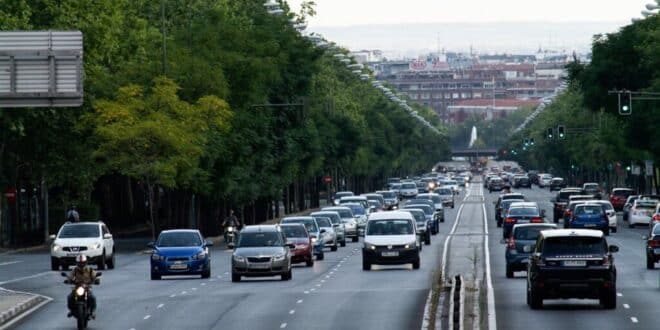
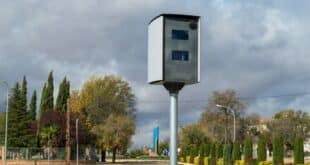
The new “occupation radars”, which will be used to monitor traffic, are expected to ease congestion on Madrid’s A-2 autobahn.
Credit : VVargas, Shutterstock
You might want to reconsider driving alone in Spain if you do it often. The DGT (Dirección General de Tráfico) has just confirmed what many suspected – Spain’s first ‘occupancy detection radars’ are coming, and they’ll start issuing fines to cars with only one person inside.
The first of these cameras will appear on the A-2 motorway, the main route between Madrid and Alcalá de Henares, when a new Bus-VAO (high-occupancy) lane opens in early 2026. Starting in early 2026, any driver caught driving alone on the designated lane would be fined.
The Spanish government is pushing for more people to share rides
The DGT’s latest move is part of a bigger plan to tackle one of Spain’s biggest traffic problems – too many cars with just one person inside. Official statistics show that 85% of the vehicles in major Spanish cities during rush hours are driven solely by their driver.
Pere Navarra, traffic director, has been warning this for several months. He said that if we could get two people into every car we would have half as many cars, half as much fuel, and half as many emissions. “Our infrastructure wasn’t designed for 50 million people – it’s starting to show its limits.”
Navarro’s message is clear: Spain’s roads are overcrowded and sharing is not an option.
This philosophy has now become a real policy. This new A-2 high occupancy lane will be monitored by combining license plate scanners and occupancy cameras. Unlike the old VAO lanes, there won’t be traffic officers checking manually – technology will do all the work.
The actual workings of the system
Unlike traditional separate lanes, this new A-2 VAO lane will be dynamic — the left-hand lane will become a high-occupancy lane during rush hour, and revert to normal traffic the rest of the time. This lane will be for vehicles with at least two passengers, public transportation, motorbikes, and emergency services.
Interestingly, even zero-emission vehicles (with Spain’s blue environmental label) won’t be exempt — they’ll also be barred from using the VAO lane unless there are at least two people inside.
The DGT says the lane will be clearly marked using LED road markers, new lane signs, and dynamic panels, with a total investment of €3.9 million. According to early visuals, it may even be painted a distinct colour – red – to make it instantly recognisable.
The DGT has not revealed the exact technology, but it is likely to be a thermal imaging camera, similar to the ones that are currently operating on the A-83 between Nantes and Bordeaux in France. These devices measure the heat signature inside the car to count how many people are on board — and yes, they can even detect through tinted windows.
So, if you’re tempted to sneak into the lane alone – don’t. The radar will catch you.
What’s next for Spanish drivers
DGT has stated that this is only the beginning. The same radars for occupancy control could be installed on other major roads in Spain once the Madrid trial is successful. The agency describes it as a “flexible and low-cost solution”, which can be easily adapted to different types roads.
The government is also preparing a Royal Decree which could allow city councils restrict access to the Low Emission Zones. This would be based on the vehicle’s environmental labels, but also the number of people inside.
In short — your car’s occupancy could soon decide where you can and can’t drive.
The DGT even created an official sign to mark these lanes with high occupancy, the S51b. The blue square sign features a car with occupants in it and the symbol (2+), which clearly indicates who is allowed to use this lane.