Costa News Spain Breaking News | English News in Spain.

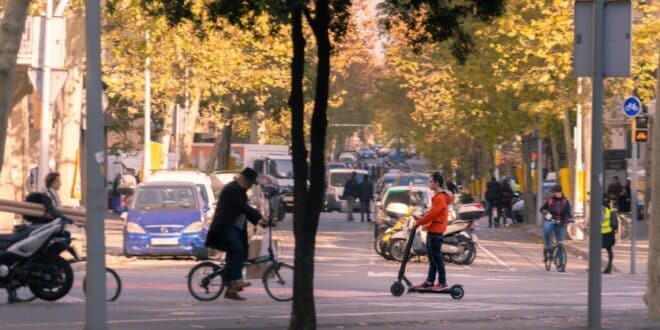
From 2026, Spain will fine uninsured e-scooter riders up to €1,000.
Credit : Ivan Marc, Shutterstock
Electric scooters have taken over Spain’s city streets in recent years – zipping past traffic jams, cutting commuting costs and becoming the go-to ride for urban mobility. The freedom of two wheels will soon be put to the test.
On January 2, 2026 new traffic laws will be in force. If you fail to follow them, you could pay a high price. The General Directorate of Traffic has confirmed that the electric scooters would soon be recognized as light personal vehicles. They will then fall under the same umbrella of safety and insurance as motorbikes, cars, and other similar vehicles.
This comes in response to a rise in scooter accidents and frustration with the lack of rules. The government says the goal is simple – to make the roads safer and ensure victims of accidents are properly protected.
Insurance is now mandatory
Until now, riding an e-scooter in Spain has been almost consequence-free – no licence, no insurance, and in many cases, no accountability. It’s all about to be changed.
Owners of electric scooters must insure themselves against civil liability, starting 2026. This will cover any damage or injury caused to other people. This is a first in Spain, and it brings electric scooters into line with other modes of transportation.
According to early estimates, the annual cost of this new insurance will range from €20 to €100, depending on the level of coverage. Those caught riding without it could be fined up to €1,000.
If an accident involves an uninsured scooter, the Insurance Compensation Consortium – a public body – will step in to compensate victims. The scooter owner must reimburse the entire amount if the accident occurs on an uninsured scooter.
DGT insists that the reform doesn’t aim to penalise riders, but rather introduce responsibility. The agency explained that it was about “protecting everyone on the roads”.
All scooters are not affected
It doesn’t affect every eScooter. Only those e-scooters that meet specific technical requirements need insurance.
Scooters that are eligible for the new rule must:
- A motorised vehicle that has one or more wheels
- You can achieve speeds of 6 to 25 km/h with a vehicle that weighs less than 20 kg
- Or between 6 to 14 km/h for heavier loads
And there’s more – the scooter must also have a circulation certificate, be registered in the DGT’s official vehicle database, and display a visible identification plate.
The goal is to make every vehicle traceable in the event of an accident – something nearly impossible under the current system.
There are still other safety rules that apply
In addition to the new insurance rules, riders must still follow safety measures that are already in place: wearing a protective helmet, wearing reflective clothing while riding at night and only having one scooter per rider.
The updates are the result of years of complaints by pedestrians and motorists who claim that scooters have turned into a danger rather than an convenience. The authorities hope that by establishing clearer rules the roads of Spain will become safer and orderlier.
Not everyone is happy about the new requirements. Some users and rental companies argue that the new requirements could discourage people from using scooters altogether – especially in big cities like Madrid, Barcelona or Valencia, where they’ve become an everyday part of urban life.
Road safety experts still believe that it is a necessary move. Spain’s decision to tighten controls is seen as part of the wider European trend of regulating micromobility to prevent it from spiraling out of control.
From 2026 onwards, one thing is clear: the era of unregulated, carefree scooting in Spain is coming to an end — and ignoring the rules could cost you a lot more than just your balance.