Costa News Spain Breaking News | English News in Spain.

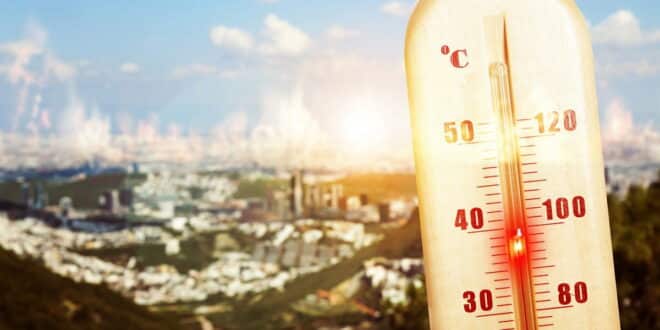
Forecasters predict that Spain may experience a summer hotter than usual, with more extreme heat and storms.
Credit : New Africa, Shutterstock
A lot of people across Spain have already started saying the same thing lately : ‘We’re still in May… so how is it already this hot?’
Forecasters say summer 2026 may be more challenging than expected. After weeks of unseasonably high temperatures, packed patios, and heavy afternoons which feel like they belong in July, not spring, many forecasters are now predicting that the heat will continue to increase.
The most recent outlook presented by Meteored Samuel Biener is a climatologist. Spain is likely heading towards a warmer than normal Temperatures in many parts of the country could end up being between 1.5 and 3° above average.
And while the heat itself is already making people nervous, meteorologists are also watching another problem developing quietly in the background : Storms.
The long periods of rain that some people wish for during hot temperatures are not to be expected.
Forecasters say that some parts of Spain may experience an unstable summer. They predict more violent downpours, sudden storms and hail in certain regions.
After the bizarre weather changes that Spain has experienced in the spring, it is not surprising to hear the forecast. For many, summer has already arrived way too early.
Forecasters believe this summer will be particularly exhausting
Meteored’s latest seasonal models continue to point towards a persistent warm climate in large parts of the nation during the next few months.
Central Spain seems to be particularly exposed. Areas including Madrid, Castilla La Mancha, Castilla y León and Extremadura could see some of the strongest temperature anomalies compared with what would normally be expected during summer.
People living in these areas know exactly what this means in practice:
- It’s a very hot night.
- The heavy air that fills apartments after sunset.
- Even at midnight, cities are still unable to cool down.
It is at this point that summer can become physically exhausting, rather than just pleasant.
Particularly during long heat episodes. Meteorologists remain cautious about predicting specific heatwaves too far in the future, as seasonal forecasting will always be uncertain. Samuel Biener, however, admits the trend of increasing extreme heat in Spain over recent years.
Most residents can tell the difference without scientific charts.
Air conditioning is on earlier, fans are out sooner, and the afternoons are harder to bear than before.
People in some southern cities are already changing their routines even before the month of June begins. They avoid the streets at the height of the heat because the temperatures feel much higher than they would expect for this time.
This summer, storms will be a major problem.
The fact that the forecast does not focus solely on heat makes it more complex. In the next few months, several regions may also see more storm activity.
Meteored has projected that conditions in the Pyrenees mountains, Mediterranean area of Spain, southern Iberian Mountain areas, and even on the Canary Islands, may become more volatile over the summer.
It is impossible to predict storms six months in advance.
It is difficult for meteorologists, especially over long time periods, to accurately predict rainfall because the storm system depends on a number of rapidly changing atmospheric variables.
Forecasters still say that the current instability signal is becoming more noticeable in certain areas.
Many people in Spain feel that summer storms are different this year.
Often, they arrive more quickly and violently.
In less than an hour, a sunny afternoon can turn into a violent storm with hail, wind and flooding streets.
This pattern has appeared more than once this spring. Particularly after days of trapped warmth buildup.
Heat builds up quietly behind the scenes until it suddenly explodes.
The sky is lit up by lightning, rain drops pelt the ground and violent winds arrive without warning.
There are also short, intense storms which can cause chaos in streets within minutes. They then disappear almost as fast as they appeared.
Meteorologists think similar situations may repeat themselves this summer if conditions continue to develop as models suggest.
There are many people in Spain who have already begun to dread another summer of hardship
Headlines about hot weather in Spain are usually attractive to tourists. Many residents are now feeling the effects of a more complicated reality. Extremely hot summers are no longer synonymous with beach weather.
These problems are becoming increasingly exhausting. Air conditioning running almost constantly increases electricity bills. Tropical nights can make it hard to sleep.
Older buildings trap heat for days. Outdoor workers suffer during the afternoon hours, and drought concerns return quickly every time rain stops for long periods.
Seasonal forecasts are now much more popular than before. People are genuinely curious about the summer that may be on its way. After several years of heat records in Spain being broken earlier and earlier, people are curious about what the summer will bring.
Experts say Spain’s summer temperatures cannot simply be explained by El Niño alone
Meteored says that European weather patterns are heavily dependent upon other atmospheric factors as well, including the behaviour polar jetstream.
Regardless of the technical explanation, it is clear that the feelings many Spaniards have are becoming more similar each year.
Many people in Spain have the same feelings every year.
The summer seems to arrive earlier than usual, the heat lasts longer and storms are more intense than before. In many places, the nights are no longer cooled down as they used to be.
Forecasters still emphasize that long-range models may evolve in the weeks to come. Many residents in Spain are worried about the heatwave that has hit Spain before June even began.
People are beginning to wonder how the middle of summer will look if it already feels this way in late May.