Costa News Spain Breaking News | English News in Spain.

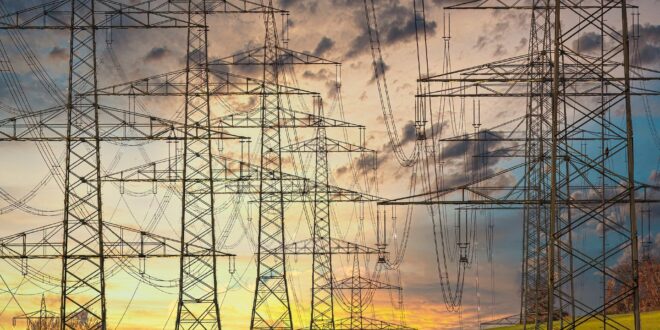
SPAIN’S energy regulator has sounded the alarm over the state of the country’s energy grid – almost six months after the country was plunged into a nationwide blackout for hours.
The National Commission for Markets and Competition (CNMC) has warned of ‘dangerous swings’ in the network, warning the country has just five days to put emergency measures in place or risk a repeat of the blackout scare that swept the country earlier this year.
The regulator rushed to issue a temporary rule change this week after grid operator Red Electrica Reports of voltage spikes that can destabilize the entire peninsular grid.
READ MORE Spain now boasts among the cheapest energy in Europe – and its thanks to renewables (which were NOT to blame for the blackout), new report claims
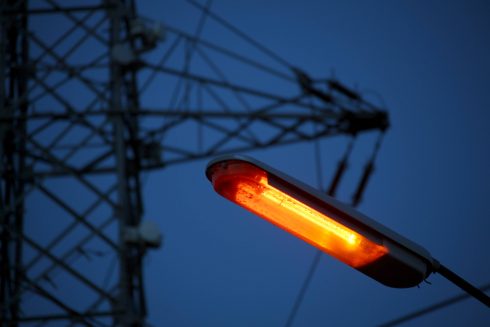
The deadline for consultation has been set at 15 October, due to the immediate threat that the supply security faces.
The approved measures are immediately effective for 30 days. They can be prolonged by up to 15 days if problems persist.
Last spring, millions of people were left in fear due to sudden fluctuations in power stability.
Officials now admit the grid is again at risk in early autumn, with solar surges and rooftop ‘self-consumption’ schemes creating abrupt shifts in demand.
READ MORE EXPLAINER: What is ‘inertia’, how did renewable energy sources contribute to Spain’s nationwide blackout – and how did they get the power back?
‘Self-consumption’ in Spain refers to electricity that people or companies generate for their own use – for example, solar panels on a house, a block of flats, or a factory roof.
They produce all or part of the power they require themselves, instead of drawing it from the grid.
These small rooftop solar systems can reduce demand for electricity on the main grid at a time when there is a lot of sunlight.
When clouds roll in, or if consumption patterns change the grid will see sudden spikes up and down. This creates unstable voltage.
READ MORE Spain is given ultimatum by the EU for failing to ‘fully implement’ its renewable energy directive
The regulator warns that even though voltages have remained within formal limits, the sudden jolts could trip generation units or force demand disconnections – potentially cascading into wider instability.
The CNMC’s resolution reveals that technical fixes are being rushed: changes to daily deadlines for scheduling, tighter management reserves, forced ramping to prevent step-jumping in power flows and stricter voltage controls on generators.
In order to maintain stable reserves, we will call up backup thermal plants at short-notice.
Javier Blas, co-author of The World for Sale, said the emergency was entirely predictable, warning: “Spanish grid asks for urgent measures – to be implemented in 5 days – to stabilise the electricity network as voltage swings again sharply, with the situation similar in early autumn to spring during the blackout.
READ MORE Spain and Portugal’s April electricity blackout due to excessive voltage
“The Spanish grid operator and the government have been procrastinating for months about the country’s electrical problems. Everyone else was to blame but them.
“Now, urgent measures are needed in 5 days – or else. Someone must take responsibility.
The problem lies in Spain’s rapid shift to renewables.
Solar panels on rooftops are now used by thousands of homes, businesses and factories to generate their own power.
This has reduced the reliance on fossil-fuels but also made grids less predictable.
When solar production is high, demand on the main grid plunges – but when clouds roll in, demand spikes back, leaving the system scrambling to keep up.
READ MORE: Gibraltar blackout: Contractors working on new £1.8bn data centre blamed; power to return from 7pm
The CNMC acknowledges that the emergency fixes may increase costs and reduce competition on the market, but argues that they cannot be avoided until more structural reforms have been implemented.
Red Electrica is required to provide daily updates to the regulator regarding the implementation and impacts of the new changes.
The official Spanish state bulletin will publish this resolution in the coming weeks.
Analysts say that while opponents continue to blame solar and wind for the fragility of Spain’s grid, it is actually the fault of the grid.
READ MORE Spain could suffer from further blackouts this summer as original causes ‘unresolved’
The system is not being strengthened at the same rate.
The blackout last April – and this week’s emergency appeal from the regulator – both highlight the same issue: without urgent investment in batteries, interconnections and stabilising technologies, Spain’s green energy boom will remain vulnerable to sudden shocks.
For now, Spaniards are being reassured that the lights will stay on – but the scramble to shore up the grid has exposed the fragility behind the country’s celebrated green energy boom.
Read more Green News at The Olive Press by clicking here.