Costa News Spain Breaking News | English News in Spain.

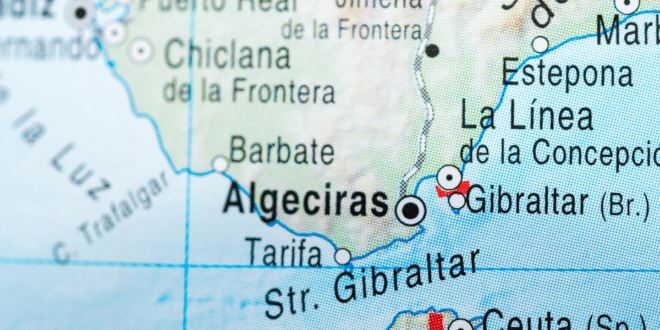
Firstly, there was opposition at the local level. Authorities in Cádiz and Málaga resisted losing territory and influence. Photo credit Tudoran Andrei/Shutterstock
In 1969, in the last years of Francisco Franco’s regime, Spanish officials considered creating a province that would have united towns surrounding the Campo de Gibraltar area. Though the proposal did not come to fruition it remains an important episode in Spanish administration history. It reflects regional identities, concerns about governance and economics.
This plan was entirely separate from Gibraltar itself The sovereignty of the territory was not affected. Gibraltar, as it currently is, remains a British Overseas Territory. The proposal, however, focused only on the internal administrations of Spanish municipalities.
What was the proposal?
The “ninth province” idea aimed to combine municipalities from both Cádiz and Málaga provinces into a single new province. Key towns included Algeciras, La Línea de la Concepción, San Roque, Castellar de la Frontera, Los Barrios, and inland towns such as Ronda and Estepona. The goal was to establish a geographically cohesive province that would connect coastal and inland communities and improve administrative coordination and regional representativeness.
Municipal leaders from towns including Castellar, La Línea, San Roque, Tarifa, Jimena de la Frontera, and Los Barrios reportedly met in early 1969 to discuss the idea, showing local interest in the proposal.
Motivations for the plan
A number of factors influenced the proposal. The first factor was administrative efficiency. The Campo de Gibraltar had long felt overlooked by the provincial capitals of Cádiz and Málaga. The creation of a new region was seen as an opportunity to improve local governance, increase representation and better serve the communities.
Second, the economic development of the region played a part. In the 1960s, the region’s economy faced many challenges, especially around the Strait of Gibraltar. A province would help to focus investments on infrastructure, social services and industry.
The plan had a third significance. The province was sometimes mentioned in connection with Gibraltar because of the cultural and economic ties to Gibraltar. The naming, though, was only symbolic and did not affect sovereignty.
Proposed structure, population and
The new province, if implemented, would have likely included more than 40 municipalities, with an estimated population of around 300,000, similar to other Spanish provinces. The debate over the capital of the province was still ongoing. Algeciras, and a new administrative centre that would combine several towns were among the options.
Included were both coastal and interior municipalities, reflecting the desire to create a province of economic and administrative cohesion. This unusual combination of towns and landscapes, from the coast up to the interior of Spain, required careful planning.
Why the plan never got implemented
For several reasons, despite initial discussion and draft, the proposal didn’t progress.
First, there was the provincial opposition. Authorities in Cádiz and Málaga resisted losing territory and influence. The redistribution posed a threat to existing administrative structures, as well as the balance between political power and provinces.
Second, the central government resisted. The ministries debated the risks and benefits, but internal disagreements as well as bureaucratic delays prevented any decision. Officials were unable to agree whether the administrative benefits and economic disruptions of creating a province outweighed them.
Third, there wasn’t a consensus on the governance. The plan was incomplete and political unstable because officials couldn’t agree on administrative structures or the capital city of the province. The proposal was not approved because it lacked coordination due to a lack of agreement on leadership, jurisdiction and authority.
The Council of Ministers did not approve the new province and it was quietly dropped from consideration. In the 1990s, the idea of a “ninth Province” was briefly discussed in civic debate. However, no legislation or administrative changes were implemented.
Legacy of the proposal
Plan for a “ninth Province” in 1969 is now regarded as a footnote. This plan shows how local identity and concerns about administrative organisation and economics shaped Spanish political life under Franco. This did not change Gibraltar’s sovereignty nor did it result in the territory becoming a part of Spain. This was an administrative initiative within Spain aimed to improve coordination, representation and growth in the south.
Understanding this episode can help explain the unique administrative histories of Gibraltar Campo and provide context for current discussions about regional governance. Even today, discussions about regional representation, infrastructure and local development reflect the challenges that were faced during this time. This proposal highlights also the interaction between central government decisions and local ambition, which is still relevant in Spain’s political landscape.
The 1969 proposal, although it was never implemented, is a great example of how geography can be combined with economics and politics in regional planning. This proposal serves as a good reminder of the complex history behind the current province boundaries in southern Spain.