Costa News Spain Breaking News | English News in Spain.

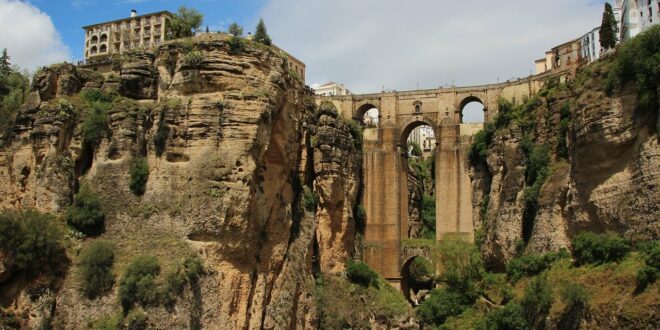
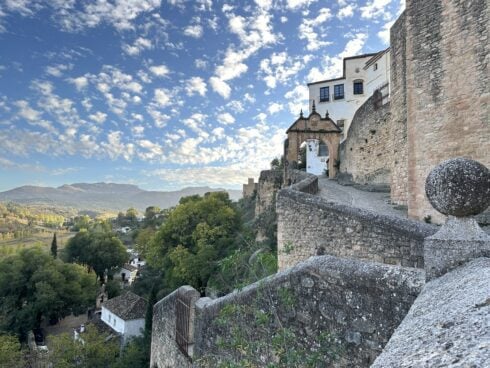
RONDA does not appear, it confronts the viewer. This captivating city rises like a pearl from the Andalucian landscape as the road curves.
You know you are arriving somewhere special and this is confirmed when you begin to understand its geography: a hilltown named by the Romans as Arunda, meaning literally ‘surrounded by mountains’.
The city of Ronda is surrounded by mountains in all directions, but it is also a geologist’s dream. A deep chasm created by the Guadalevin river splits the city in half.
This all adds complexity to its history. Where the threads that make up the multicoloured fabric of Andalucia – Moorish architecture, Roman grandeur, bullfighting, poets and outlaws all happily intertwine.
Ronda, more than just a place to visit, is a living chronicle whose stones carry the weight of centuries’ worth of stories.
The Tajo is the first visceral experience in Ronda. It’s a breathtaking gorge which rips its center and spreads into a deep valley.
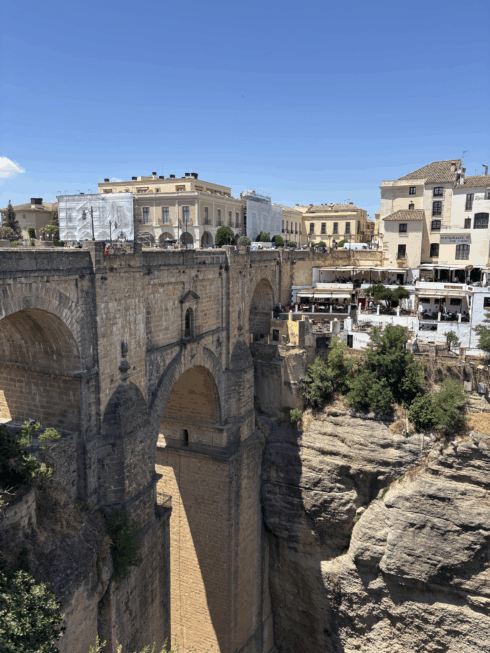
Puente Nuevo spans the monumental divide. The physical and spiritual center of the city, you cannot go near it without experiencing its dizzying height.
The very foundation of the bridge is a terrible secret. A wooden trestle bridge was the only way to cross the 300-foot drop before this stone marvel.
In 1740, that wooden structure failed, and 50 innocent rondeños plunged to their deaths.
The community was united in its will to never be divided.
Today, it stands as a testament to resilience, offering views so spectacular that locals claim, ‘the birds fly at the feet of those who look out’.
Ronda has a very simple layout. La Ciudad is the Old Town (former Moorish Medina), which sits to the south, looking old and labyrinthine. El Mercadillo is the modern business district.
Below, just outside the Almocobar gate in Arabic, is the San Francisco neighborhood, which sits next to the medieval walls of the fortress that once protected it.
Ronda held the line long before the Puente nuevo: the Celtic tribe Bastuli knew how important this rocky outcrop was for trade.
As soon as the Romans arrived in the city, it grew rapidly. They developed a unique ‘twin’ settlement colony: the defensible Arunda and the even better fortified town of Acinipo (Old Ronda) some 15 minutes west.
Take time to explore the quiet ruins at Acinipo. You can still see remnants from its Roman theater.
Imagine the life that thrived here: Roman author Pliny mentioned Ronda in his writing shortly before he died during the eruption of Vesuvius in 79 AD, confirming its importance in ‘Baetica,’ Roman Southern Spain.
Western Goths or Visigoths followed. They were mainly farmers, and their brief period of wooden structures left little trace – a quiet interlude before the continent was changed forever.
Al-Andalus: Eight centuries of Al-Andalus
Arrival of Muslim forces in Ronda from Morocco, 711 AD, transformed the city and dictated its fate for eight centuries. The city was transformed into an Arab fortress within a few years, and its influence can still be felt today, especially around La Ciudad.
It’s like stepping into a time capsule when you enter the Old Town. It still retains the original Arab street layout: a maze of narrow and winding lanes.
This wasn’t accidental architecture; it was highly practical, reflecting the ancient Arab proverb that ‘the sun is our enemy’.
The beautiful geometric azulejos used inside the houses enhanced the effect of the tight streets in maximizing shade and minimizing the scorching summer heat.
History here has been one of constant conflict. This area was the center of the Muladis’ (Christians who became Muslims) rebellion led by Omar Ben Hafsun. The fierce resistance shows how difficult it was to conquer the rocky perch.
The Arabic legacy was not confined to walls. It permeated into the entire landscape. The villages in Serrania, a nearby region, still carry Arabic names, such as Arriate. Benaojan. Benadalid. and Farajan.
Even the Spanish language spoken by the rondeños carries the ancient heritage: when someone says “¡Ojala!” (I wish!They are calling out the name of Allah. And whether you believe it or not, some etymologists suggest the famous bullfight shout of ‘¡Olé!’ These same ancestral Islamic connections are revealed by the famous bullfight shout ‘!Ole!
After a long battle, the Muslim era ended when the Catholic Monarchs took the city in 1485 (seven years before the final push seized Granada).
The peace was not long-lasting. The Christian rulers desperately needed the Arab craftsmen. But the uneasy truce ended, and a brutal decree was passed for forced conversion or expulsion.
The final expulsion of 1571, after a series violent uprisings led by the Moriscos converted Muslims, ended a remarkable history of 700 years.
Visit the Time Walk to learn more about what you can see.
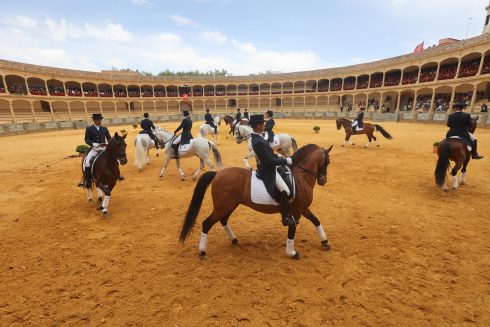
For you to fully appreciate this rich and complex history, it is essential that you walk through the area. Start your tour in El Mercadillo. It is the newer area of the town, and the Plaza de Toros de Ronda is the most impressive structure.
This is the oldest bullring in Spain and the undisputed birthplace of modern bullfighting, immortalised by the family of the legendary bullfighter Antonio Ordoñez, the man who defined its modern swagger and enjoyed the company of figures like Ava Gardner.
The stunning classical architecture reflects the wealth of the 18th Century, the same period that produced the Puente nuevo.
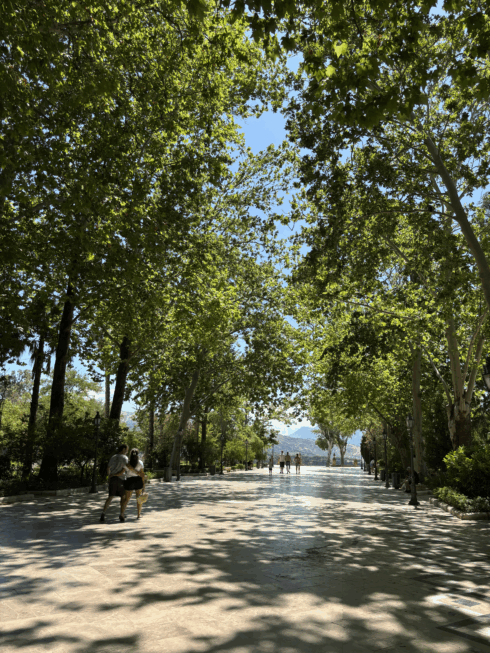
Alameda del Tajo is nearby. This park in Spanish style is ideal for a stroll with friends and a chance to catch up. Its unique views of the countryside are also enticing.
It has that wonderfully unique origin story: its construction in Napoleonic times was said to have been financed by a ‘swear box’! Everyone who was caught using curse words (palabrotas), had to pay for the park.
You can then cross over the Puente nuevo to the Old Town. In La Ciudad the history is intimate. The Arab street plan is a walk along which key monuments tell stories of conquest, nobility and conquest.
- Mondragon Palace was once the residence for the Moorish king Abbel Makik, but later adopted by the Catholic nobility. Its Moorish-style courtyards, intricate tile work and beautiful Moorish style are visual proof of the fusion that took place after the reconquest.
- Casa del Rey Moro: This palace, despite its name, was built by the Christians after Ronda fell. It is most famous for La Mina. The secret staircase, which has over 200 stairs, was carved down directly into the gorge by the Arabs. The secret staircase was built to collect water, and in times of siege to repel invaders. This is an impressive feat of defensive engineering, which makes the walk worth it.
- Baños Arabes (Arab Baths): Located outside the ancient Moorish walls, these baths are some of the best-preserved in all of Spain. The tranquil and atmospheric baths are the perfect place to take a moment to reflect back on the life of the Muslim population in the city a thousand-years ago.
- Do not forget to follow the winding path below the bridge so you can appreciate its scale at the bottom.
Bohemian flair, poets and bandits
Ronda has always been a magnet for writers, artists and people who live outside the norm. Its winding streets are a place where romantic ghosts can be found.
You can trace the literary and artistic writers who have been captivated with the city from antiquity to the present.
The list also includes al-Mutamid, poet-king of Sevilla; Vicente Espinel of Ronda and Renaissance man, who is credited for inventing the Spanish guitar with a fifth-string; and Rainer Maria Ridke, Austrian poet, who died after being pricked on the rose thorn, but was also suffering from leukemia.
Perhaps the most poignant figure is Juan Ramon Jimenez, hounded by the Fascists, who famously confided his most secret thoughts only to his beloved mule, ‘Platero’.



Ronda (Málaga)


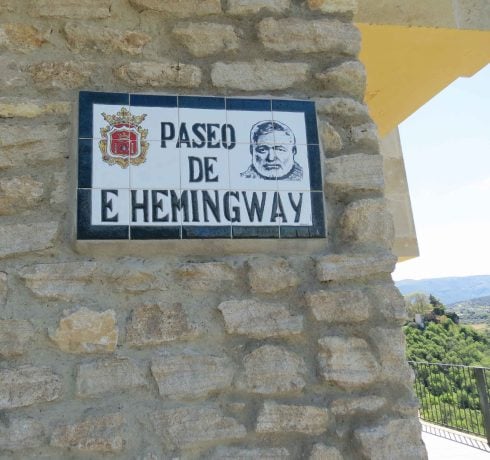


The city’s allure extends to the visual arts: the English painter David Bomberg, described as the ‘poor Jewish boy from London’, came here to create canvases bathed in Ronda’s intense golden light. He has many followers.
Don’t forget about the bandoleros (outlaws) who lived in the mountains around Ronda, such as the singing Tragabuches. Their stories still inspire the vibrant folklore of Ronda.
Serrania: a final stroll
It is a city that invites you on a leisurely walk, to enjoy the details of the ancient Moorish Medina on the south side of the Guadalevin river, where part of its walls still remain. The city also invites you cross the Puente nuevo and stroll down the Alameda del Tajo.
You can’t leave Ronda without experiencing its food – a robust celebration of the surrounding mountains and with plenty of talented local chefs.
READ MORE
Bull’s tail is a culinary highlight, served with a thick gravy and a rich, slow cooked beef dish. The restaurant Bardal of its chef Benito Gomez has now been awarded two Michelin stars.
Alternatively, you can recharge your batteries by hopping from bar to bar to enjoy the infinite variety of tapas, small, inexpensive snacks perfectly paired with the region’s local wines… and there are nearly 30 bodegas producing vino in the nearby hills.
Ronda’s modern spirit can be best captured by its festivals. People here are well-aware of conflict, particularly the French invasion at the beginning of the 1800s. Ronda and the surrounding villages commemorate their history through annual costumes re-enactments, which are accompanied by a few days of real communal partying with lots of wine, dancing, and music.
Ronda, a city with a rich history that includes the Roman theatre of Acinipo and the lively energy of its modern districts, has learned the art of cultural fusion. This is a piece of history that lives on at the edge of the planet.
The Olive Press Travel News: Click Here to Read More.

Find Tailor Made Travel
Simply Holiday Bookings allows you to create your own personalized vacation experience.