Costa News Spain Breaking News | English News in Spain.

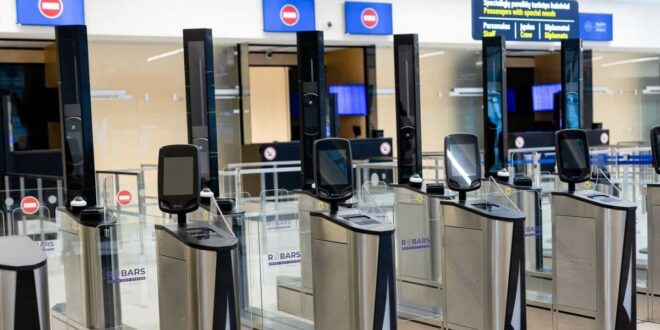
The new EU digital border system will start next week and restrict BRITS’ access to their second homes located in Spain.
Brussels will start rolling out the new Entry/Exit System on Sunday, October 12. This is a continent-wide database of biometrics that records automatically when non-EU nationals enter and exit.
With this impending date, second-home buyers will no longer be able to get away with extending their stay in the Schengen area with the help friendly border guards.
READ MORE EXPLAINER. Here’s the new EES border system for Brits entering Spain or other EU countries next month.

The scheme will be fully operational in April and will put an end to the patchwork enforcement that has defined post-Brexit for many Brits.
At present, UK citizens without an EU passport are limited to 90 days within a rolling 180-day period in the Schengen Area.
In theory this has always applied, but in practice many border officials relied on manual passport stamps and often ‘turned a blind eye’ to those who overran their allowance.
READ MORETop 10 European Airports Most Likely to Experience Travel Chaos When the EES Kicks In Next Month
The EES will eliminate this leniency.
At the first border crossing, fingerprints and photographs will be taken of every British traveller who enters Spain or any Schengen country.
The system will then log each entry and every exit, allowing it to calculate how many days were spent within the block. It can also flag overstays.
Brussels officials have told member states to enforce this rule firmly once EES becomes active. Those who breach it risk fines of up to €10,000 and bans of up to ten years from the EU.
The move has been described by industry figures as a ‘wake-up call’ for second-home owners who have been stretching the rules since the UK left the bloc.
READ MORE British tourists stuck in ‘third world hell’ at airport in Spain – in ‘taste of things to come when EES arrives’
A source told The Times“Governments from both sides of Channel know that people are breaking the time limits.
We were told that the system would automatically flag up people and the enforcement will be more strict. It’s going be a wake-up call for people who, for whatever reasons, can’t get residency.
Madrid-Barajas, the first Spanish Airport to activate the System, will do so on October 12th. Barcelona, Malaga Alicante Palma, and the Canary Islands are expected to follow shortly thereafter.
By November and December the system is expected to be in place at key land borders – spelling a headache for the 15,000 workers who cross the Gibraltar land border at La Línea each day.
Algeciras, Cadiz, Barcelona, and the main Balearic Island, and Canary Island ferry ports are expected to join this scheme in the winter before the full coverage of the nation is achieved in April.
READ MORE Ryanair adds new flights to Malaga – including two from Teesside – after slashing millions of seats to Spain
On April 10, 2020, the traditional passport stamping in Spain will cease, and biometric EES will be fully operational at all airports, ports of entry, and land borders.
In the first half year, border guards will still be able to stamp passports in case of emergency. Once the digital system is in full operation, stamps won’t be as important.
Foreign Office issued a new warning to British travelers about the changes.
Brits with legal residency in the EU are exempted from EES registration, as long as they can provide proof of their residency. Tarjeta de Identidad de Extranjero (TIE).
The issue was the main topic of discussion at the Association of British Travel Agents’ annual conference held in Magaluf, Spain this week.
READ MORE Spain’s airport operator accuses Ryanair CEO of ‘lying continuously’ in row over ‘excessive fees’
Luke Petherbridge said that ABTA’s director of Public Affairs, Luke Petherbridge: “It’ll mean that those in breach of the 90/180-day rules will be automatically detected.
“We know this hasn’t been true.” A number of countries didn’t do this check very closely. “Most, if I am honest.”
He continued: “It is from April that it will be automatically detected by every country.
The advice to those who own second homes is to take the residency route and make sure you are exempt.
Spain has the largest number of Britons with second homes who could be affected. This is why it’s the epicenter of the looming crackdown.
Click here for more Spain News by The Olive Press.

Discover Tailor-Made Tours
Simply Holiday Bookings allows you to create your own personalized holiday experience.