Costa News Spain Breaking News | English News in Spain.

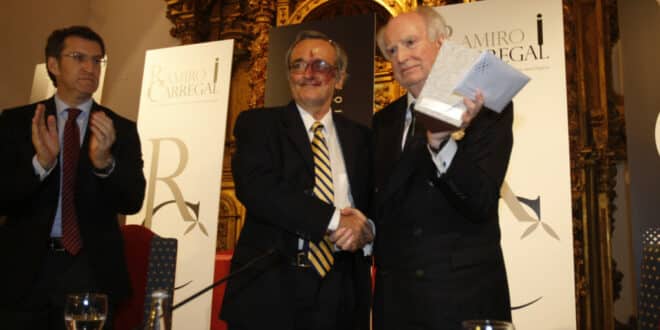
Barbacid’s career has seen him identify key molecular target such as the TRK Oncogene. This helped to develop targeted cancer treatments. Photo credit Wikipedia CC
Spanish actor Antonio Banderas The actor has revealed that he will support financially the work being done by renowned bio-chemist, Dr Mariano Barbacid. Pancreatic cancer is one of most lethal forms of disease. Banderas made his commitment public via social media. He said that he hoped his contribution would accelerate progress in the direction of treatments which could transform patient outcomes.
Banderas, who runs the philanthropic foundation Lágrimas y Favores, said in his post that in a world marked by “violence, confusion, disenchantment and stupidity,” scientists like Barbacid represent a beacon of hope. The actor’s foundation will provide resources to Barbacid and his team of researchers as they continue their research.
The Long Road to Pancreatic Cancer Research
The aggressiveness of pancreatic cancer and its poor prognosis are well-known.. Most patients are detected at an advanced state, and overall survival rates of less than 10% over five years. Cancer research has been focusing on the disease because of its resistance to conventional treatments.
Dr Mariano Barbacid is one of Spain’s leading cancer researchers. He has spent years unraveling the molecular mechanism behind this deadly disease. Barbacid heads the Experimental Oncology Group at the Centro Nacional de Investigaciones Oncológicas (CNIO) in Madrid, where he has conducted pioneering work on oncogenes, genes that, when mutated, can drive cancer development.
Laboratory Innovations that Break New Ground
Barbacid’s team published recent results showing complete elimination of pancreatic tumors in mice, a preclinical first for this type of cancer. The study, published in the scientific journal Proceedings of the National Academy of Sciences, In animal models, a triple-therapy targeting three key molecular pathway could eliminate tumours without significant side-effects.
It targets multiple tumours simultaneously, including KRAS (the oncogene implicated in 90% of pancreatic cancers). It also targets proteins involved with tumour growth and resistance. Researchers claim that after treatment, mice were tumour-free and remained so for long periods.
Experts say that this result represents an important milestone. However, they stress that more research and refinement is needed before the treatment can even be tested on people. Barbacid has said that more work needs to be done in order to adapt the treatment for human clinical trials. These are expected to take several years and will depend on funding.
The Man Behind the Research
Barbacid’s scientific pedigree spans decades. After earning a Ph.D. at Universidad Complutense de Madrid, he spent time training at the US National Cancer Institute. Before establishing his own group of researchers. Early work by Dr. Ayala led to the discovery of the first human tumour-causing oncogene, as well as a mutation that is associated with cancer. These discoveries laid the groundwork for modern understanding of tumour biology.
Barbacid also has identified molecular target such as TRK oncogene during his career. This helped to develop targeted cancer therapies. He was Vice President of Oncology at Bristol-Myers Squibb in the late 1990s. There, he pioneered efforts to improve precision medicine.
Barbacid returned in Spain in 1998 and established the CNIO. It quickly became one of the leading cancer research centres worldwide. Barbacid stepped down from his position as director in 2011, to concentrate on his scientific work. He remains a prominent oncologist.
His contributions have been recognized internationally, with membership in the US National Academy of Sciences and fellowship of the American Association for Cancer Research. He has also received numerous honorary degrees, scientific awards and other honours.
Finance the Next Phase
Recent preclinical successes have sparked renewed research interest. The online fundraising campaign by the Fundación CRIS Contra el Cáncer quickly surpassed its goal, raising more than €3.5 million to support the next stages of work.
A further investment will be necessary to bridge this gap and move forward with clinical trials. Barbacid has estimated that about €30 million might be needed to fully prepare and conduct the early stages of human testing, including optimisation of the therapy and safety studies.
Public and Scientific Support
The research has received widespread attention both in Spain and abroad. Over 80,000 people signed a petition urging Barbacid to be awarded the Nobel Prize in Medicine. This reflects public support for Barbacid’s work and potential impact.
Scientists emphasize that although the results of animal models are unmatched, converting them into effective treatments for humans involves many complex steps. Both public donations and the support of celebrities like Antonio Banderas highlight the collective effort required to make this transition possible.
Hopeful Way Forward
Barbacid’s research is at an important juncture, thanks to the support of the scientific community, philanthropic groups, and now, high-profile donors. The funding from Antonio Banderas’s foundation will help maintain momentum and bring researchers closer to their ambitious goal to transform laboratory discoveries into treatments that could improve outcomes for those with pancreatic carcinoma.