Costa News Spain Breaking News | English News in Spain.


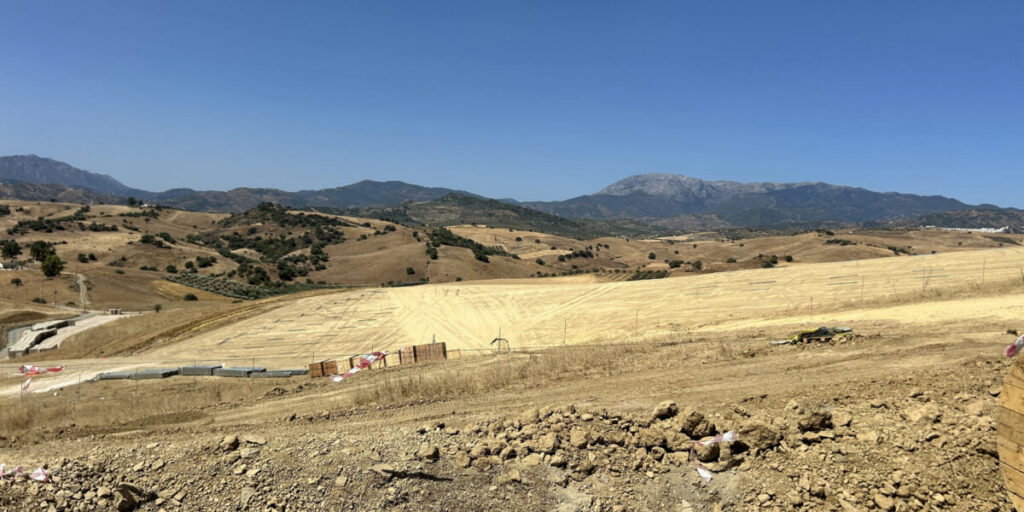
Locals in Coin and throughout the Guadalhorce valley stare in amazement at the massive solar plants that have been built on what was once Spain’s breadbasket. Nearly 2,000 acres of La Jara’s richest agricultural land have been solidified like concrete. Tens of thousands photovoltaic panel and hundreds of miles cable will cover the Guadalhorce valley at the foothills of Sierra de la Nieves National Park.
The wildlife has disappeared and trees over 100 years old have been ripped down.
Credit: EWN
The roots of 100-year-old oak trees were pulled out. The flora has been completely destroyed. Since March of this year, scores of heavy machines are tearing the site apart. One flat owner refused to sign the 25-year contracts that the companies were offering their neighbours. Now, his plot is surrounded entirely by bare earth that looks like a desert and rows of aluminum brackets waiting to be fitted with panels. A kestrel, which is native to the area, circled above us, confused by the lack of anything to land on.
Environmental report kept secret despite legal rules
Campaign groups claim that Coin Council has refused to release the environmental report. The mayor says he can’t stop the work because the higher authorities have the power. No one can accurately judge the damage without this document, which according to the law should be available. The works should never have been permitted to start.
Flooding and water concerns are increasing downstream
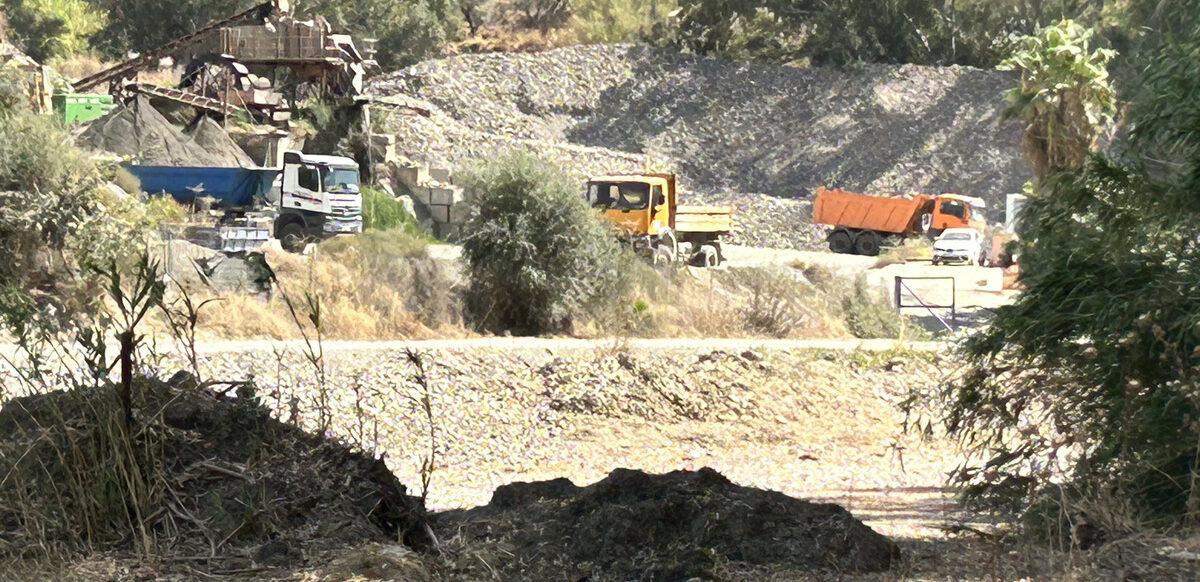
Solar parks will gulp up huge amounts of water. The land is stripped and can’t absorb the rain that falls in autumn or winter. The sudden runoff is now a real danger. Coin council is racing to clean and wall Rio Grande, which cuts through their territory. The river flows into the Guadalhorce, then past Cartama and Campanillas. Both are notorious for flooding. It seems that extra water will flow downstream in the coming season. Has anyone asked the affected populations about the possible effects of this mega-project?
Credit: EWN
Austrian state-owned firm behind scheme
The project is driven by Verbund, Austria’s biggest electricity company Austrian State-owned company. Campaigners from Asociación Valle Natural Rio Grande You might ask the blunt question: Would Austria accept a similar scheme on its soil? There are stricter planning rules for solar panels on the ground of this size. The need for renewable energy cannot be achieved by sacrificing local jobs, productive farms, and beautiful landscapes.
The vast site is well hidden from the main roads, and largely out of sight for most people. Except those who live in Alozaina or Casabermeja. Residents from all over the Malaga region demand a louder message before more land is covered in solar panels.
Credit: EWN