Costa News Spain Breaking News | English News in Spain.


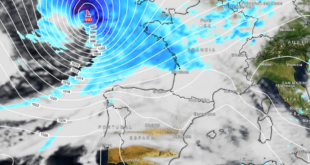
Meteorologists predict storms will form in the afternoon. Photo credit:
Spain’s National Meteorological Agency AEMET has issued a weather warning across eight autonomous communities. This is due to a mass of cold air moving into the upper atmospheric layer, which triggers widespread instabilities following recent high temperatures. Andalucía, Asturias, Cantabria, Castilla y León, Castilla-La Mancha, Extremadura, Galicia and the Community of Madrid are all under yellow-level alerts for thunderstorms.
The storm is expected to develop primarily in the evening and afternoon of Monday 15 When the surface heat is at its strongest. In the affected areas, heavy rains, hail and high wind gusts are forecast. Storms will be evenly distributed with some areas experiencing heavy rainfall and others remaining largely unaffected.
Monday, June 15: Storms intensify in central and western regions
As long as the atmospheric instability persists, it is likely that thunderstorms will become more organized in central and western Spain on Monday. The Central System mountain range and the Cantabrian Mountains are most affected, followed by the Iberian System as well parts of Galicia. Meteorologists predict storms will form again in the afternoon due to continued interaction between warmer surface air and cooler air above. It is possible that rain will be brief but intense, increasing the chance of flooding.
The conditions on the roads are likely to be worse during storm peak hours, due to sudden drops in visibility and water accumulation. Authorities have advised caution when driving in mountainous regions, especially on rural and secondary routes. Meanwhile, heat warnings remain active in Aragón, Cataluña, Navarra, La Rioja and the Basque Country, where temperatures may still reach between 36°C and 38°C. Coexistence of extreme heat and storms in the north-east, as well as storm activity throughout the interior, is contributing to extremely unstable atmospheric conditions on the Iberian Peninsula.
Tuesday, June 16: Convective storms continue in the afternoon peak hours
Tuesday is the day to start preparing for your trip. AEMET forecasts continued Convective thunderstorms developing across central and northern Spain. The pattern remains the same, with the peak activity expected in the afternoon and early night.
Highest risk areas are the mountains, especially the Central System, surrounding provinces and parts of northern Spain affected by Atlantic humidity. Storm cells may form quickly, and they could include hail and lightning. They can also bring gusty wind and strong winds.
The distribution of rainfall is likely to be highly irregular with sharp contrasts across short distances. In some areas, rainfall may be minimal, while in others, intense localised downpours will occur within a short period of time. Emergency services monitor river basins, steep terrain and other areas that may experience rapid surface runoff. Even though widespread flooding has not been forecasted, isolated flash flooding can still occur when storms repeatedly pass over a location or stall.
Wednesday, June 17: Gradual easing but isolated thunderstorms persist
On Wednesday, the atmospheric conditions will begin to stabilize gradually. However, residual instability may still lead to isolated thunderstorms in mountainous and elevated areas.
Storms are less likely to form than they were earlier in the week but can still cause heavy rain and strong winds locally. The west coast is expected to see the most improvement, whereas eastern inland areas could still experience some convective activity in the afternoon.
Overall, AEMET shows a decrease in storm coverage compared to Monday and Tuesday. This marks a transitional period as the upper-level cold air mass begins to weaken and atmospheric conditions start stabilising.
Areas at greatest risk and anticipated impacts
During the entire period, the Cantabrian Mountains are the most affected, followed by the Central System, Iberian System and Sub-Baetic Ranges. Galicia, Extremadura, and some parts of the Eastern Pyrenees also suffer from this. These areas are especially vulnerable to storms due to localised convection and orographic lift.
There are several risks, including sudden heavy rains, hailstones, strong gusts of wind, and temporary floods in low-lying, poorly drained regions. Transport disruptions are possible during storm peak hours, especially on rural roads and mountain pass.
Weather-related causes of instability
AEMET attributes this weather pattern to a cool air mass that has entered the upper atmosphere of the Iberian Peninsula. This contrasts sharply with the warm surface conditions after several days of intense heat. This temperature gradient generates strong atmospheric instability, promoting the development of convective thunderstorms across Spain is a large part of the country.
This agency states that these patterns are common in early summer when residual heat combined with upper-level troughs often combine to create fast-forming storms and high-intensity rainfall.