Costa News Spain Breaking News | English News in Spain.

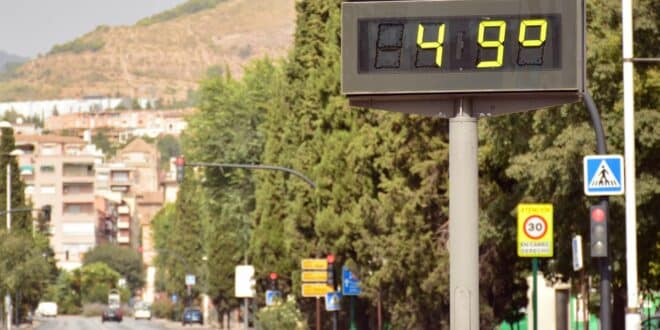
Record-breaking heat: A street thermometer in Spain hits a staggering 49°C as the risk of heatwaves intensifies across southern regions.
Credit: Kuki Ladron de Guevara / Shutterstock
Forecasters are increasingly watching a rapid rise in temperatures that is expected to occur across the country within the next few days. After a month of unusually cool temperatures, rain and storms, the weather models now point towards a different pattern, as hotter air builds across the peninsula.
As British tourists and expats prepare for summer, their attention has already moved from the unpredictable spring weather toward the possibility of extended early season heat. Spain has been stepping up their response to extreme temperatures following recent deadly heatwaves. The authorities are now treating heat as a serious threat to public health. In some areas of southern Spain, temperatures could rise well above seasonal norms in the near future. Forecasters also warn that tropical nights may start appearing, when temperatures stay above 20C over night.
What parts of Spain will be the hottest?
Southern Spain is the first area to be affected by severe heat in early summer, especially Andalucia, where cities like Seville, Cordoba, and Jaen routinely reach or exceed 40C when heatwaves occur.
The Costa del Sol, Costa Blanca, and other coastal areas can be uncomfortable, particularly when the intense heat is combined with high humidity, and there is little cooling overnight. Some coastal resorts were above 25C over night during previous hot spells. This was especially uncomfortable for tourists and older residents who are not used to Spain’s summer weather.
According to previous patterns monitored by Spain’s state weather agency AEMETAreas most vulnerable to early heatwaves are:
- Seville and Guadalquivir valley
- Cordoba (and inland Andalucia)
- Extremadura
- Murcia
- Castilla La Mancha – Parts
- The Ebro Valley surrounding Zaragoza
Even popular tourist destinations like Malaga Alicante or Mallorca can be affected by extreme heat conditions, especially during summer when the beaches, airports, and city centres are heavily crowded.
Spain could face another intense summer
Forecasters are already keeping an eye on weather patterns that favor a hotter summer in Spain. prolonged periods of extreme heat.
The sea surface temperature in parts of the Mediterranean remains above average. Atmospheric conditions continue to allow hotter air masses from Africa to move northwards towards the Iberian Peninsula.
Some meteorologists are also monitoring wider climate patterns linked to the possible transition between El Niño and more neutral conditions across the Pacific. These global systems may not cause heatwaves directly in Spain but they can affect the broader atmosphere across Europe, increasing the probability of extended periods of unusually high temperatures.
Spain also has experienced an increase in the intensity and frequency of heatwaves over the past few years. Climate experts have warned that extreme heat events are occurring earlier in the year and lasting longer.
The summer of last year saw many temperature records broken throughout southern Europe. This included parts of Spain, where temperatures were unable to fall below 25C overnight for several days. The so-called tropical nights are particularly exhausting to residents and tourists, as homes and apartments can remain hot well after sunset.
It is especially difficult to maintain comfort in older buildings without air conditioning, particularly during prolonged periods of high humidity along the Mediterranean coast.
What residents and tourists can expect
The summer heat in Spain is a major attraction for many British tourists. When temperatures reach high 30s or more, daily activities can become very exhausting for those who are coming from a cooler climate.
Even simple activities like waiting in line for transport, going sightseeing, or spending hours at the beach can be physically taxing during prolonged heatwaves. After hours of direct sunlight, the pavements, cars, and apartment buildings in some southern Spain can still be extremely hot.
Health authorities usually advise people to:
• Avoid direct sun during the hottest hours of the afternoon
• Drink water regularly, even before feeling thirsty
• Use sunscreen, hats and lightweight clothing
• Limit strenuous outdoor activity during peak heat
• Check regularly on elderly relatives, neighbours and vulnerable people
Tourists with older family members or children are encouraged to plan sightseeing excursions earlier in the day or later in evening. This is especially true during extreme heat, when temperatures can be uncomfortable long after sunset.
Can airports and flights be affected?
Extreme temperatures can cause problems beyond beaches and resorts.
During the previous heatwaves, Malaga airport, Alicante airport, and Palma de Mallorca airport experienced delays caused by air traffic congestion and high passenger volumes.
Even in the heat of the day, very high temperatures can affect aircraft performance and runway operations.
Travel experts warn of the impact that heatwaves and wildfires in Spain can have on road, rail, and air quality.
How long can heat last?
The weather forecasters are watching closely to see if the current conditions will develop into Spain’s first official heatwave for 2026. They use the AEMET criterion, which considers both the length of the heat as well as how many areas experience abnormally high temperatures in the same area.
Forecasting long-range weather is never without uncertainty, especially when it’s so far out. Current projections point to several periods of heat above average between late May and early summer, particularly in southern and inland areas of the country.
Some forecasters also warn of hot conditions that can persist over days and nights, with limited relief during the night. This is especially true along the Mediterranean coast, where tropical nights are common.
Spain’s first heat alerts for the year could arrive earlier than expected if temperatures continue to rise in the next few weeks.
What travellers need to do now
Spanish authorities on health and travel are warning both tourists and residents of Spain to be ready for extended periods of extreme temperatures as temperatures start rising in many parts of the nation.
The majority of authorities recommend:
• Checking local weather forecasts regularly
• Confirming homes or accommodation have suitable cooling or air conditioning
• Drinking water consistently throughout the day
• Monitoring local wildfire warnings and emergency alerts
• Staying updated with airport, transport and local authority notifications during periods of extreme heat
The people of the southern part of Spain should also avoid outdoor activities during the afternoon heat, especially during periods of prolonged high temperatures and tropical nighttime temperatures where buildings struggle to cool themselves overnight.
Extreme heat and heatwave conditions may once again be one of the biggest stories for Spain’s travel and public health in the months ahead, with millions of tourists and foreign residents expected to arrive this summer across Spain.
Visit our Spanish weather page for the most recent forecasts, heat warnings and regional updates throughout Spain.