Costa News Spain Breaking News | English News in Spain.

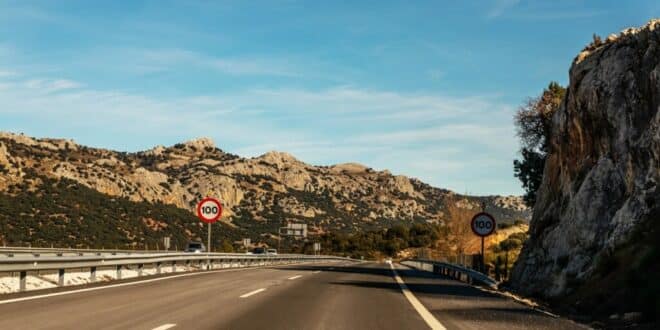
Spain introduces a new 100 km/h speed limit on certain high-risk roads
Credit : Q77photo, Shutterstock
Spain’s drivers are beginning to notice changes on the main roads. In some high-risk stretches of road, the maximum speed has been reduced from 100 kmh to 100kmh as part a larger push by the DGT Reduce accident rates. It is already being implemented along key routes.
The concept is simple. Reduced speeds on dangerous sections will lead to fewer serious accidents. For many drivers, this change is a shock, especially in areas where higher speed limits were the norm.
Why Spain has lowered speed limits on major highways
In Spain, road safety is a top priority. Speeding remains one of the leading causes of fatal accidents. Many drivers still exceed speed limits despite clear signage on dual carriageways and motorways.
DGT is tackling this by introducing targeted reductions, rather than blanket changes. It focuses on sections where accidents occur more frequently. This includes areas with poor visibility or steep gradients, as well as complex traffic conditions.
This is not a Spanish initiative. France, Italy, Germany and other countries have also introduced similar measures, following international recommendations to improve road safety.
One of these recommendations comes from United Nations. They have highlighted 100 kmh in high-risk road environments as a safer speed.
Spain is gradually implementing this approach, but not across the entire network.
There are already roads affected by the new 100 km/h limit
Some changes are already implemented. One of the most notable examples is on the AP 7 in Catalonia, where a 140 kilometre stretch between El Vendrell and Maçanet de la Selva is now managed using variable speed limits.
The maximum speed is constantly changing based on road conditions, traffic, and weather. Drivers can see the updated speed limit on digital panels as they drive.
In the Basque Country, several sections of the AP 8 in Guipúzcoa have also been reduced to 100 kmh. Meanwhile in Galicia, parts of the AG 55 between A Coruña and Carballo are now permanently limited to the same speed.
These decisions are not made at random. Each section has been identified by the DOT as a high-risk area where speed reduction could have a tangible impact.
Many times, these changes are accompanied by cameras that measure average speeds. These cameras ensure drivers adhere to the new speed limits for longer distances, rather than reducing their speed briefly.
What drivers should know about variable speed limiters
Dynamic speed limits are a source of confusion on many roads, including the AP7.
These limits are not set in stone, unlike the traditional ones. They can change based on current road conditions.
In order to avoid sudden braking or collisions, speed limits may be reduced if traffic becomes heavy. In the event of worsening weather conditions, like rain or fog for example, speed limits are reduced to increase safety. Temporary speed changes may also be caused by roadworks, incidents or other factors.
This information is displayed electronically on signs either above or beside the road. The limit displayed at the time is expected of drivers, even if the maximum speed for the road type differs.
It is hoped that this will make driving conditions easier to predict and reduce the risk of accidents due to sudden changes in speed.
The shift could be extended to other roads in Spain
Currently, the limit of 100 kmh only applies to certain sections. But it may not be limited there. If there is a significant reduction in accidents as a result of these measures, they could be expanded to other areas.
Drivers should pay more attention to signs, particularly on major routes, where conditions can quickly change.
Although some may view the lower limits restrictively, authorities maintain that the goal of the law is clear. Fewer road accidents, less serious injuries and safer roads.
The acceptance of this balance by drivers depends on the degree to which it becomes noticeable over time. One thing is for sure. Slowing down has become mandatory on some of Spain’s busiest highways.