Costa News Spain Breaking News | English News in Spain.

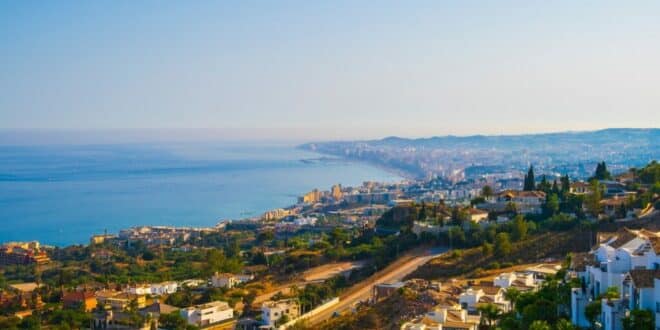
Málaga’s rapid growth has intensified pressure on housing across the city.
Credit : Eduardo Frederiksen, Shutterstock
Málaga has promised a lot when it comes to housing before. The number this time is too high to ignore.
17 000 new homes are being built.
This is what the mayor of the city put on the table in a new municipal plan that was designed to, at least, on paper, ease the pressure residents have been under for years. Rents on the rise, sale prices that are out of reach and the feeling that the city has become unaffordable for the residents have all been factors in pushing housing to the forefront of political agendas.
This week, the announcement was made to a predictable amount of fanfare. The reaction on the street has been more measured. There is less applause but more eyebrows raised.
Because for anyone trying to rent or buy in Málaga right now, promises don’t pay deposits.
Trying to bring order to Málaga’s chaotic growth
City Hall insists it is different this time. Instead of housing developments appearing in a scattered, opportunistic way, the council says it wants a single, structured plan that guides where and how Málaga grows.
The 17,000 houses would be spread out over several areas in the municipality. This will combine under-used urban land and new growth zones. According to the mayor’s offices, the goal is to relieve the pressure on the historic center and the most desired coastal neighbourhoods where prices have risen well above local salaries.
Officials argue that without this kind of coordinated approach, Málaga risks becoming a city where people work but can no longer afford to live.
It’s a familiar concern – and one that has become harder to dismiss as more long-term residents are forced to move further out.
Affordable housing takes centre stage – at least in theory
A key selling point of the plan is the focus on affordable housing and protection. According to the council, a large portion of new homes won’t be sold or rented for full market price but will instead be reserved for those who meet certain residency and income requirements.
The beneficiaries of the project are frequently cited as being young people, local families, and key workers.
This is important. Málaga’s housing boom has been driven not just by population growth, but by outside demand – tourism, second-home buyers, remote workers and international investors, all competing in the same limited market.
Locals often feel that their city is growing, but they are not part of it.
City Hall says that increasing the supply isn’t sufficient. It’s also important to consider the type of housing. The question is whether those protections still hold true once deadlines, developers, and other factors are included.
Home without school, busses and clinics is useless
It’s a good thing that the plan does not stop with housing numbers. The council is saying that the new developments are going to include schools, public services, health centres and green spaces.
It’s a silent admission that past growth wasn’t always well planned.
Alongside the housing strategy, the city has outlined a wider package of urban improvements – road connections, public transport links, cycling routes and upgraded public spaces. The city wants to avoid creating isolated neighborhoods that rely solely on cars and a stretched infrastructure.
Residents in new areas who have seen them struggle with traffic problems and poor service will hope these lessons have been truly learned.
Why the pressure continues to grow
Málaga’s success is part of the problem. It has become one the most sought-after cities in Spain to visit, live and work. The tourism industry is still strong. International professionals and remote workers are also adding to the demand.
The growth of short-term accommodation has also squeezed the market for long-term rentals, especially in the central and coastal districts. The council has already taken steps to limit the number of new tourist licenses issued in certain areas. This housing plan will complement this approach.
The logic is straightforward: if demand keeps rising, supply has to rise too – especially supply aimed at residents, not visitors.
The hard part is getting from the announcement to reality
The mayor is careful not to exaggerate the timeline. It will take many years before these 17,000 homes are built. Some sites are already in advanced planning. Other sites may require long procedures, infrastructure improvements and negotiations with the developer.
Economic realities are also important. Construction costs continue to be high. Conditions of financing can change. If profitability is uncertain, private developers could hesitate.
The biggest test may be the enforcement. Making sure affordable housing quotas are delivered as promised – and not quietly reduced – will determine whether this plan actually changes lives or simply changes headlines.
Hope, doubt, and a familiar answer
The response has been mixed among residents. Residents are relieved that the council has finally addressed the issue, but there is also deep-seated scepticism due to years of seeing prices rise faster than the solutions.
Developers see both the opportunity and the restriction. Clear municipal strategies offer certainty, but they also come with conditions that impact margins and timelines.
What it could mean for Málaga
This plan will not bring immediate relief to renters or first-time homebuyers. This plan may not bring immediate relief to renters and first-time buyers, but it might begin the process of easing the relentless market pressure.
For investors, Málaga remains attractive – but the signal from City Hall is clear: growth will continue, but not without rules.
A bold promise, 17 thousand homes. Whether it becomes a turning point for Málaga, or just another figure that fades with time, will depend on one thing above all else.
How many of those homes actually get built – and who they’re built for.