Costa News Spain Breaking News | English News in Spain.

You land at Málaga, pick up the keys to a shiny little hire car and within ten minutes you’re staring at a Spanish road sign, a flashing camera and a speed limit you’re not entirely sure you’ve understood. Does this sound familiar?
Spain has some of the best roads in Europe, with spectacular scenery and better road safety than average. But the rules are strict, the cameras don’t blink and a lot of visitors head home with an unwanted souvenir – a fine that lands in the post weeks later.
What you need to know about 2026, if you’re looking for the best views possible without paying the penalty.
Is it possible to drive on your license here?
Let’s begin with the basics. You must be 18 or older and have a current, full driving license for the vehicle that you are driving. This part is non-negotiable.
If you have a photocard license and are just visiting from the UK, EU, or EEA, you can use it. you’re generally fine to drive without any extra paperwork. It gets complicated when it comes to non-European driving licences. Most travellers outside of the EU will need to bring their home driving licence and an International Driving Permit.
Do not rely on a guess. Instead, check with your motoring organisation or consulate before you fly. Before you fly, check with your motoring association or consulate. Do not ask a traffic policeman on the side of the road. And if you’re moving to Spain rather than visiting, be aware that residents are expected to exchange their licence after a grace period – ignore that and you can end up treated as if you’ve no licence at all.
This kit contains the boring but essential paperwork
The Spanish police have every right to ask you for your documents, even if nothing else has been done wrong. You’re in serious trouble if you don’t have them with you.
Your driving license and proof of coverage, as well as your passport or ID card. The following are some of the ways to get in touch with us. Vehicle Technical Inspection (ITV), and the vehicle registration documents. The rental agreement usually covers these two documents, but you still need to check that they are in the glove box.
There’s also the safety kit. Spain is expecting high-visibility vests as well as warning devices in case of breakdowns. It used to be two triangles, but now the trend is moving towards V16 flashing signals. By 2026 it is safest to assume that you will need a vest in easy reach of the drivers and an approved V16 beacon. It is expected that you have a spare tire or a good repair kit. You can get fined if you do not have the essentials, even if it never happens.
Speed limits, camera and classic tourist mistakes
The ‘paper’ is the “” limits It’s easy enough. Motorways, dual carriageways 120 km/h. Most rural single-carriageway roads: 90 km/h. In cities and towns, you will see main roads with 50 km/h speed limits and many 30 km/h zones.
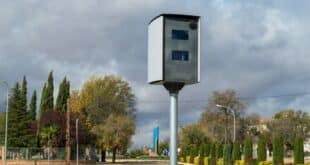
Where visitors make mistakes is in the real world. Limits can quickly drop as you approach intersections, tunnels, or roadworks. And the camera is placed often just after the sign. You can also find average-speed systems that measure your speed along a road, rather than just at one point. You won’t be saved by slowing down and then speeding back up for the camera.
You must also add the basics, such as wearing a seatbelt at every seat and ensuring that children are restrained appropriately for their age. Also, phones should only be used hands-free. A fine can be issued for simply holding your phone. Lane discipline matters too – hogging the middle lane when the right is free is frowned upon and can attract attention.
Why “just one” of both is not a good idea
Spain has lower alcohol limits than UK. In recent years, the government has tightened them even more, pushing toward what campaigners call “practically zero”. The new rules aim to make it clear that drinking and driving are not compatible.
Most often, roadside checks occur at weekends or on holidays. You could face a fine, penalty points or even a criminal charge if you are over the limit. The same is true for drug driving. Saliva tests and lab analyses are used to confirm the presence of drugs in your system.
If you are driving, do not drink alcohol. Nominate a driver, use taxis in the evenings, and keep your licence – and your trip – intact.
The real fines and point system
Spain has a points-based system in addition to the money. The majority of experienced drivers are given 12 points, while new drivers receive fewer. You can lose both money and points for offences such as speeding or using your phone. You’ll be banned if you accumulate enough points.
The famous “50 percent discount” is still available. Paying within 20 days will reduce the amount of many traffic fines. Paying usually means that you are accepting the offense and giving up your right of appeal. So, don’t pay if you think the fine is wrong.
Expect a two stage process if you rent a vehicle. The rental company will charge you an administrative fee to pass on your information. Then, the Spanish authorities will send you the fine, which can arrive weeks later. In the EU, vehicle data is shared between countries. Unpaid fines are increased and pursued. Coming back to Spain after a long absence with a sanction outstanding is not advisable.
Low-Emission Zones : a new trap for city motorists
By 2026 you will need to pay attention to more than just speed signs. Large Spanish cities are rolling out Low Emission Zones – Zonas de Bajas Emisiones, or ZBE – which restrict older, more polluting vehicles. Cameras track who enters and leaves, and automatically issue fines.
Barcelona and Madrid have already established zones. Valencia is stepping up its schemes. If your car is foreign-registered, you might need to register it online before you enter the zone. This process may take several days in some locations.
You can’t memorize a single setting because every city has their own rules. Check the website of the local council or ask at the rental desk if your vehicle is allowed to enter the ZBE before you follow the sat nav.
Criminals, scams, and breakdowns – the risks no one mentions
Spanish roads are not lawless but there is petty criminality, particularly around tourist areas and motorway service stations. Well-known scams target hire cars: one driver flags you down claiming you’ve got a problem – a flat tyre, smoke, strange noise – while someone else helps themselves to your bag or documents.
Keep valuables hidden, ideally inside the boot. Pull into a busy gas station to check if there is a problem with the vehicle. Do not stop on the roadside if someone claims there is a problem. When there’s a breakdown, you should get everyone behind a barrier if it exists. Use your warning devices, call your breakdown insurance or the emergency number.
Quickfire questions British drivers keep asking
Do I require an International Driving Permit to drive abroad?
You don’t need one if you are a short-stay tourist with a UK or EU photocard. Most travellers from non European countries will need to have one. Before you travel, always check for the latest information.
What is the maximum speed limit for speed cameras?
Very. Cameras are placed where speed limits are most important and even small excesses can lead to a citation. On busy routes, average-speed zones have become more common.
Can I ignore the fine when I get home?
You can, but you’re taking a risk. Within the EU, authorities can trace and pursue foreign-registered vehicles. The fines can grow over time, causing headaches and frustration if you are a repeat offender.
Does driving in Spain make it harder to drive than in the UK?
Most visitors say no – once you’ve adapted to driving on the right and learned the limits, the roads themselves are a pleasure. Spanish enforcement is more strict, so there’s less room for “I will just push it”
Get the basics right – the licence, the documents, the kit, the limits – and driving in Spain in 2026 should be exactly what it ought to be: sunshine, scenery and sangria waiting for you at the end of the day, not a nasty surprise on your doormat when you get home.