Costa News Spain Breaking News | English News in Spain.

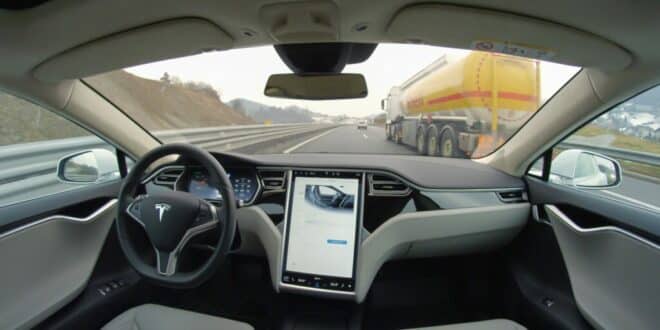
Drivers’ jobs are under threat, say critics. Photo credit: Flystock/Shutterstock
Spain has made a major leap in the future of transportation by allowing driverless car trials to be conducted under a newly created national authority. framework of the DGT. The move positions the nation as an emerging hub of advanced mobility testing and opens the door to multiple manufacturers who can test high-automation system on public highways. Tesla is the first company to publicly associate with the program, but the authorization is not exclusive. The framework is open to all manufacturers who can meet Spain’s technical, safety and monitoring requirements.
The new system is a highly efficient and effective way to manage your business. automated vehicles to circulate in controlled environments The Spanish approach to mobility is changing dramatically with the introduction of autonomous vehicles without drivers behind the wheel. Up until now, autonomous vehicle testing in Spain was limited to research centers and private tracks. The nationwide approval marks a new phase of trials aimed at gathering data on safety and performance as well as interactions with traffic.
The New System: How it Works
Controlled testing under strict supervision
The authorization does not give companies a free hand on Spanish highways. The trials must adhere to a strict set of protocols that includes pre-approved routes and mandatory reporting. They also require systems which allow for remote intervention by humans in emergency situations. To ensure accountability, each vehicle must be equipped multiple failsafe mechanisms and real-time monitoring tools.
Companies must work closely with traffic authorities to inform them of all tests, provide detailed risk assessments and demonstrate that the systems are compliant with European and national safety standards. These measures were designed to ensure driverless trials do not compromise public safety or technological advancement.
The automotive industry is open to all
Tesla has received the most media coverage, but the framework accepts manufacturers of all types. The framework is open to all manufacturers, including traditional European brands that develop Level 3 and Level 4 autonomous systems. The goal is to create an innovative, competitive ecosystem in which multiple players can contribute to safer and smarter transportation.
The automotive industry and research institutions are expected to also benefit. They will have the chance to take part in trials of sensors, AI perception systems and new road safety technology. Spain’s mobility regulators are hoping that the programme will increase collaboration between industry and engineering universities as well as public authorities.
The Impact of Industry on the Public
Spain’s automotive future: A strategic move
Spain has one of Europe’s largest auto-manufacturing industries, and the authorities believe that autonomous mobility is essential to maintain competitiveness. Real-world trials of driverless vehicles could help attract international investment and create partnerships for research, as well as support the development new mobility services. This could also help Spanish cities to modernise their transportation systems by integrating automated cars into future smart-mobility plans.
The public’s reaction is split. Supporters are excited about the possibility of fewer accidents, lower emissions and better accessibility for older or disabled passengers. Critics raise concerns, however, about job loss in driving professions and ethical challenges associated with machine decision-making. They also worry about system failures. To reduce these risks, officials insist the framework puts safety first.
Spain’s Roads are Important for Autonomous Tech
The ideal conditions for testing in the real world
Spain is a unique test ground due to its diverse topography, varied road layouts and extensive motorway network. Companies can test their systems in a variety of driving conditions, from densely-populated cities to rural areas. Climate variation is also a factor, as it allows autonomous systems to test in different conditions, such as rain, sun, fog and high temperatures during the summer.
The ability to gather data in these conditions is crucial for manufacturers when developing automated systems that are reliable and secure. These trials will refine perception algorithms, emergency response capabilities, and interactions between unpredictable road users.
What to Know about Spain’s Driverless Vehicle Trials
- Spain has authorized autonomous vehicle testing in a new framework.
- All eligible manufacturers are covered by the system.
- Safety protocols must be followed and human supervision should be provided remotely.
- The program aims to reinforce Spain’s position in Europe’s automotive innovations sector.
- Although public concerns persist, the framework prioritizes controlled testing and transparency.
- Spain’s varied roads provide ideal conditions for testing autonomous technology.
Take a cautious, but ambitious step ahead
Spain’s decision, to test driverless vehicles on its roads, marks a turning point in its transport strategy. Spain hopes to be a leader of the new world of autonomous vehicles by adopting innovation while maintaining tight regulation. In the coming months and year, we will see which manufacturers are part of the programme and what driverless technology is adapted to Spain’s conditions.
Under the watchful eye of Spanish regulators, the nation is on the cusp of a new age, where the theory of human-free driving becomes a reality.