Costa News Spain Breaking News | English News in Spain.

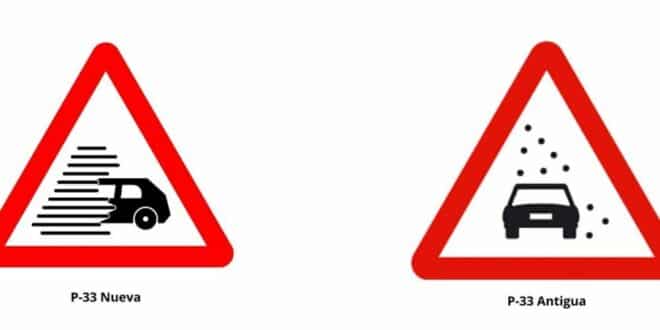
Signs are more clear and concise with the new P-33.
Credit: X-DGT
Spain’s traffic authority, the Dirección General de Tráfico (DGT), has quietly given its official road sign catalogue a makeover – and one particular sign stands out among the changes. You’ll want take note if you drive along foggy mountain roads, coastal routes where storms are rolling in quickly, or rural stretches which seem to disappear into fog at dawn.
The sign is in question P-33This triangular sign alerts drivers when visibility suddenly drops. You’ll see it in areas where there is low fog, wildfire smoke drifts over the road occasionally, or heavy rains and snow make visibility almost impossible.
You can also find out more about the following: DGT The sign was redesigned to make it more intuitive and easier for drivers. The meaning hasn’t changed – but the way it communicates that message has.
Why the P-33 Requires a Refresh
The original P-33 signs served their purpose. But the DGT says that the road conditions and driving behaviors are different today than they were 20 years ago. Drivers are driving faster today, the roads are more crowded, and weather patterns are changing rapidly. This means that drivers have less time to respond when weather conditions change.
So the DGT has replaced the older, more generic icon with a clearer, sharper graphic designed to catch the eye more quickly, even in poor visibility – ironically, when it’s needed most.
The reason is not just about design. Spain has seen more extreme weather events in recent years — longer fire seasons, heavier winter storms, sudden bouts of dense coastal fog. In many areas of the country these aren’t occasional inconveniences, but yearly realities.
Even if a sign allows a driver to recognise dangers a few moments earlier, it’s enough for accidents to be reduced.
Part of a Larger Update – Not Just One Sign
P-33 gets attention for its importance in everyday life, but that’s not all. The DGT has updated multiple road signs in warning, prohibition and obligation categories. The goal is for signage to be:
- Easy to understand at a glance
- More in line with international driving standards
- The newer designs are more accessible to younger drivers as well as foreigners who may not be familiarized with the older Spanish designs
Spain is a country with a huge number of expats, seasonal residents and tourists – and a large share of first-time visitors choose to rent cars. Everyone is safer when signs are easily understood by everyone.
When will drivers start to see the new sign?
Expect to not see the P-33 updated everywhere instantly. DGT doesn’t require councils to change signs immediately. The change will be gradual, and will occur mainly when signage is worn out, or during roadworks, resignalisation, or roadworks.
That means drivers will first notice the new P-33 in places where low visibility is a frequent problem — mountain passes, woodland roads, coastal highways and areas near reservoirs or valleys where morning fog lingers.
If you are in one of these areas, you will notice the change more quickly.
Why this is important for road Safety
It’s easy to think of traffic signs as background noise – something you glance past on the way to somewhere else. When visibility suddenly decreases, the conditions can change in seconds from being manageable to becoming dangerous. An earlier warning gives drivers time to adjust their driving, slow down and maintain distance.
The DGT has emphasised that this update is part of a wider effort to reduce serious accidents, particularly those caused by weather and environmental hazards – areas where Spain has seen avoidable deaths in recent years.
You’ll probably run into the new sign at some point, whether you drive every day or just occasionally. Its message is very simple:
You may need to react quickly if the P-33 appears. Stay alert, ease off the gas and allow yourself some time to react.