Costa News Spain Breaking News | English News in Spain.

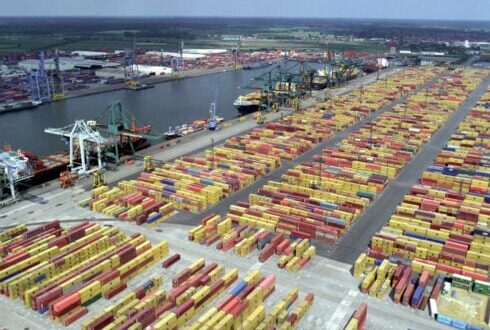
SOMETHING is rotten in the state of Belgium – and the stench is emanating from the country’s largest port.
An investigating judge in Antwerp recently broke his silence to warn that Belgium is ‘becoming a narco-state’.
He wrote anonymously out of fear for his life, in a letter that was verified by Politico Europe, and The Brussels Times. This letter has more weight than usual chatter of the chattering class.
READ MORE How the Portuguese navy foiled an attempted high-seas hijacking of a container vessel travelling along the notorious cocaine route to Malaga

In it he described a country where cocaine cartels have embedded themselves so deeply in the state’s machinery that they now form a ‘parallel power’.
The judge painted a portrait of Belgium’s second city, Antwerp, as Europe’s new Medellín: a port riddled with corruption, where dockworkers are bribed for €100,000 to move a single container, and where judges and police live under protection after a wave of kidnappings, assassinations and bomb attacks linked to drug clans.
The investigating judge – roughly equivalent to a chief magistrate who also directs criminal investigations – warned that criminal organisations have penetrated every layer of public life.
He said that customs officers, police officers, municipal employees, and even judges had been compromised. “We lost control.” He wrote: “We are turning into a narcostate.
READ MORE ‘That’s how you deal with narco traffickers’: Spain’s police union stokes controversy by lauding US strike on drug boat that killed 11

His words have set alarm bells ringing across the capitals of the European Union – but nowhere should they ring louder than in Spain.
Because if Antwerp is the northern gateway for Europe’s cocaine, Spain is its southern one – and many of the same warning signs are already flashing red.
The Port of Antwerp has seized 116 tons of cocaine since 2023. This is a slight increase from 2022.
In the same time span, Spain intercepted an incredible 117 tons; this was a huge double of the amount seized in the previous year.
In sober bureaucratic prose the Spain’s Prosecutor’s Office Report 2024 describes what the Belgian Judge described as a panic.
READ MORE Watch as police frogmarsh one of Europe’s top narco-kingpins from his luxury villa in Spain’s south coast

The country’s three main ports – Valencia, Barcelona and Algeciras – have become key entry points for Latin American cocaine.
The report admits that ‘non-anecdotal’ cases of corruption among port workers and police officers have been uncovered, including Guardia Civil agents charged with laundering drug money and customs staff caught collaborating with traffickers.
Prosecutors warn in Algeciras that the criminal industry has become entrenched to the point that narconetworks employ logistics managers and drone operators.
Spain is also facing a similar situation.
In the report, the report reveals a dramatic increase in violence. Drug traffickers are ramming patrol boats in the Strait of Gibraltar and shooting at them.
In the Costa del Sol Triangle, a geographical area that includes Marbella, Fuengirola and other nearby towns, international gangsters are killing each other.
READ MORE ‘Narco traffickers who threaten Spain must be treated the same as ETA terrorists,’ claims Andalucia president

The methods used are also the same. Both countries struggled to deal with encrypted communication systems such as EncroChat or Sky ECC. Prosecutors claim that these systems allowed criminal networks to coordinate across borders.
According to the National Court, the Spanish use the same materials in over a hundred prosecutions.
Corruption is the preferred weapon of cartels both in America and Europe.
The Antwerp judge accused his government of complacency – of letting cartels ‘buy peace’ through bribes.
Spain’s prosecutors, though less dramatic, concede that corruption ‘facilitates criminal penetration’ of port infrastructure.
READ MORE A month of violence on the Costa del Sol. One Brit is among those killed as the narco-violence returns to the region.

Recent convictions of Guardia Civil officials in Algeciras, Cartagena and other cities for assisting smugglers or laundering profits are cited.
In a shocking move, Spanish authorities arrested in Madrid the head of Policia Nacional’s economic crime unit last year for a seizure record of 13 tons of cocaine hidden inside a container of bananas in the port of Algeciras.
When they searched the home of Oscar Sanchez Gil, investigators found €20 million in cash hidden in the walls, along with a fleet of luxury cars parked outside in the driveway.
The arrests present a grimly common picture: underresourced frontline officers, a stretched justice system, porous port areas, and an underworld class of gangsters making money off Europe’s unquenchable demand for cocaine.
Spanish prosecutors have pointed out one important difference between their country and Belgium’s nightmare scenario.

The latest report from the Spanish Prosecutor’s Office acknowledges not only the threat, but also documents the counterattacks.
It describes the implementation of a national asset-recovery protocol, the expansion of international cooperation through Eurojust, and the validation by Spain’s highest courts of EncroChat evidence — allowing judges to dismantle the encrypted empires that once made traffickers untouchable.
It also names its own weaknesses openly: scanner corruption at Malaga port; inadequate inspection rates at Algeciras; and the need to end the culture of ‘competitiveness’ between ports that has led to security shortcuts.
Spain’s transparency is in itself a sign of resilience.
The prosecutors’ 500-page report details the flaws in their anti-narcotics machinery, but it is evidence that the system is functioning – still self-correcting in the teeth of the narco challenge to the state.

In contrast, the warning issued in Belgium was not issued from an institution, but rather from an individual hiding.
The difference is clear.
Both countries are on the frontlines of Europe’s cocaine traffic, with infiltrated port, corrupt officials, and an escalating race between cartels, and the state.
Spain has retained what the Belgian judge believes his country lost: confidence in their institutions to fight back.
Spain’s gunfire is confined to logistics routes, unlike Belgium, where violence and threats have reached judges, lawyers and even the royal family.
The scourge of narcosis does not extend beyond the narcolanchas There are mafias along the Costa del Sol, in the Campo de Gibraltar and the warehouses of Cadiz, Huelva, or Cadiz.
There is still a long way to go before Antwerp becomes a war zone.
The Belgian judge’s phrase ‘we are becoming a narco-state’ may not apply south of the Pyrenees – yet.
The Olive Press offers a variety of international affairs news.