Costa News Spain Breaking News | English News in Spain.

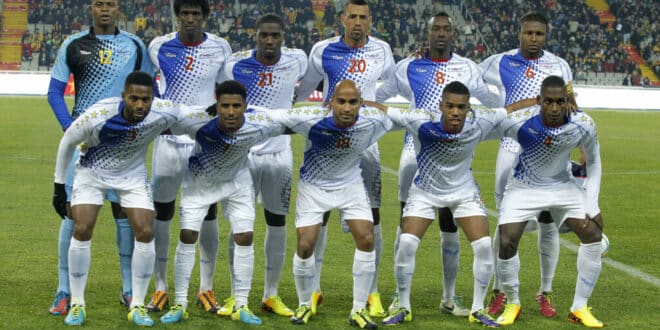
Cape Verde, a nation with a population of less than half a million, is celebrating more than just a sporting victory. Photo credit: Maxisport/Shutterstock
Cape Verde, with a population of just over 525,000, has achieved history by qualifying to the FIFA World Cup. The country will be playing in North America at the tournament 2026. The island nation, with a population of just over 525,000, achieved this historic milestone following a decisive 3–0 victory over Eswatini in the African qualifiers at the National Stadium in Praia. The result propelled the Blue Sharks to the top of Group D, finishing ahead of Cameroon, who drew 0–0 with Angola.
Cape Verde, a country which has struggled in the past to compete on an African stage represents a remarkable turn around. The nation, once largely absent from qualification processes, is now competing with some of Africa’s established soccer powers. Fans have taken to the streets in celebration of the team’s victory.
World Cup: The Path to Success
Key Matches & Players
Cape Verde’s qualification is based on a series strong performances during the group stage. Dailon Livramento scored in the 48th minute against Eswatini, Willy Semedo, in the 54th and Stopira, in stoppage-time. Livramento has stood out as a star performer. He had already scored several crucial goals in previous matches, including one against Cameroon.
Both domestic and diaspora players are included in the team, including many who were born or trained in European nations such as Portugal, France, the Netherlands, etc. The team’s resilience and consistency is a result of the combination of local talent with international experience.
Leadership and Team Spirit
Under the management of Pedro Leitão Brito, known as Bubista, Cape Verde’s squad has shown remarkable cohesion and determination. Bubista is credited with forming a squad that can compete with nations with more resources. Many have cited the players’ dedication to representing their nation as a major factor in their success.
Why This Qualification is Special
Cape Verde is now the second-smallest nation in terms of population to qualify for men’s World Cup after Iceland. The inclusion of Cape Verde in the World Cup highlights the importance of strategic investment, coupled with leadership and talent from diaspora, to enable smaller nations reach sport’s highest level.
For the World Cup in 2026, several countries will also be participating for the first. Uzbekistan is one of these newcomers, along with Jordan and Lebanon. They join Cape Verde to expand the diversity. In addition to the debutants, the host nations Canada and Mexico automatically qualify. Established teams such as Morocco, Tunisia and Ghana have also secured their places, ensuring that there is a mix of fresh talent and experience.
Looking Forward
Cape Verde is now facing the challenge of preparing itself for the World Cup in 2026. Blue Sharks may be expected to lose to footballing giants but will still strive to demonstrate their skills, resilience and team spirit. Analysts say that their international experience and disciplined style of playing provide a solid base for competing.
Cape Verde is a country of about 500,000 people. The first World Cup qualifier is not just a sporting victory, but a symbol of national pride, ambition and perseverance. Fans and footballers alike hope that this achievement will inspire and motivate a new generation to play the sport and elevate Cape Verde’s global profile.