Costa News Spain Breaking News | English News in Spain.

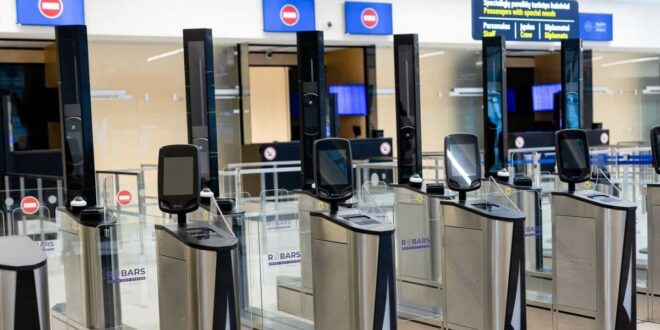
As of October 12, the new Entry/Exit System will be in force and British travellers will have to face fingerprinting, photo taking and binding questions when they arrive at EU border crossings.
The digital scheme is applicable to all non EU citizens who enter the Schengen area, including UK passport-holders, but it will initially be implemented in stages over a period of six months.
The familiar manual stamp is replaced by a central EU-wide database that tracks who comes and goes.
Simon Calder, a travel correspondent at The Independent, demonstrated the exact process in a film for The Independent.
The kiosk verifies that the passport is valid before telling passengers to remove it.
READ MORE Massive queues, travel chaos and strike action at Spain’s busiest international airport
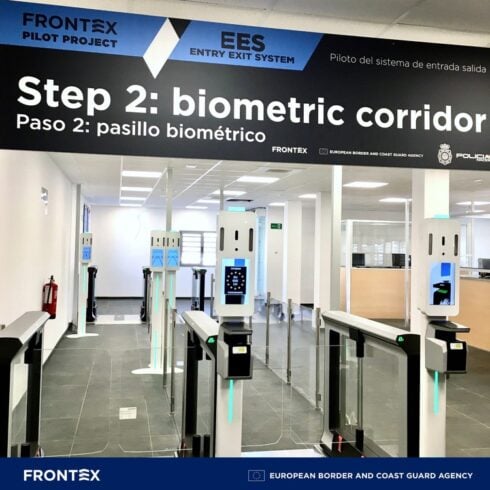
A live photo is then taken – ‘smarten up, no smiling,’ Calder jokes – while green lights signal success. Travellers will then be asked to press the four fingers of their left hand onto the biometric reader.
The questions will begin.
The kiosk asks whether the passenger has proof of accommodation, with options ‘yes’, ‘no’ or ‘don’t know’.
Calder points out that under Schengen law, the correct answer must be ‘yes’, even if many holidaymakers are not sure where they will be staying.
READ MORE Summer travel bug: Doctors warn that heat and holidays fuel gastro outbreaks
Calder clarifies that the law only requires proof of departure from the Schengen zone, not necessarily the return flight.
The traveller is also asked if they have enough money for their stay, and if they are covered by medical insurance.
Calder notes that all British citizens living in France have access to the Global Health Insurance Card. However, the kiosk question is framed much more narrowly.
He warns the audience that his answers are legally binding and can be checked by a police officer. He warns that these answers are binding and could be checked by an officer.
The machine will display a message telling passengers to gather their documents and head to the border crossing.
Calder says that this isn’t the end of the project.
The passport must be presented to an officer at the e-gate or by an officer. For at least six month, travelers will have their documents manually stamp.
READ MORETop 10 European Airports Most Likely to Experience Travel Chaos When the EES Kicks In Next Month
He describes this as ‘double red tape’, predicting longer queues as the system beds in.
The EU says that once the roll-out is complete – expected by April 2026 – stamps will be phased out altogether.
If you have already registered, the next crossing should be faster, as it will rely on facial recognition instead of new fingerprinting. This is true unless your passport has changed, or if there are long gaps between entries.
Officials say the new system is designed to improve security and reduce fraud, as well as ensure that visitors do not exceed the 90 days per 180-day period.
Critics fear chaos in airports like Malaga and Alicante, where millions of tourists and ex-pats will encounter unfamiliar kiosks at peak travel times.
READ MORE: Spain’s hotel sector slams ‘price-gouging’ 300% hike in cost of new ETIAS travel permits for Brits
The border guards must also deal with travellers who lack the proper documents and technical problems.
Travel prepared is a tip for expats in Spain. It is important to have proof of your accommodation, a Schengen ticket, travel insurance, and funds.
The EU has warned against overstaying once EES goes live.
Gibraltar, at least in the short term, is a frontier that will be left out of the system.
The Rock’s land border with Spain will not see the kiosks or biometric checks – which have already been installed – activated in October, though officials have left open the possibility of including it later.
Travel News by The Olive Press.

Find Tailor Made Travel
Simply Holiday Bookings allows you to create your own personalized holiday experience.