Costa News Spain Breaking News | English News in Spain.

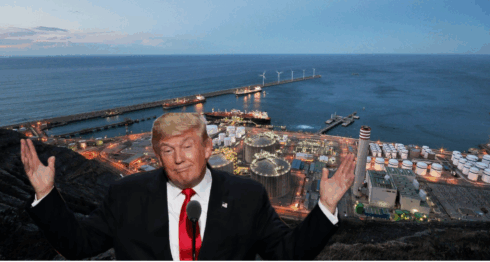
SPAIN’s role in the importation of Russian gas has once again been brought to light after Washington issued an ultimatum for the EU to cease buying Russian energy.
The awkwardness of European positions has been brought to light by the demand.
Fearing the Russian war machine’s breath on its neck and the Kremlin, Brussels has sought to close off Kremlin funding channels for years.
One of the key pillars of this strategy is to prevail upon the US to impose crippling secondary sanctions on third parties which buy Russian energy – namely India and China, and even NATO ally Turkey.
READ MORE Pedro Sanchez attends christening of new Spanish frigate – ‘the first of five’ – as Spain boosts its military credibility

In July, China purchased €6.2 billion in fossil fuels from Moscow, accounting for 42% of total sales, mostly crude. India followed with €3.5 billion, Turkey came third with €3.1 billion.
Collectively, they funded Putin’s invasion of Ukraine to the tune of €12.8 billion in just one month.
If these inflows were to be stopped, this would deal a crippling defeat to the Russian war effort.
Yet there is one snag with Europe’s strategy – recently highlighted by the Trump administration.
The fourth largest buyer of Russian energy – which the EU wants the US to sanction – was the EU itself.
Member states imported a total of €1.1 billion in July, far ahead of fifth-placed Saudi Arabia.
Unsurprisingly, Viktor Orban’s Hungary led with €485 million, followed by France at €239 million (much of it liquefied natural gas (LNG) that is re-exported), then pro-Russian Slovakia (€169 million).
Belgium, surprisingly, comes in fourth (€102 million).
READ MORE Washington accuses Spain ’emboldening terrorism’ by imposing an Israeli arms embargo
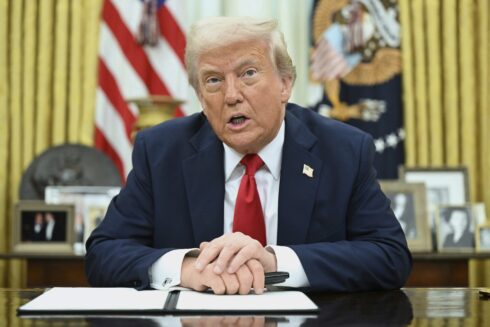
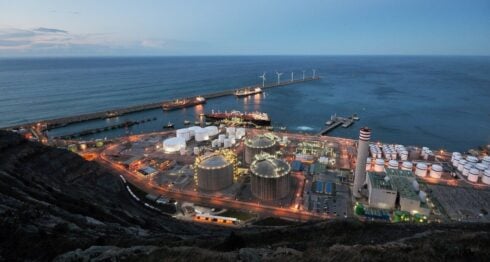
But it is Spain’s import of €66 million of Russian LNG in July that sits it within the top five.
While Hungary or Slovakia can claim they are unwillingly dependent on importing energy from Russia through pipelines, Spain is in no such position – nor does it import Russian crude.
Its importance lies in its role of a portal.
Spain is a hub for both transit and consumption of LNG, and some gas is re-exported into other European countries.
The tanker usually docks at Spain’s 7 regasification stations in Bilbao. Barcelona, Huelva, and Cartagena.
Ships can take the Northern Sea Route through Siberia in the summer, saving weeks of travel time before they enter the Atlantic and head to Iberian port.
READ MORE Vox, the extreme right party in Spain, has grown in popularity since the summer.
The amount of Spanish imports in July is not a fluke. It actually reflects a trend that has been in place for a long time.
In March 2024 – two years into the war – Russian LNG accounted for nearly 26% of Spain’s total gas imports, up from 14% the year before.
Even if volumes fluctuate – July’s €66 million was down from €144 million in April – the underlying pattern has been one of greater reliance, not less.
The inability of Brussels to enforce sanctions on EU countries and its patchwork nature is evident in the persistence of these inflows.
Europe banned seaborne Russian crude in 2022 and backs the G7’s $60 (€55) oil price cap, but – crucially – LNG remains largely untouched.
Gas is still being delivered via pipelines to central Europe.
This means that Spain has been legally free to keep importing Russian gas at its discretion – and with the alternatives all more costly or less reliable, its cabal of energy companies have continued to do so.
Algeria’s pipeline deliveries fluctuate. Nigeria’s exported have fallen. And connections to the rest Europe are still weak.
READ MORE The EU’s largest bank by market cap is now Spanish – while two more make top ten as Spain fast becomes a financial powerhouse
In reality, it’s Spanish utilities, such as Naturgy Endesa and Repsol, that choose to purchase the cargoes. These are often bought at the spot price from Russian supplier Novatek Yamal.
The result is the exact same: Russian cargoes continue to pass through Spanish ports and ensure a steady revenue flow back to Moscow.
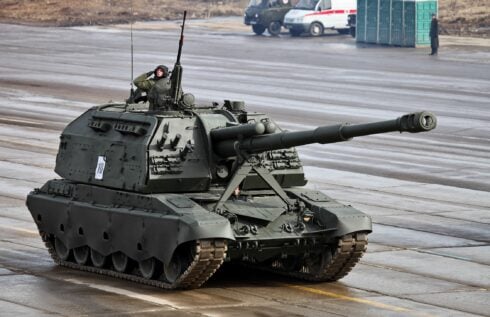
The European Commission is now debating new measures: lowering the price cap, tightening enforcement against Russia’s ‘shadow fleet’ of tankers, and even phasing out all Russian oil and gas by 2028.
There is still resistance, especially from Viktor Orban’s Hungary which claims that alternative supplies are neither affordable nor secure.
Orban’s and Fico’s Slovakian counterpart’s suspicions are not diminished by this.
READ MORE Spain’s Pedro Sanchez calls Gaza offensive ‘genocide’ and announces formal embargo on all weapons to Israel

Critics attribute Orban’s unwillingness to wean himself from the Russian teat, to the massive wealth and stately mansions his family have acquired. They suspect that much of this is funded through kickbacks received via Russian oil contracts.
The American logic is easy to follow amidst the half-measures, excuses and corruption.
The FT reported Washington’s signal that it would only tighten sanctions if Europe stopped buying Russian gas.
Why should the US help Europe when Europe cannot help itself?
Trump’s own reputation is tainted by suspicion.
Many question if he has ever had the true intention of applying sanctions and punishing Vladimir Putin and his war machine.
The question policy makers in Europe are wrestling with is whether Trump is playing a double game – throwing up a series of increasingly impossible and costly demands in exchange for dangling the carrot of American aid.
The pattern is the exact same, whether it’s his calls for a Russian energy ban and 100% tariffs against China, or his demand that defence expenditures be 5% of the GDP.
READ MORE: SUNDAY LONG READ: People smuggling from Algeria to Spain is on the rise – thanks to drug traffickers diversifying and murky international politics
Europe could do itself irreparable fiscal and economic damage in acquiescing to these phantom demands – and ultimately face betrayal and receive nothing in return.
Either way, the paranoia does not change the fundamental equation – Europe needs to stop funding the Russian war machine.
What are your alternatives?
Trump’s USA is the biggest winner of Europe’s withdrawal of Russian energy.
The US has overtaken Russia as the leading LNG supplier, accounting for nearly half of all EU LNG imports in 2023–24.
Norway is the EU’s biggest supplier of pipeline natural gas. It covers more than 30% demand.
Qatar has signed long term contracts with Germany and Italy, but the new supply won’t start until late 2020s.
Algeria continues to be a key gas provider for southern Europe. It supplies gas directly into Spain through Medgaz and Italy via the TransMed pipeline. LNG in smaller volumes arrives from Nigeria, Egypt, and Trinidad.
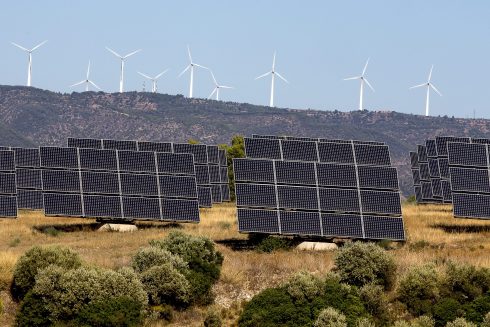
Europe is moving beyond hydrocarbons to accelerate renewables. Spain and Portugal generate over half of their electricity through wind and solar power, while France relies on nuclear power for 70%.
Brussels also pins hopes on green hydrogen projects in Spain, Germany and the Netherlands – though these remain years from scale and are expensive capital investments.
It has cost Europe a lot to abandon cheap Russian energy.
The price of Norwegian pipeline gas is high, while LNG cargos from the US or Qatar are even more expensive once shipping, regasification, and other costs are taken into account. Renewables also require a large upfront investment for grids and storage.
These factors have combined in a flurry that has rained down a torrent of punishment on European economies, during a dangerously dangerous new era characterized by Trump’s Tariffs and China’s Dumping.
The shift has left households paying more for electricity and heating, with energy bills in many EU countries still 30–50% above their pre-war averages.
The high electricity and gas costs in Europe have forced many heavy industries, such as those in steel, chemicals, fertilisers and other energy-intensive sectors, to either reduce production or relocate.
Governments have had to shoulder the burden by spending hundreds of billions on subsidies, tax breaks and price caps – Germany alone committed over €200 billion between 2022 and 2024, while Spain and France have each spent tens of billions shielding families from inflation.
Many European citizens naturally view these outcomes as a very high price to pay – all to blunt the Russian war machine.
The question is: Would the alternative be worse than this?
Would a well-funded, blood-lusted and – crucially – victorious Russian army camped on the EU’s borders be better than a drawn out economic decline?
Some Spaniards, who are sheltered and safe from the frontlines, have a firm no.
As the 21st Century progresses, the world has become a more dangerous place for Europe.
Russia’s assertiveness coincides with Trump’s gradual removal of the American security umbrella – in spite of the hope that one-sided trade deals would keep him engaged.
Without America to protect it, European leaders will either have to get serious and make some tough choices, or permit predatory states such as Russia to expand its empire and extend its corrupting influence into western capitals – and the heart of Europe itself.
The Olive Press has more Must Read News. Click Here to Read More.