Costa News Spain Breaking News | English News in Spain.

OSTEOPOROSIS is no longer irreversible – bones can recover with current treatments.
The Rheumatology Unit at Hospital Quirónsalud Marbella leads the way in advances that make it possible to prevent fractures and improve patients’ quality of life
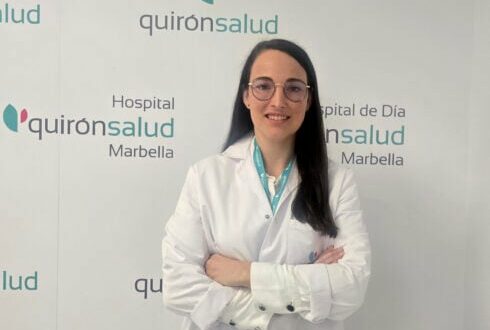
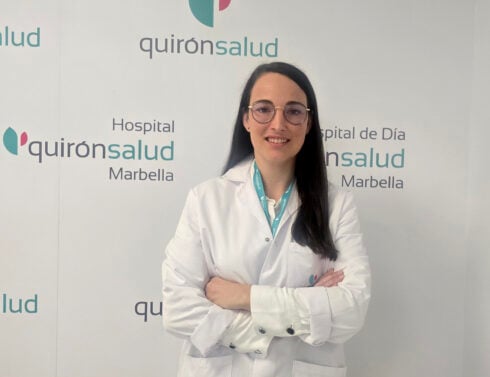
Dr Nerea Costas, Director of the Rheumatology Department at Hospital Quirónsalud Marbella, who underscores the “importance of early diagnosis and a comprehensive approach to changing the outlook of this silent condition”.
The challenge, she adds, is that “it is asymptomatic, and we often diagnose it after a fragility fracture has already occurred — which is precisely what we want to prevent”.
Specialists note that fractures of the spine or hip can cause chronic pain, loss in independence, and a decline in life quality.
She stresses the importance of early detection in preventing fractures, which could be prevented with proper treatment.
In the Costa del Sol, there are certain factors that make monitoring more important. The bone density begins to decrease naturally at the age of 35. Due to the importance of oestrogen for bone health during menopause, this is a crucial turning point.
Unhealthy habits, such as smoking and drinking alcohol, poor nutrition, and limited sun exposure, also play a role. In addition, certain treatments — such as corticosteroids or hormone therapy for breast cancer — and conditions such as rheumatoid arthritis significantly increase risk.

Dr Costas says that, although there isn’t a universal consensus for screening, “all women who have gone through menopause and all men over 75” should be assessed.
Early diagnosis has improved significantly. Bone densitometry, available at Hospital Quirónsalud Marbella, allows physicians to accurately assess bone status and intervene before a fracture occurs.
If we find that the bone density is below the threshold for fracture risk, we will begin a specific treatment tailored to your case.
The specialist explains that these treatments strengthen the bones and prevent fractures, and they are complemented with blood tests focused specifically on bone metabolism.
Dr Costas emphasizes that bone can be recovered. Current treatments are able to stimulate the formation or slow down accelerated bone loss by combining pharmacological and nutritional options.
“We have a complete therapeutic arsenal today”, she said, highlighting that intervention goes beyond medications.
The unit will adjust each patient’s diet and incorporate calcium and vitamin D supplements when necessary. It will also design exercise programmes, which include moderate-impact exercises such as Nordic walking, racquet sport, or dancing.
She explains that the musculoskeletal systems reflects the relationship between muscle and bone, meaning that both are essential for patient outcomes.
Specialists insist that prevention is key. The best way to prevent osteoporosis is by maintaining a calcium-rich, natural diet, avoiding ultraprocessed food, exercising regularly and getting enough sun exposure.
Hospital Quirónsalud Marbella has consolidated a comprehensive care approach that distinguishes its healthcare model. The unit is closely linked with the Gynaecology Department, Traumatology Department and Rehabilitation to ensure every patient receives the correct intervention at the appropriate time.
“Our goal is primary prevention of fragility fractures — restoring bone density so patients never experience a fracture — and secondary prevention: if they have already had one, preventing another”, explains Dr Costas Torrijo.
A second fracture is a high risk after a first one, so a specialist assessment is essential to stop this fragility cycle.
With a personalised approach, precision technology and therapies capable of restoring bone, Hospital Quirónsalud Marbella positions itself as a benchmark in osteoporosis care, offering solutions that can alter the natural course of the disease and improve patients’ quality of life.

Quirónsalud in Andalucia
The Quirónsalud Group in Andalusia currently operates eight hospitals located in Málaga, Marbella, Los Barrios (Cádiz), three in Seville (Sagrado Corazón, Infanta Luisa and Materno-Infantil), Córdoba and Huelva, as well as two day-surgery hospitals in Seville and Málaga and 22 specialised medical and diagnostic centres, positioning it as the leading private hospital provider in the region.
About Quirónsalud
Quirónsalud is Spain’s leading healthcare group and, together with its parent company Fresenius-Helios, also a leader in Europe. In addition to its activity in Spain, Quirónsalud operates in Latin America.
More than 50,000 healthcare professionals are employed across 180 facilities, including 57 hospitals that have more than 8,000 beds. It boasts cutting-edge technologies and a large, highly specialised team with international reputation.
Its centres include Hospital Universitario Fundación Jiménez Díaz, Centro Médico Teknon, Ruber Internacional, Hospital Universitario Quirónsalud Madrid, Hospital Quirónsalud Barcelona, Hospital Universitari Dexeus, Policlínica Gipuzkoa, Hospital Universitari General de Catalunya and Hospital Quirónsalud Sagrado Corazón, among others.
The Group promotes teaching (eleven of its hospitals are university hospitals) and medical-scientific research (it has the Fundación Jiménez Díaz Health Research Institute, accredited by Spain’s Ministry of Science and Innovation).
Its healthcare services have been organised into networks and units that are cross-disciplinary, allowing for the best use of expertise accrued across centres. This also facilitates the clinical translation and application of research.
Quirónsalud is currently developing numerous research projects throughout Spain, with many of its centres leading advances in specialties such as oncology, cardiology, endocrinology, gynaecology and neurology, among others.
Visit our website for more information
Call +34 952 774200
Read more Health News at The Olive Press by clicking here.