Costa News Spain Breaking News | English News in Spain.

Rachel Gore
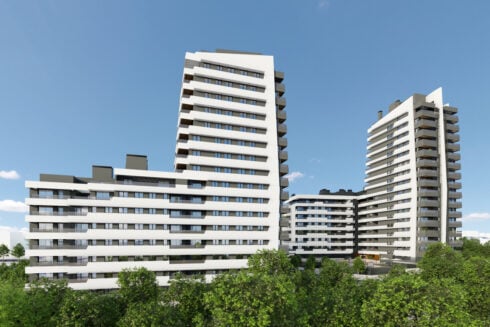
A NEW wave of black and white striped buildings is making its way across Spain – and causing backlash from architects who call them ‘fast food’ homes.
The familiar zebra-shaped housing blocks are popping up everywhere in the country. barrios Luxurious developments
Some boast even marble kitchens and bathrooms, as well as underfloor heating.
But there is a group of architects who have started referring to these blocks as ‘fast food’ homes – repetitive eyesores that are constructed rapidly and feature a one-size-fits-all design.
READ MORE Spain’s property market is booming – but not quite as you think: Office space returns the biggest margins, but where is housing?
These are characterized by horizontal black-and-white stripes, darkened glass panels, and polymer and glass reinforced concrete.
According to architects, zebra blocks of housing are not sustainable and cannot create a city because they are not built using local materials or are linked to the climate.
The professionals are now sharing their opinions on social media. They use the Instagram handle @bloque_cebra. This allows them to be anonymous and not have their critics associated with one name.
The architects say that developers are responsible for the growth of the zebra housing blocks. They claim they ignore the work of the architects and only focus on efficiency.
READ MORE: Spain hits luxury property giant Engel & Völkers with €16m ‘fake self-employed’ fine

These people blame developers, councils and purchasers for the high number of blocks.
The developers have defended their blocks by stating that they are valued and work well.
The blocks are also viewed as a way to meet the high demand for housing, because they can be built quickly and efficiently. They appeal to people of all income levels.
These blocks are now visible in Malaga as well in Bilbao and Madrid.
The Council of Architectural Associations agreed that the large blocks could be harmful. It instead advocates for ‘quality architecture that adapts to the environment’.
The zebra-striped housing was created in Spain during the 1960s and 70s to house migrants.
READ MORE Costa del Sol property prices soar 17% as two-bed flat reaches an eyewatering €318,000
These past public housing developments were however linked to the location they were in – they were recognisably tied to local communities.
In contrast, the modern-day zebra housing blocks are often ‘hyper-privatised’, says Bilbao-based architect Iñigo Berasategui.
Many of the luxurious ‘fast food’ housing blocks feature exclusive paddle tennis courts and swimming pools that can only be used by residents.
This is yet another criticism that @bloque_cebra made.
Since the account’s launch this summer, they already have two million visits to their profile a month – something which they are attributing to people feeling fed up with the zebra pattern becoming normalised.
As zebra housing blocks continue to multiply across Spain, the debate surrounding them continues – individuals are questioning whether they are a smart solution to modern housing demands or signs that cities are being shaped by speed and profit.
Read more Property News at The Olive Press by clicking here.