Costa News Spain Breaking News | English News in Spain.

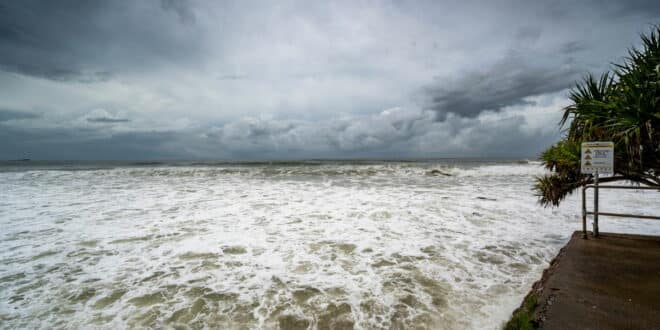
Over 600.000 people were evacuated. Photo credit: Wirestock/Freepik
As Typhoon Kajiki nears the central coast of Vietnam, Vietnam has taken extensive emergency measures. Typhoon Kajiki is expected to hit the central coast of Vietnam on Monday morning at around 9am GMT. It will bring winds of up 166 km/hr. Authorities have taken swift action in order to protect residents from the storm and minimize potential damage.
Over 600,000 people were evacuated in response to the disaster, mainly from the provinces Thanh Hoa and Quang Tri. Hue and Da Nang also received evacuation orders. Around 152,000 households were relocated and around 60,000 fishing boats with approximately 249,000 crew members were ordered to return port. This is the largest evacuation in Vietnam since recent years and reflects the severity of the Kajiki threat. The Vietnamese government mobilised over 16,500 soldiers and 107,00 paramilitary staff to help with evacuation and rescue operations. Shelters and temporary accommodation are being set up outside of the projected path of the storm by emergency teams to help residents reach safety. In addition, the airports of Thanh Hoa province and Quang Binh have been closed. Many flights have also been cancelled. This has further limited travel for residents and tourists.
Typhoon Kajiki caused major disruptions in China’s Hainan Province, where more than 20,000 people evacuated from the area and 21,000 fishermen returned to shore. In Vietnam’s Nghe An Province, a man died as he secured his roof before the storm. Authorities have warned residents in coastal and low-lying areas to exercise extreme caution.
It is predicted that the typhoon will bring torrential downpours, with some parts of the country receiving over 300 millimetres. Landslides and river systems are both likely to be affected, especially those in mountainous terrain. High waves and strong wind are expected in coastal areas, which could damage agricultural land, homes and infrastructure. Around 300,000. hectares are under threat, including rice fields, fruit plantations (77,000 hectares), and rubber plantations (57,000 hectares). This could have a negative impact on food production and livelihoods. Climate change, say experts, is responsible for the rapid intensification and development of storms such as Kajiki. This storm developed from a tropical depressive depression just days before it reached Vietnam. The storm will weaken as it moves inland, due to the cooler temperatures and the loss of moisture in the air. However, its initial impact may be significant.
Authorities continue to monitor conditions and provide regular updates to residents to ensure their safety. Emergency services, local officials, and military personnel remain alert to handle emergencies, rescues, or deliver aid to communities. The ongoing preparations demonstrate Vietnam’s proactive approach in disaster management, and the importance of rapid, coordinated action when faced with powerful tropical storms.