Costa News Spain Breaking News | English News in Spain.

A SHIVER down the spine from a scoop of ice cream could be a thing of the past for many after scientists at a British university developed an ‘exciting’ new gel that could repair and regenerate tooth enamel.
Researchers at the University of Nottingham’s school of pharmacy and department of chemical and environmental engineering say the new protein-based substance could open the door to ‘new possibilities’ for treatment against tooth decay.
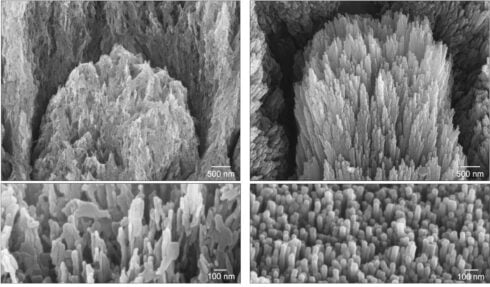
The gel works by mimicking key features of the natural proteins that produce enamel in infants – helping to reverse the process of tooth degradation.
The gel forms a thin layer to fill in cracks and holes on teeth. It acts as a scaffold, absorbing calcium and phosphate from saliva and encouraging controlled growth of new minerals.
Paul Hatton, a professor of biomaterials science at the school of clinical dentistry in Sheffield and a member of the British Dental Association’s health and science committee, said: “Recreating natural enamel to repair teeth has been something of a ‘Holy Grail’ for dental material scientists for many years, where this paper suggests an exciting breakthrough has been made.”
Results of research published in Nature CommunicationsA leading scientific journal.
READ MORE: Dodgy dentist scams customers with ‘double’ loans in Costa Blanca and Murcia areas of Spain
Professor Alvaro Mata of the chair in biomedical and biomaterials, who led the study said: “We’re very excited about the technology because it was designed with clinicians and patients in mind.”
“We are hoping to release a product next year.” [and] This innovation will soon help patients around the world.”
He added that the new gel can be ‘easily and readily applied’ in the same way dentists currently apply fluoride treatments.
Dr Abshar Hazan, the leading author of the research, stated: “Dental Enamel has a uniquely structured, giving it its remarkable qualities that protect our teeth for life from physical, chemical and thermo-thermal insults.
The material encourages crystal growth in a coordinated and integrated manner. This restores the natural architecture of healthy enamel.
Enamel degeneration is one of the major causes of tooth decay, and it is also associated with dental issues that affect almost half of all people in the world.
These problems can lead to tooth loss and infection, and they are often associated with diabetes.
Oral diseases affect 3.7 billion people worldwide, according to the World Health Organisation.
Click here to read the latest Spain News at The Olive Press.