Costa News Spain Breaking News | English News in Spain.

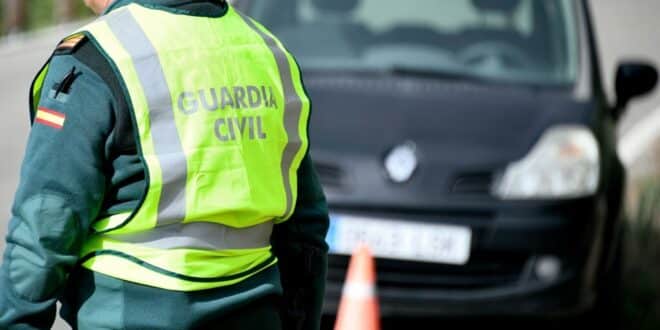
Guardia Civil Traffic Control on a Spanish Road
Credit : Joan Llado, Shutterstock
If you live in Spain long enough, you start learning the rules of the road the same way you learn where to find ripe avocados at the supermarket – through trial, error, and the occasional shouted reminder from someone who has clearly been doing this longer than you.
Most expats are aware of the basic rules for driving in Spain: follow speed limits, avoid using your phone and wear your seatbelt, even when you’re on a short trip. And, please, do not drink “just one” and drive. Spain is strict – and openly so – when it comes to road safety.
But here’s what many foreign residents don’t realise: while the standard maximum traffic fine is €500, there are situations – surprisingly common ones – where the penalty jumps from a painful €500 to an eye-watering €20,000.
Yes. Twenty. Thousand. Euros.
And no – we’re not talking about police inventing new rules or punishing tourists. These fines have been written into Spanish law under the same legal framework as your regular driving tickets.
So let’s break this down clearly, calmly, and with less panic than the number “€20,000 fine” naturally provokes.
Most drivers face fines
You can also find out more about the following: DGT (Dirección General de Tráfico) sets three basic traffic fine levels across Spain:
| Type of Infraction | The Typical Fine | Notes |
| Minor | Up to €100 | There is usually no loss of points |
| Serious | €200 | Points deduction may be involved |
| Very Serious | €500 | Reserved for dangerous behaviours |
Most drivers will face these penalties if they make a mistake. Many expats compare Spain’s laws on driving to those in the UK and Ireland, and conclude that Spain has stricter and uniformed rules.
- Above 0.25 mg/l of alcohol (or 0.15 mg/l for new or professional drivers): €500 + 4 licence points
- Above 0.50 mg/l or any trace of drugs: €1,000 + 6 points
The worst is yet to come. The offence is criminalized under Spain’s Penal Code Article 379 if the police find that the driver was actually impaired. This can lead to:
- The maximum driving ban is 4 years
- Fines imposed by a court
- You could face up to six months in jail
The Spanish system is based upon a clear logic
You can expect to pay a price if you put other people at risk.
But none of this explains the €20,000 fines. For that, we need to look beyond how you drive – and into what you The following are some of the ways to improve your own ability to do so. To the road itself
So Where Do the €20,000 Fines Come From?
Below is a list of the most recent posts. Article 80.2(d) of the Spanish Traffic LawThe highest fines are reserved in situations where the road safety of others is at risk, but not because of driving behaviour.
This can include:
- Work on the road without authorization
- Damage, removal, cover, or tampering of road signs
- The road is dangerous if you leave objects or residues.
- Damage to road surfaces, barriers or safety elements
In these cases, the fine can range from €3,000 to €20,000.
The following incidents, which may seem unusual, can be applied to everyday life situations:
- A business that places unauthorised signs on a traffic roundabout
- Homeowner blocks road access for public while renovating
- A driver who destroys a sign, barrier or other object and leaves without reporting it
- An amateur DIYer is dumping materials in places they shouldn’t.
Many expats find themselves caught unawares: ignorance of Spanish Administrative Law is not a defense.
When the Guardia Civil informs the police of the incident, then the process for imposing a fine begins.
And it’s not just car drivers: Motorbikes, cyclists & scooters too
If you live in a city in Spain, especially Madrid, Barcelona, Valencia, Málaga or Sevilla, you’ll know how common e-scooters and bikes have become. Their users are also not excluded.
- Cyclists can’t lose licence points (because they don’t need a licence), but they can face fines of up to €200 for:
- Running red light
- Riding in the dark without lights
- Cycling on the pavement is prohibited
- Electric scooter (VMP) users can be fined €100 to €200 for:
- Riding with headphones
- Use the pavement
- When required, riding without a helmet
And if a scooter rider tests positive for alcohol or drugs, the exact same fines apply as to drivers – up to €1,000.
The DGT wants all riders to adhere to the same principles, whether they are on two wheels or four, and even if they have an electric plank that has handlebars.
Don’t put others in danger.
What’s your intention behind this?
Spanish officials are blunt
Prevention is the main goal and not revenue.
The highest fines target behavior that increases the risk:
- Fatal accidents
- Road blockage
- Public infrastructure damage
Spain’s road safety record has improved enormously over the last two decades — and the DGT wants to keep it that way.
Expats: The Bottom Line
You don’t need to panic — but you do need to know the rules:
- For normal driving mistakes, the maximum fine is €500.
- Alcohol and drug-related offences escalate quickly – to €1,000 or even criminal court.
- The €20,000 fines only apply in very specific cases involving damage or obstruction to public roads.
If you would not do it at home, don’t even think about doing it in Spain.
If you have ever damaged something on your car?
Report the incident immediately.
It could be the difference between a tense phone call with your insurer…
and a €20,000 fine.