Costa News Spain Breaking News | English News in Spain.

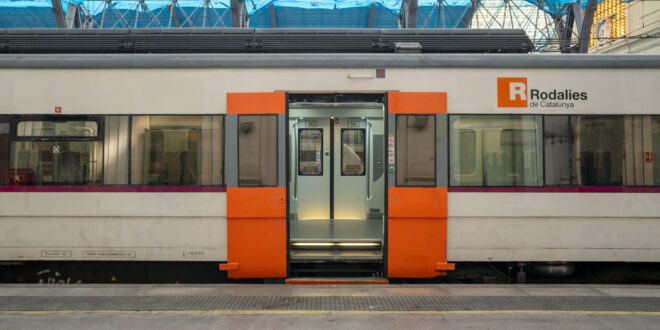
A month after an accident that killed a passenger near Barcelona, Rodalies commuter train system still runs with closed lines, reduced speed and 25 percent fewer passengers.
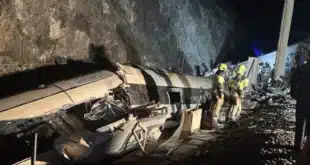
The traffic on Barcelona’s Rodalies commuter railway network has dropped sharply one month after an accident that killed six people in Gelida. Six lines are now disrupted and 210 sections have been speed restricted. Around 100,000 passengers a day no longer use the service.
A 28-year old trainee Sevilla train driver died in the crash near Gelida, in the province of Barcelona, after a retaining-wall from the AP-7 autobahn collapsed onto tracks following a heavy rain.
Since then, network activity has been far below normal.
Rodalies transports around 400,000 people per day.
According to the company, around 25 per cent of users have stopped using the service – equivalent to roughly 100,000 people.
Read more: Breaking: Driver dead, at least 20 injured passengers after train derails in Barcelona
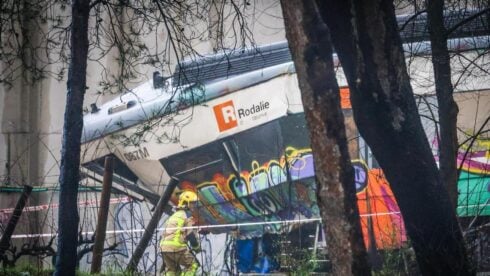
Many are now using cars, the Metro or remote working.
Road traffic entering and leaving Barcelona has increased by around 5 per – approximately 36,000 additional vehicles – leading to regular traffic jams.
Metro use in the city has also increased, with 700,000 additional passengers being recorded in the week following the accident.
Overcrowding in the subway, which was once limited to rush hours and weekends, has become more common.
Rodalies is still a major source of interruptions, with six lines affected.
The R3 & R8 lines, which connect La Garriga w/ La Tor de Carol et Martorell w/ Granollers remain closed.
Lines R4 and R15 are partially disrupted, including sections between Sant Sadurní and Martorell, and between Reus and Roja.
Line R3 does not provide service between Barcelona and La Garriga.
Line R7 runs between Cerdanyola University and Cerdanyola.
Restoration dates for R7 and R3 were set in May 2026 and January 2027, respectively.
On some lines R1, R4 & RL4, shuttle buses and replacement trains are used to complete trips.
READ MORE: Watch: Barcelona’s iconic Sagrada Family finally reaches its maximum height after 144-years of construction, with the installation of the crowning cross
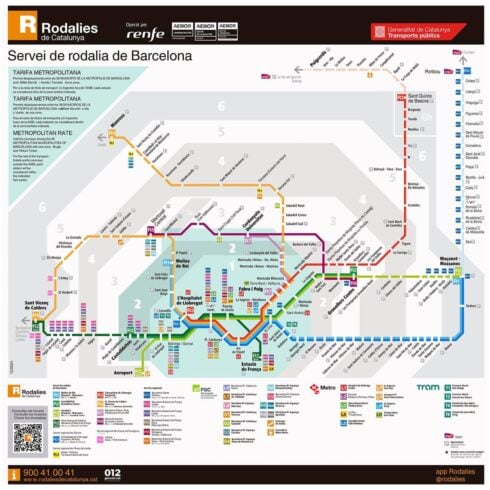
On the entire network, there are 210 sections where trains must slow down for safety. This figure was 193 two weeks ago.
The situation has ignited a political debate about the transfer of Rodalies’ management to the Generalitat of Catalunya.
Catalan nationalists argue that speeding up the transfer will help solve the crisis.
Pere Macias is the commissioner who oversees the transfer process. He said that the current crisis could not have occurred if it had been managed by the Catalan government.
Pro-independence party Junts per Catalunya has rejected that claim, calling the transfer a ‘fake’ arrangement that merely distributes responsibilities between administrations.
Jordi Tuull, the general secretary of the organization, has said that under the current model of joint management, the public is unaware who is in ultimate charge.
Rodalies is not up to standard yet, and passengers are less confident about using it.
Click here to read the latest Spain News at The Olive Press.