Costa News Spain Breaking News | English News in Spain.

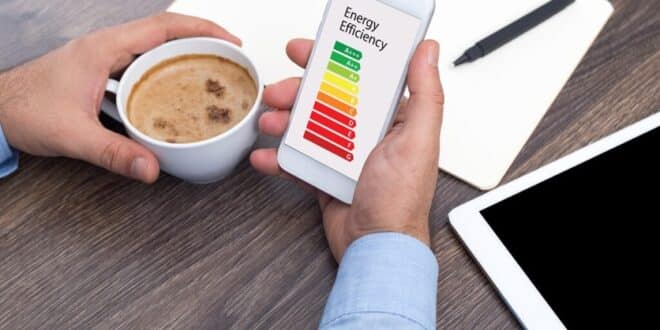
New EU rules mean your next phone or tablet will come with an energy label—just like your fridge. Before you upgrade your technology, here’s what to consider.
Credit : garagestock, Shutterstock
You’re considering buying a new tablet or phone? You’ll see something new in Europe starting June 2025: an energy label on each device. Let’s take a look at what this label means before you glaze your eyes.
Why does the EU require energy labels on phones and tablets?
We all know we tend to buy the phone that is attractive, has a good camera and (if lucky) doesn’t cost too much. The EU wants us all to be a little more savvy, particularly when it comes time to save money, protect the environment, and know how long our gadgets last.
In June, all mobiles and tablets will be required to display their eco-credentials. Or on the box. The new label lets you know at a glance if the battery can handle being dropped, if it is repairable, and how much time it will last.
What’s new on the energy label? There’s much more to energy than power
What you will see when you open a new gadget:
- The Basics: This is the basic information. You will get the name of the company, the model and a QR Code that leads to the EU database.
- Energy Rating: Mobiles, like washing machines and fridges, are now rated A to G.
- Battery Life & Endurance: See how long your phone’s battery will last between charges, and (for phones) how many drops it can supposedly survive without giving up.
- Repairability Score – Because no one wants to own a phone where the cost to repair it is more than what they paid for it. The new score will tell you if your device can be repaired easily (A) or is a real nightmare (E).
- Battery lifespan isn’t just about how long one charge lasts but also the number of charges you can make before your battery gets worn out. After 800 charges, you should see at least 80% of the battery.
- Water & Dust Resistance: No more guessing. Look for an “IP” number—if your phone’s at least IP44, it should handle splashes and a bit of dust.
- This is only for true technophiles. Each device has its own unique number, so everything is in order.
Why is it important to you?
Nobody likes surprises. Especially when the battery on your phone dies in the middle of the day, or if the repair shop gives you an outrageous quote. These new labels will let you know exactly what you’re buying before you ever open the box.
Also, it means less waste. If everyone buys phones that can be repaired easily and last longer, then fewer will end up in landfills. This is a huge win for the planet, and puts more pressure on brands.
Don’t buy the most expensive phone when June 2025 arrives. Check out the label. You could save money, headaches and even trips to the repair shop.
Buying smart isn’t just good for you—it’s good for the planet, too. Who wouldn’t?