Costa News Spain Breaking News | English News in Spain.

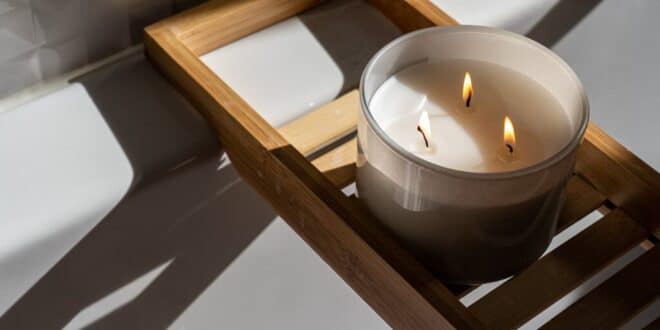
Scented candles. Credit: Castorly Stock / Pexels
A growing body of evidence shows that lung cancer is not a disease only affecting smokers. Non-smokers’ lung cancer is on the rise, and scientists are attributing this to something much closer to home – indoor air pollutants from everyday products.
According to the Centers for Disease Control and Prevention (CDC), between 10–20 per cent of lung cancer cases occur in people who have never smoked or smoked fewer than 100 cigarettes in their lifetime. Unfortunately, non-smokers are often quick to dismiss early symptoms such as a persistent cold, which delays diagnosis.
Indoor pollutants can cause lung cancer
Studies in Nature There are already cases of lung cancer among non-smokers that have been linked to air pollution such as exhaust fumes from vehicles, toxic chemicals and cooking fumes. Some people believe that ultra-processed food and its packaging could also be a factor.
Scientists warn, however, that homes may be more dangerous than streets. U.S. Environmental Protection Agency found that concentrations of volatile compounds (VOCs), indoors, can be up to 10 times greater than the outside air. The landmark TEAM study found that this was true in both rural and suburban homes.EPA).
VOCs can be released by cleaning sprays and disinfectants. They are also found in paints, air-fresheners, scented candle, furniture, plastics and beauty products. Inhaled VOCs can travel to the lungs and bloodstream where they cause irritation, cancer and long-term damage.
Hair styling releases millions of nanoparticles
One of the most startling recent findings comes from Purdue University, where researchers discovered that a 10–20 minute heat-based hair routine exposes people to more than 10 billion nanoparticles that lodge directly in the lungs (Phys.org).
Nusrat J. Jung, Purdue assistant professor of engineering said: “This is quite alarming.” The number of nanoparticles that were inhaled by using store-bought products to care for your hair was much higher than we had ever expected.
Up until now, there had never been any real-time home studies of nanoparticles formation during hair styling. Jung’s team found that when hair products are combined with heat above 150°C, they release a surge of airborne particles that can trigger respiratory stress, lung inflammation, and even cognitive decline.
What’s the advice? Avoid heated styling devices when using sprays or, at least, ensure that you have a strong extraction fan.
All-day household products are being tested for toxicology
Report from Hartford Hospital Warning: many household items contain chemicals linked to cancer.
- Cleaning products and disinfectants – often contain benzene and formaldehyde.
- Paint – VOCs can linger in the air long after painting.
- Air fresheners – emit harmful VOCs such as toluene and benzene.
- Scented candles – paraffin wax candles release benzene and toluene when burned.
- Plastic containers – BPA and phthalates may leach into food, especially when heated.
- Non-stick pans – older Teflon-coated cookware may release PFOA, a “forever chemical” linked to kidney, liver and testicular cancers.
Hidden dangers of household dust
According to studies, dust may appear harmless but is actually a toxic mixture of over 250 chemicals. Environmental Science & Technology.
It contains pesticides, microplastics, flame retardants, and PFAS (‘forever chemicals’). This product contains endocrine-disrupting chemical (EDCs), which can disrupt hormones and affect fertility, immunity, cancer risk, and more.
“Dust is an incredible reservoir for chemicals in the home – chemicals that can stay there for years,” said Robin Dodson of the Silent Spring Institute.
Experts recommend weekly HEPA cleaning, damp cloth dusting instead of feather dusters, and regular handwashing to children, as they are the ones most at risk.
Cleaning can be harmful to your health
The pandemic caused people to use stronger disinfectants and more often. Studies now show that excessive cleaning can harm lung health.
Environmental Working Group found that 30 common household cleaners contained 193 toxic chemicals (TIME). Professional cleaners are at a higher risk for asthma and chronic obstructive lung disease (COPD), which is correlated with frequent exposure.
Doug Collins is a chemist from Bucknell University. He said, “Cleaning shouldn’t be synonymous with disinfection.” If you have a mess that is not too serious, white vinegar, hydrogen peroxide or plain soap are better alternatives.
Radon and secondhand smoking remain the two most deadly killers
The EPA stresses that radon – a naturally occurring radioactive gas seeping into homes – is the second leading cause of lung cancer overall.
Michael Repacholi is the coordinator of WHO’s Radiation and Environmental Health Unit. He said that radon poses a health risk for populations around the world. However, it has not received much attention. He said that radon in homes was the major source of exposure for ionizing radiation and accounted for half of the public exposure to naturally occurring sources of radiation.
Indoors, second-hand smoke and “third-hand” (chemicals left on surfaces, walls and fabrics) continue to pose a danger.
Cancer survivor’s Story
Cancer survivor Susana Demore told Newsweek She changed her life when she was diagnosed with aggressive cancer of the breast while 35 weeks pregnant. She had a double mastectomy after undergoing chemotherapy and delivering her child early.
“Once I had gotten myself into a better position, I started to make lifestyle changes. I’ve swapped personal care products – including skincare, haircare, cleaning supplies, and laundry detergents – and made many changes in our kitchen as well, because what touches our food matters,” she said.
Susanna has over 77k folllowers on Instagram You can watch videos on YouTube about how to get rid of plastic containers, non-stick pans and air fresheners.
Protecting your lungs at Home
Experts suggest these simple steps to take:
- Open windows and use extractor fans to ventilate daily.
- Switch to soap, vinegar or hydrogen peroxide instead of chemical-heavy cleaning products.
- Choose products that are fragrance-free and eco-certified.
- Vacuum your home weekly using a HEPA vacuum filter.
- Test your home for radon.
- Use glass or stainless-steel instead of plastic to reheat food.
- Reduce the use of air fresheners and scented candles.
- Keep vaping and smoking outside.
Irony strikes: the products that are sold to make our bodies and homes cleaner and fresher may actually cause cancer in nonsmokers. Researchers warn that the dangers of VOCs and nanoparticles in our homes have been underrated for years.
Is it the responsibility of individuals to protect their health or that of governments?
All health and beauty articles are available.
All Home and Garden Articles