Costa News Spain Breaking News | English News in Spain.

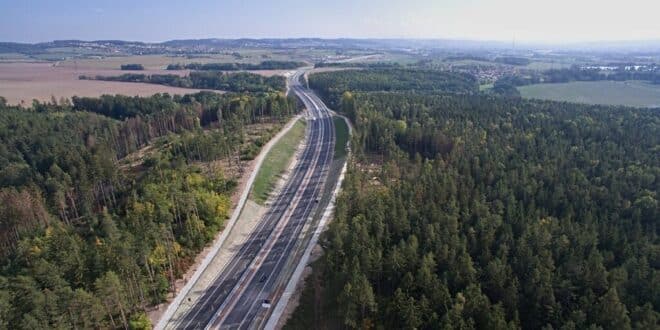
150 km/h trial route: a 50 km stretch of the D3 between Prague and the Linz corridor will test 150 km/h via variable signs—dropping back to 130 km/h in bad weather, with 42 gantries installed for the pilot.
Credit: Wikipedia
Where the 150km/h test will run – and why now..
Czechia will soon be a leader in the world. From late September, a 50-kilometre stretch of the D3—the route heading from Prague towards Linz, Austria – will pilot a top speed of 150km/h. It’s a simple idea: on sunny, quiet days, the road is capable of safely handling a little more speed than the 130km/h limit. Ministers are looking for real evidence and not just a bunch of platitudes, so they will be watching how drivers act, as well as the crash statistics. Martin Kupka’s brief was clear: to see how the public reacts and, more importantly, if there are any increases in incidents. If the numbers are reasonable, then other motorways might follow. If not it’s back down to 130, and the lesson is learned.
How the D3 will handle “smart-speed”
This isn’t just a speed race with no adult supervision. The state is spending €2.2 million on 42 variable signs along the pilot section. These gantries show 150 when the weather is good and traffic flows. If rain, fog or ice moves in—or the road gets busy—the live limit drops to 130km/h. The road will tell you what is safe. Right nowIt’s not about what you remembered yesterday, but rather, it is about the information on the sign. This is the same logic that’s used across Europe to set variable limits. It just gets a little higher when the conditions are right. Keep an eye on the numbers, as they can change in minutes.
Does it really save time?
On paper going from 130 kilometres to 150 kilometres takes only a couple of minutes off the 50-kilometre leg. In the real world, that gain depends on lane discipline, weather and patience—and we all know how fragile those are on a Friday afternoon. When the road is open, it may be easier to flow: there will be less clumping and accordion-style sloweddowns. On the flip side, stopping distances double at 150 miles per hour. This means that leaving generous gaps will prevent small mistakes from turning into big accidents.
The data is what matters. If the D3 delivers quicker trips without a safety penalty, expect the 150km/h model—only when signs allow—to pop up on other Czech routes. Arguments are answered by themselves if the number of collisions increases. This trial puts a mature footing on a debate which is normally confined to comments sections. If the weather is in our favor, should the speed limits be increased?
150km/h You can learn more about it here. coming to Czechia—but only when the gantries say so. Respect the drop back to 130 and read the signs. This autumn’s test will determine whether or not the country is accepted into Europe’s fastest club.