Costa News Spain Breaking News | English News in Spain.

Credit: Taokinesis. Credit: Taokinesis. Pixabay.
Scientists at Stanford Medicine Have you found a way to Regeneration of aged joint cartilage You can also find out more about the following: prevent arthritis After injury, this finding could reduce or eliminate the need for joint surgery.
The study published on 20 January shows that blocking the protein associated with ageing restores healthy cartilage to old mice and protects injured joints from becoming worse. osteoarthritis. and triggered regeneration of human cartilage taken from knee replacement surgery, according to an article published by ScienceDaily on Stanford Medicine’s cartilage regeneration research.
What is osteoarthritis (OA)?
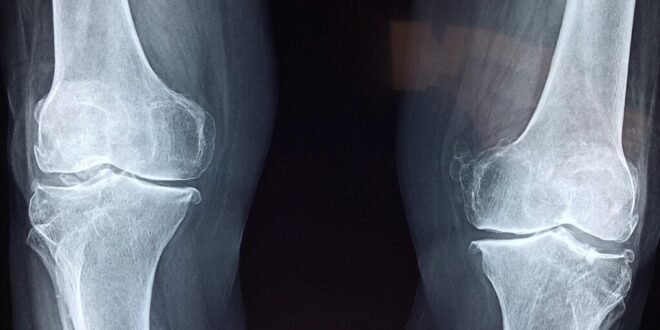
Osteoarthritis, a degenerative disease of the joints that affects millions of adults worldwide, is expected to reach 1 billion cases by 2050. The current treatments are aimed at relieving pain or replacing damaged joints surgically. There is no approved drug that can slow down or reverse cartilage damage.
Stanford’s approach is based on treating the disease at its root rather than just the symptoms.
Helen Blau is a professor of microbiology, immunology, and aging at Stanford. She said, “This new method of regeneration adult tissue has great clinical promise in treating arthritis caused by ageing or injuries.”
At the centre of the study is a protein called 15-PGDH, which the researchers describe as a “gerozyme” – an enzyme whose levels rise as the body ages and drive tissue decline.
Earlier research from the same group showed that high levels 15-PGDH weaken aged muscles while blocking it improved strength and endurance among older mice. The protein was also associated with regeneration in bone tissue, nerve, and blood tissues.
Researchers found that the 15-PGDH level in knee cartilage of young and older mice doubled as they aged, suggesting that it may be a major driver for cartilage degeneration.
Regrowing cartilage
The team injected mice older than 12 months with a small molecule that blocks 15 PGDH. First, the drug was injected systemically. Later it was injected directly into their knee joints. In both cases, the thin and dysfunctional cartilage on the joint surface thickened.
Crucially, tests confirmed the regenerated tissue was hyaline cartilage – the smooth, shock-absorbing cartilage found in healthy joints – rather than the weaker fibrocartilage that often forms after injury.
Nidhi Bhuti, an associate professor at Stanford’s Department of Orthopaedic Surgery, said that the extent to which cartilage regeneration occurred in old mice surprised her. “The effect was stunning.”
Mice with similar knee injuries to tears of the ACL showed similar results. Animals that were treated twice weekly over a period of four weeks had a lower risk of developing osteoarthritis, and they moved better than mice who weren’t treated.
Regeneration without stem cells
This study found that cartilage regeneration did not depend on stem cells, unlike many other forms of tissue repair. Instead, existing cartilage cells – called chondrocytes – changed how their genes behaved and reverted to a more youthful state.
The team also tested cartilage from patients who had undergone total knee replacements for osteoarthritis. After a week of treatment with 15-PGDHsDH, the tissue revealed:
- The number of cells producing PGDH is reduced to 15
- Reduced expression cartilage-degrading gene
- Early signs articular cartilage regeneration
Bhutani stated that “the mechanism is quite stunning and has really changed our perspective on how tissue regeneration occurs.”
Blau stated, “Imagine being able to re-grow cartilage without having to replace joints.” “We are extremely excited about this possible breakthrough.”
All health news.