Costa News Spain Breaking News | English News in Spain.

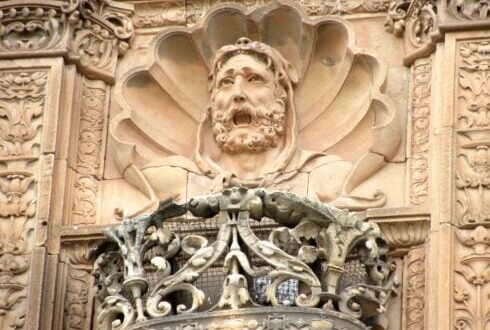
SILVERWORK is delicate and it’s all about detail, so when an exclusively Spanish style of architecture flourished in the time of Cervantes and Philip II, it earned the nickname ‘silver smithery’.
It’s now known today as the ‘Plateresque’ style.
Plateresque is a Spanish artistic movement that developed between the late Gothic period and the early Renaissance in the 15th century.
The motifs continued to be used for two hundred years and brought joyous details to hundreds grand buildings on the Iberian Peninsula.
Architecturally, Plateresque is a mix of Mudejar architecture and Flamboyant style with a hint of Tuscan Renaissance.
It reached its peak during the reign Charles V. The epicenter was Salamanca.
READ MORE
In addition to Casares, Burgos and Santiago de Compostela, the culture flourished throughout Spain.
Plateresque buildings are recognizable by their ornate floral patterns on the facades as well as other interior items like chandeliers, ceilings, and altars.
Above all else, it was a movement of art that responded to demands of the ruling classes at the time.
It was a time of great optimism and wealth, coming as the Reconquest against the Moors was completed – in Granada in 1492 – and the colonisation of the Caribbean and the Americas was beginning, led by Christopher Columbus.
The Spanish were rapidly acquiring wealth and power – as the gold and silver began to flow from the New World – and this was reflected in the money spent on a series of new grand buildings.
At its best, the decoration featured shields, medallions as well as animals and insects, aswell as motifs of flowers.
The type of decoration on the building can often reveal the owner, whether it is a soldier’s shield or a lawyer’s laurel.
And when we think of the word ‘ideals’, we need to pause and think.
The owners and builders of these structures wanted to ‘send a message’.
The look of a building could convey a sense that it was imposing authority and power over passersby.
In the golden age of Spain, wealthy aristocrats were stifling their power. Forget about the notion of form after function.
They didn’t care about the cost to create beautiful ornate forms of stone on their building. The money was there and they were ready to spend it.
Olive Press’ Top 10 Platareque masterpieces
University of Salamanca

Salamanca’s university has a majestic sandstone frontage, a testimony to Plateresque style. The intricate carvings are a rich source of detail that harmoniously blend Gothic and Renaissance themes. The surface is adorned with figurative sculptures, heraldic symbols and academic significance. The facade features delicate ornamentation such as sculpted-silver.
Casa de las Conchas, Salamanca

Casa de las Conchas, Salamanca, has an incredibly unique façade. It is instantly recognisable by its shell-covered exterior. This unusual and striking design creates an eye-catching surface studded with hundreds sandstone seashells. The windows are adorned with delicate ironwork. The urban palace combines Gothic, Renaissance and Plateresque influences in a unique architectural style.
Colegio Mayor de San Ildefonso, Alcala de Henares

The imposing façade of Colegio Mayor de San Ildefonso demonstrates the splendor of Plateresque architecture. The layered architecture, which incorporates brickwork and arched features, reflects a classic elegance and historical significance. Its dignified appearance is enhanced by intricate details that frame windows and doorways. Heraldic symbols and sculpted decorations also add to the dignity of this facade. This magnificent facade is indicative of the prestige, artistic sophistication and importance of this university.
Convent of San Marcos (Leon)

Convent of San Marcos has a magnificent facade that is a display of Plateresque art. The sandstone is sculpted with intricate details in a symmetrical pattern. The monumental structure has a dignified and regal presence that reflects the wealth and power of the time. Its refined ornamentation and scale are a cultural and artistic landmark for Spain.
Puerta de la Pellejería, Burgos Cathedral

Burgos Cathedral’s Puerta de la Pellejería represents a transitional style, blending Gothic elements with the emerging Renaissance Plateresque. The intricate sculptures and arched structures show off the changing tastes in art of the time. A doorway framed with intricate ornamental works adds refinement and elegance to the cathedral. This historical portal is a testimony to Burgos rich architectural heritage, and Plateresque style.
Hospital Real, Santiago de Compostela

Santiago’s Hospital Real has a symmetrical and impressive facade that exemplifies the grandeur often associated with Plateresque architectural style. The style is characterized by sculpted and detailed ornamentation that reflects Renaissance ideals. This historic building was once a Royal Hospital, and is now a Parador. It is a majestic landmark that demonstrates intricate craftsmanship and artistic sophistication.
Palacio de Monterrey, Salamanca

Salamanca’s Palacio de Monterrey, a fine example of Plateresque design. Its facade features intricate carvings in shallow relief that look like silverwork. The delicate ornamentation that frames the windows and doors, with floral motifs and mythological figures and heraldic symbol, creates a rich, ornate surface.
Iglesia de San Esteban, Salamanca

Salamanca’s Iglesia de San Esteban is a magnificent example of Plateresque Architecture. Its intricate details are carved into the surface of sandstone to create an impressive display. The ornamentation combines religious iconography and floral and figurative themes. This monumental church façade is a testimony to the artistic fervor and spiritual fervor in the Spanish Renaissance.
Casa del Dean Ortega, Guadalajara

Casa del Dean Ortega in Guadalajara demonstrates the finer details of Plateresque decoration on a smaller scale. Intricate carvings on doorways and around windows show the fine craftsmanship of that era. On a smaller apartment, the Plateresque design is evident in the floral motifs, sculpted elements, and other details.
Ayuntamiento de Sevilla

Sevilla’s town hall has a majestic facade that reflects the Plateresque architectural style. The façade conveys historical authority and government importance. Ornate details and sculpted features are typical of the time, and reflect the wealth and power of the city. The intricate ornamentation that frames the building entrances and window creates a striking and impressive visual statement in Sevilla’s cityscape.