Costa News Spain Breaking News | English News in Spain.

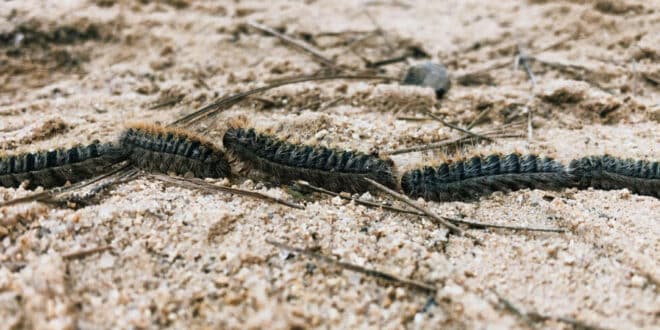
Photo credit: Molly Grace. Molly Grace. Photo credit
In parts of Spain, pine procesionary caterpillars are appearing earlier than residents expected. This has prompted renewed warnings by local councils and environmental services. Although the species has a well-known seasonal presence, authorities warn that it can change its behavior from one year to another. Encounters have been reported in pine tree parks, woodland edges, residential areas, and other places.
The pine processionary caterpillar (Thaumetopoea pityocampa) It is a native of the Mediterranean region and closely associated with pine forest. Every year, the larvae emerge from their trees nests and migrate across the earth in long single-file rows. This behavior gives the species a common name. The ground phase is dangerous for both people and animals because the toxic hairs of the caterpillars can easily be released into the air.
Why are they now being seen?
Experts point out that the timing of a processionary catapillar’s descent does not depend on a specific calendar date. The biological cycle of the insect, which varies by region, altitude, and colony, is what determines when it appears. As a consequence, early appearances don’t necessarily indicate abnormal conditions.
The environmental technicians explain that certain colonies reach the larval stage earlier than others. This results in staggered emergence times. Caterpillars could be active on the soil in late winter, in some areas. In others, they might not show up until weeks afterward.
High-Risk Areas
Local authorities recommend increased caution where pine trees grow, in particular:
- Public parks and urban spaces with mature pines
- Forest trails, woodland paths and rural walking routes
- Near pine trees, school playgrounds and school grounds
- Private gardens with nests visible in the tree canopy
In several areas, municipal services monitor these areas regularly and may even install trapsIf infestations are confirmed, either remove nests or restrict entry. Officials caution that not every nest is immediately visible. Caterpillars can also appear in zones where treatment hasn’t taken place.
Recognising the Processionary Caterpillar Behavior
The caterpillars search for a soft soil to pupate in when they leave their nests. They travel in distinct lines from nose to tail. They are not aggressive towards humans or other animals. They are covered by thousands of tiny urticating hairs.Setae). These hairs:
- Contain the potent toxin thaumetopoein
- Inflammation localized and vascular damage
These hairs are very easy to detach, and can remain in the air or on surfaces, such as clothing, grass, soil, and animal fur. Direct contact isn’t necessary for symptoms to appear. Passing through the affected area may be enough.
Health Effects on Humans
Humans are most likely to develop:
- Skin reactions including itching, redness and raised rashes
- Hairs in the eyes can cause eye irritation, including conjunctivitis.
- In rare cases, respiratory discomfort can occur in individuals with allergies and asthma.
Symptoms may appear within a few hours of exposure, and can persist for a number of days. Seek medical advice if the reactions are severe or involve the eyes.
Pets are at Risk of Serious Health Problems
Veterinarians emphasize that dogs are vulnerable. Strange behaviours such as biting, licking and sniffing caterpillars may cause serious symptoms.
- Excessive drooling
- Swelling in the face, lips or tongue (sometimes turning dark purple, red or black).
- You may experience pain, vomiting or breathing problems
- Severe cases can lead to necrosis in the mouth and/or tongue, organ failure, or death
Animal health professionals emphasize that a suspected contact is an urgent situation. Immediate veterinary care improves outcomes.
How fast can it happen?
- Contact within minutes to hours
- First signs are swelling and drooling.
- Necrosis may become visible within 24–72 hours, depending on severity and treatment speed
A timely veterinary intervention is essential to preventing permanent damage.
Safety Advice to the Public
The authorities recommend that you take the following precautions when attending processions:
- Never touch caterpillars, nests, or eggs.
- Keep your dog on a leash in areas with pine trees and stop them from sniffing.
- Children should be closely supervised in parks and other green spaces
- Local councils are notified about nests and large processesions.
- After visiting a high-risk area, wash hands, clothing and shoes.
The pine processionary is an important part of the Spanish ecosystem. Officials stress the importance of awareness and caution. Residents should be aware of the caterpillar activity in the coming weeks and adhere to safety instructions to minimize the risk.