Costa News Spain Breaking News | English News in Spain.

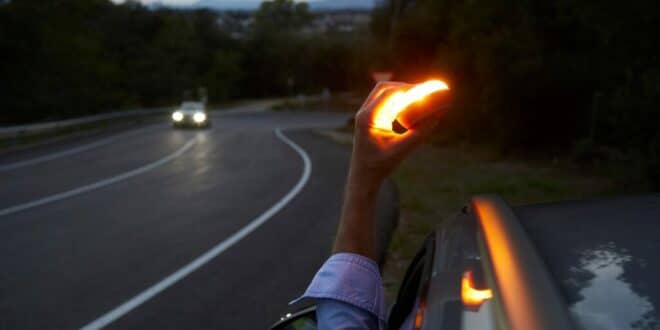
Spain will replace warning triangular lights with V16 Emergency Lights from 2026.
Credit : Baliza V16 conectada, Shutterstock
The countdown to 2026 has begun. From January 1, 2026, the classic emergency triangles that Spanish drivers have carried in their boots for decades will officially be replaced by a new high-tech device – the V16 emergency light.
The Dirección General de Tráfico (DGT) has confirmed the change as part of a nationwide push to make roads safer and smarter. The move aims to reduce accidents caused when drivers step out of their vehicles to place warning triangles — a risk that has led to far too many tragic deaths on Spanish roads.
This shift isn’t just about modernising road safety tools – it’s part of the DGT’s digital traffic strategy (DGT 3.0), which connects vehicles, traffic systems, and emergency services in real time.
Who is required to carry the V16 Emergency Light?
According to the DGT, the rule applies to cars, vans, buses, lorries and mixed-use vehicles – basically, all standard vehicles except motorbikes, mopeds and special vehicles, which are exempt but can still use the device voluntarily.
If your vehicle is registered in Spain, you’ll need to have the V16 light on board — even when driving abroad in countries that are part of European traffic agreements.
Traditional warning triangles for foreign vehicles entering Spain will continue to be accepted until an EU standard is implemented, but DGT is encouraging drivers to adopt this new system as quickly as possible, out of safety concerns.
What is the V16 light?
The V16 light is a great alternative to traditional triangles. You won’t need to stop your car on the side of the road. It’s a small, lightweight device with a magnetic base, designed to sit on the roof and emit a bright yellow flashing light visible from every angle – even up to one kilometre away.
What makes it stand out is the fact that it’s always connected. Each V16 beacon is equipped with a SIM and GPS card. This means that the moment the beacon is switched on, the DGT will receive your exact location. This information is shared in real-time with Traffic Management Centres who can alert other motorists through roadside signage and navigation systems.
The DGT must approve the V16 and the light must also meet some key standards.
- The battery must last at least 30 mins when it is in use.
- Battery should last for at least 18 months.
- Connectivity must be guaranteed for 12 years — with no extra fees.
In summary, the V16 is a better, safer, and more convenient option to the old reflective triangular lights that served their purpose.
What happens if I don’t?
When the rule becomes mandatory in 2026, not carrying a V16 could cost you around €80, and failing to signal an emergency properly – or in a way that endangers others – could mean fines of up to €200.
DGT warns drivers about fake or non-certified devices sold online. The DGT warns that many cheap versions do not meet safety standards or aren’t connected properly.
Spain has become the first country in Europe to require all vehicles to have a connected, emergency light. The DGT hopes the change will significantly reduce roadside accidents and make Spanish roads safer for everyone – from drivers to emergency workers.
As the DGT put it, the goal isn’t just to modernise road safety – it’s to keep people alive.