Costa News Spain Breaking News | English News in Spain.

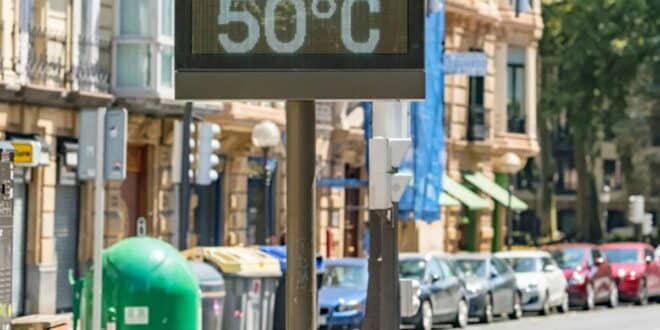
Spain recorded the hottest summer first half on record. Extreme temperatures affected much of Spain.
Credit : Mazur Travel, Shutterstock
It’s not just you if you have spent the past couple of weeks sleeping with windows open, checking weather reports before leaving home, or planning your days around the hottest times. The State Meteorological Agency AEMET has confirmed that Spain’s first half of the summer was officially its hottest since records began in 1960. The average temperature in mainland Spain between 1 June and 15 Jul reached 24.5C. This is the highest recorded for this time of year.
It’s not a new milestone, but rather a reflection of what people have been experiencing. The heat has been a constant in many parts of the country. Two major heatwaves arrived before mid-July. Even areas that are accustomed to milder summers were hit by unusually high temperatures. The nights also brought little relief.
The latest statistics raise a question that is obvious, given the remaining summer weeks. Is it just an unusual year or will Spain have to become accustomed to these types of summers?
This summer has been different since the beginning
Many people did not experience a sudden heat wave this summer. It began that way.
AEMET reported that almost every day from 1 June to 15 July saw temperatures higher than average.
Spain’s weather records were rewritten by the 3.3 degree average temperature that was recorded during these six weeks.
There was a very small chance that the country could cool off between hot spells.
The first heatwave in Spain arrived at the very end of June. It pushed temperatures up to an exceptional level across large areas of Spain. Another period of intense heat came before conditions settled down, and the weather remained unusually hot well into July.
Many households have found it difficult to cope with temperatures exceeding 40 degrees in the afternoon. For many, the biggest challenge has been the feeling of heat that never goes away.
When the nights no longer bring relief
Anyone who lives in Spain knows the summer evenings are a great way to relax after a long, hot day.
Many people found it difficult to find relief this year.
The number of nights with temperatures above 20C in the morning has been a defining feature of this summer.
During the night, without cooler air, homes are still warm and bedrooms struggle to cool off. Sleeping comfortably is difficult.
Many residents had noticed this long before the official statistics were released.
Many homes have air conditioning units that run continuously, while others rely on fans, opened windows, and evening walks to escape the heat.
Health experts have repeatedly warned about the dangers of hot nights, particularly for those who are older, young, or suffer from chronic conditions. Fatigue builds up when the body is unable to cool down overnight.
Many people are feeling tired this summer because of the heat.
The heat has spread well beyond Spain’s usual hotspots
Andalusia as well parts of Spain inland are no strangers when it comes to extreme temperatures in July.
This summer’s heat is notable for its wide spread.
The temperature in the cities that normally enjoy cooling sea breezes has been abnormally high.
Barcelona reached temperatures above 40C. It was an extraordinary figure for the city, which is located on a coast where sea breezes usually moderate summer extremes.
Cantabria recorded the highest temperatures in the north.
Other words, it is not a story that has only been told in southern Spain.
The weather has been noticeably different in many communities, from the Mediterranean to the northern regions.
Climate specialists say that the Mediterranean basin is one of Europe’s most vulnerable regions to temperature rises.
In cities such as Valencia, Alicante and Murcia, Barcelona, Palma, and Barcelona, the intense heat is already longer than it was in the previous decade.
Some research suggests that sea breeze cooling may become less effective in certain weather patterns. This allows temperatures along the coastline to rise above what many people associate seaside locations with.
Scientists are paying attention to the emergence of a new species
Researchers have long warned of the increasing frequency and intensity in heatwaves that are occurring across southern Europe as a result of climate change.
In international climate studies, the Mediterranean is often highlighted as a region that is warming faster than many other regions of the world.
Climate change does not cause every day to be hot. Conditions that favour long, intense heat periods are becoming more frequent.
The effects of the treatment go far beyond mere comfort.
Temperature increases and the need for irrigation are increasing pressures on agriculture. The risk of wildfires increases when the vegetation becomes dry, especially if there is little or no rain.
Spain has experienced multiple droughts, water shortages, and destructive wildfire season in recent years. This makes every prolonged period with exceptional heat even more difficult to handle.
What would the rest summer look like?
The summer is far from over, even though this record covers only the period between 15 July and now. Meteorologists warned that there could be more hot days in the next few weeks, particularly across southern and eastern Spain.
How July and August progresses will determine if new records are set.
Statistics confirm what many people already know.
The daily routine has changed. Morning walks are earlier. Outdoor work often starts before sunrise. Restaurants and cafés fill later in the evening. Parents prefer shaded playgrounds to open ones in the afternoon.
The overnight temperature is almost as important as the daytime temperatures because people know that a good night’s sleep can make a big difference in the heat of a day.
Spain has experienced hot summers for centuries. The heat this year has been particularly intense.
AEMET has confirmed that the first half of summer was the hottest since national records began. 19612026 is already etched in Spain’s history as a year of extreme weather. And for the millions of people who are living it, those numbers put into words exactly what they have been feeling over recent weeks.