Costa News Spain Breaking News | English News in Spain.

Dilip Kuner & Jon Clarke
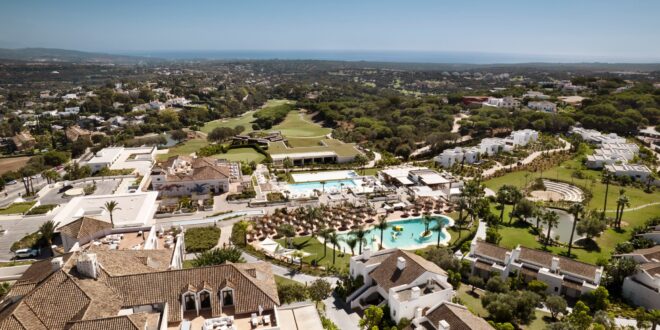
There is no place in Spain quite like Sotogrande during the summer.
It is the preferred destination for those who are discreetly rich and famous.
Even the most privileged visitors, such as those from Marbella and Ibiza, are amazed at the differences.
Ben Bateman has lived in the resort for most of his life. He says that the golf courses and marina are great. There are no traffic jams and the people are friendly.
He continued, “It’s changed a lot in Sotogrande during the past two decades. It’s all for the better.” “There is so much to do in Sotogrande now, both for eating out and nightlife. You don’t need to worry about your teens at night.”
He is referring to the cool spots such as Agora and Trocadero, where hundreds of young people gather during the summer evenings.
Yes, you read that correctly, ‘After Polo’… it’s where your youngsters will be rubbing shoulders with Middle Eastern princes, Made in Chelsea princesses and, of course, Argentinian polo professionals. What’s there not to enjoy?
It’s not surprising that this Spanish paradise is so popular because of its ideal location and almost-perfect climate.
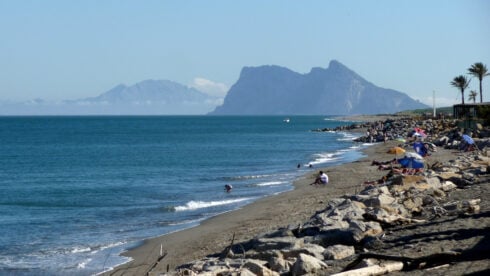
Lying just 100km west of Malaga, it offers a front-row seat to the ancient world’s ‘Pillars of Hercules’ – that’s the Rock of Gibraltar and Morocco’s Jebel Musa.
This is where A-listers and business moguls go to relax and enjoy their wealth. The lifestyles of the rich and famous are a dream for many. From private jets and yachts to golf, polo and tennis, there is something here to suit everyone.
How did this once-sleepy farm transform into a playground for elites?
Joseph McMicking is an American-Filipino tycoon who was the mastermind behind this transformation.
McMicking was already a successful businessman as the president of Ayala Corporation. He brought to life the Forbes Park in the Philippines.
Inspired by the success of his previous venture, he set his sights on replicating that exclusivity on the sunny Spanish coast and in 1962, sent his cousin, Alfredo ‘Fredy’ Melian, on a mission to find the perfect plot.
Melian, armed with a motorbike but also a spirit of adventure, explored the rugged dirt roads in the area.
He was rewarded for his efforts when he found a sprawling estate of 1,800 hectares near Gibraltar.
The farmland had been owned by a succession of the rich and famous – the Duke of Arcos, the Larios gin family and Spain’s then-richest man, Juan March, arms and tobacco dealer and founder of the eponymous science and arts institution.
It seemed fated for grander use – and it ticked the boxes.
McMicking said, “We bought land in Sotogrande before we had seen it. It was like buying a pig without seeing its face.” “Paid $750,000 as a down payment and then had to pay a third of the total in six month and the rest within a year.”


He arrived with his nephews, Jaime and Enrique Zobel (the latter had been overseeing his pal, the Sultan of Brunei’s 1,788-room palace) and Melian stayed on as ‘director of works’.
The Antigua Venta Toledo was the first headquarters, and the team managed to get by from there.
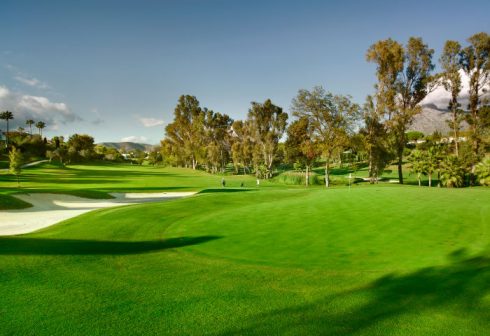
McMicking, inspired by Palm Beach, Pebble Beach, and other US golf clubs, was determined to create a community centered around a club. In 1963, he hired Robert Trent Jones, the top course designer.
Real Club Sotogrande, his first European venture was also the first European course with a modern automated irrigation system.
The low-slung clubhouse was designed by Spain’s leading modernist architect Luis Gutierrez Soto, who also designed the famous Callao Theatre in Madrid and the fnac Building. It is still considered very avant-garde to this day.
The team then hired the director of The Ritz Hotel in Madrid to manage the club.
Trent Jones came back a decade after to design Valderrama. The venue of the Volvo Masters events, Spanish Opens, and even Ryder Cup.
Ultimately it put the Costa del Sol (ED: technically just outside – it’s Cadiz) on the map as one of Europe’s top golfing destinations.
Enrique Zobel, a keen polo-player, built a polo field by the beach.
La Playa opened in 1965. Although it wasn’t Spain’s first (the Jerez Polo Club was founded in 1872), the Playa set a new social standard.
READ MORE
Santa Maria Polo Club has been upgraded and is now regarded as one of best in the World.
Trocadero was the first beach club. It’s still there today.
In 1965, the first hotel was the Tennis Hotel, a luxury, modernist motel. It is now known as Hotel Encinar.
As word spread, the wealthy and powerful began to arrive. Jaime Ortiz-Patiño of the Bolivian tin mining dynasty, diamond magnate Philip Oppenheimer, Javier Benjumea, the Marquis of Puebla de Cazalla, was one of the few Spanish residents.
Following the dukes of France, Belgian barons and European business scions were politicians (including Tony Blair) and celebrities, including ex-England manager Glenn Hoddle. Racing driver Eddie Jordan followed.
Many of the original homes are architectural jewels. The Domecq Family Mansion, which was once the Domecq’s family home, is now the San Roque Clubhouse. However, unless you happen to be a guest you will not see the best.
Javier Carvajal, who had just designed the Spanish Pavilion for the New York World’s Fair in 1963, spent $160,000 on the house of American diplomat Nicholas Biddle.
Sadly, prices have gone up: When Joseph Kanoui, head of the syndicate that bought Cartier, put his Casa La Manzana on the market for €26m in 2006, it was the most expensive house for sale in Spain.
McMicking’s vision for Sotogrande was not limited to who built the resort, but also included what kind of people came. He said that a Sotogrande built on money would be a horrible society. It was only after Sotogrande ran out of money and had to expand to a wider market that affordable housing became available.
Franco helped the Sotogrande investors by lifting the restriction that prohibited foreigners from purchasing land in Spain. Franco stifled them in 1969 by closing Spain’s border with Gibraltar. Malaga airport’s journey was arduous while the N-340 construction project was underway. Sotogrande was in debt when the jet-set couldn’t fly into town.
In the late 1970s, it was decided to build apartments along the left bank. In 1978, to appeal to all-year residents, the International School at Sotogrande (ISS) was set up – initially in the old cattle sheds of one of the farms, Cortijo de Paniagua.
By the time the border reopened in 1985, Sotogrande was a different kind of place, still off the beaten track – it would be another 17 years until the AP-7 motorway hooked it up, but more connected to the real world. Some residents had day jobs too!
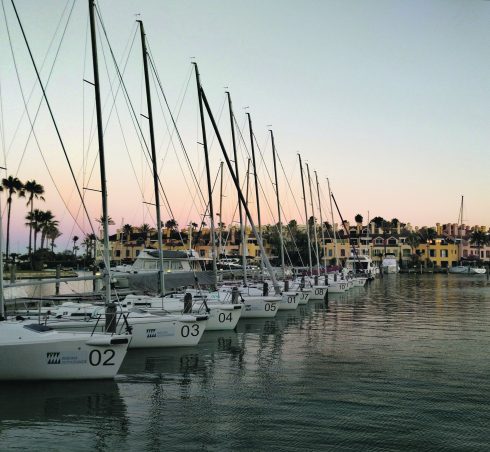
McMicking’s vision always included a canal-side marina and islands with apartments that offer views of yachts. In 1987, the Puerto Deportivo Sotogrande was built, three years prior to his death.
As he predicted: “Sooner or later, the Costa del Sol is going to be mobbed, but Sotogrande will be an island of order in the chaos.” As he said: “Sooner, or later, the Costa del Sol’s going to be mobbed. Sotogrande however will be an oasis of order among the chaos.”
No one could have said it better.
The Olive Press Travel News is available here.

Find Tailor Made Travel
Simply Holiday Bookings allows you to create your own personalized holiday experience.