Costa News Spain Breaking News | English News in Spain.

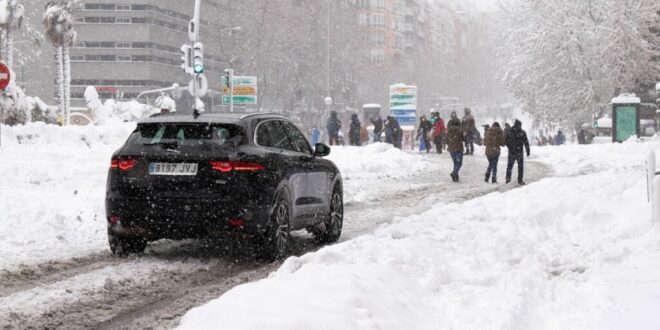
Winter weather warnings in Madrid cause snowy streets to be plowed by drivers.
Credit : Alvaro Laguna, Shutterstock
Winter has arrived in Spain and it is not going to let up anytime soon. Over recent days, people have been dealing with widespread rain, falling snow and noticeably colder temperatures, with Castilla y León and the Community of Madrid among the areas worst affected.
Forecasts warn that between 1,200 and 1400 metres, more than 5 centimetres of snow could fall in 24 hours. Snowfall was recorded Tuesday, and it is expected to continue Wednesday, particularly in the Sierra de Madrid. Conditions are expected to become increasingly wintry over 1,200 metres.
The Spanish national weather agency AEMET, mist and fog are also lingering across the region – not exactly the kind of combination drivers hope for when setting off on the roads.
The biggest casualties are drivers who get stuck in the snow
The snow is one of the biggest problems for motorists. Heavy rain already slows traffic and clogs roads around major cities like Madrid – but once that rain turns to snow, driving conditions become noticeably more dangerous.
Even the most calm journeys can feel unpredictible, especially before salt is spread on major roads or snowploughs are in place.
It’s for this reason that road safety experts are always reminding drivers that a quick vehicle inspection can make a huge difference when snow falls. Winter driving isn’t about pushing on as normal – it’s about slowing down and making sure both car and driver are ready for tougher conditions.
What to do before driving on snow
To maintain grip, it is important to have the correct pressure and tread depth. Maintaining grip requires correct pressure and adequate tread depth. Worn tyres hugely increase the chance of sliding or losing control – particularly on icy stretches of road.
Winter tyres or snow chains are essential when snowfall increases in intensity, or if it builds up on tarmac. On some mountain routes, they may be mandatory. It is also important that drivers check the brakes. If you have ice or compacted snow, it can take longer for your vehicle to stop. A brake system that is not in good condition can make this problem worse.
The DGT key message: don’t forget the antifreeze
While tyres, chains and brakes often grab the headlines during snow alerts, Spain’s traffic authority – the DGT – has singled out one item drivers sometimes forget: engine antifreeze.
Antifreeze is usually a chemical, which is ethylene glycol-based, and is added to your car’s coolant system to protect against extreme temperatures. It becomes even more important during prolonged cold spells, like those currently affecting Madrid and the north of Spain.
According to its official guidelines, the DGT explains:
Radiators must be treated with antifreeze to avoid cracking in the winter frost. This could lead to coolant leaks or serious damage from overheating.
In simple terms, if freezing temperatures hit and the cooling system isn’t properly protected, components can crack — potentially leading to breakdowns at the roadside or costly engine damage.
DGT urges drivers to be extra cautious behind the wheel, along with vehicle preparation. Drivers must stay alert, avoid distractions and expect that vehicles may not behave normally on wet roads or icy surfaces.
The authority recommends that drivers should drive with complete concentration and without distractions. They are also advised to anticipate how a car will react when it is not in the ideal environment.
A better weather is on its way
Good news: conditions will gradually improve as we approach the weekend. Forecasts suggest more Atlantic fronts may still bring rain – especially to the north and west – but overall temperatures should start to climb.
The snow line will rise as milder air enters, limiting snowfall to the higher mountainous areas. Average temperatures along the Cantabrian coast could reach around 19°C, while parts of the Mediterranean may enjoy highs close to 22°C.
Until then, anyone driving through Madrid or other affected regions is being urged to stay alert, take extra time with vehicle checks, and follow official advice – because when winter conditions hit the roads, a little preparation goes a very long way.